
Title
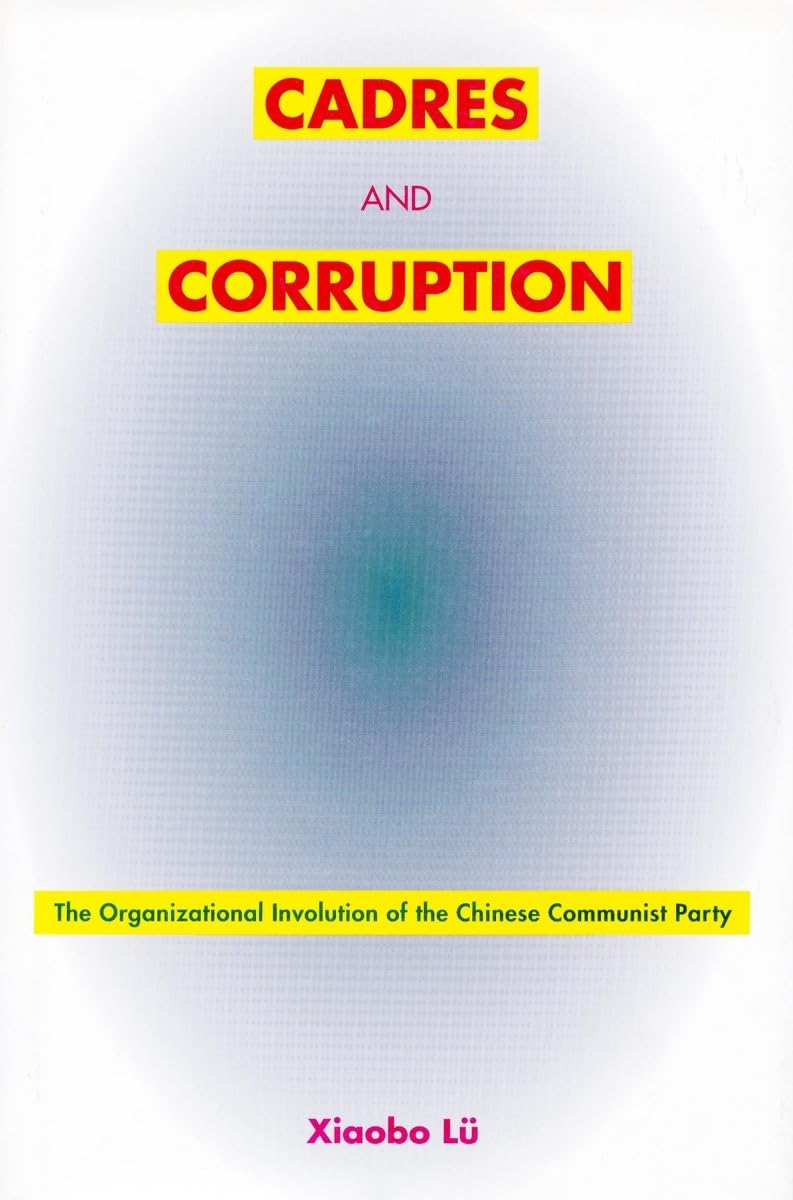
Cadres And Corruption: The Organizational Involution Of The Chinese Communist Party(Studies Of The East Asian Institute),Used
Sold by Ergodebooks, an authorized reseller.
Returns accepted within 30 days | support@ergodebooks.com
Shipping Information
- Free Standard Shipping — United States only
- Processing Time: 3–5 business days
- Estimated Delivery: 6–10 business days after dispatch
- Double-boxed, fully insured & discreetly packaged
- Tracking number sent via email once dispatched
Returns & Refund
Returns accepted within 30 days of delivery.
Damaged or Defective Item
Free return shipping + replacement or full refund
Wrong Item Received
Free return shipping + replacement or full refund
Change of Mind
Return shipping at customer's expense · 25% restocking fee applies
Payment Option

The most uptodate and comprehensive analysis of corruption and change in the Chinese Communist Party, Cadres and Corruption reveals the long history of the party's inability to maintain a corps of committed and disciplined cadres. Contrary to popular understanding of China's pervasive corruption as an administrative or ethical problem, the author argues that corruption is a reflection of political developments and the manner in which the regime has evolved.Based on a wide range of previously unpublished documentary material and extensive interviews conducted by the author, the book adopts a new approach to studying political corruption by focusing on organizational change within the ruling party. In so doing, it offers a fresh perspective on the causes and changing patterns of official corruption in China and on the nature of the Chinese Communist regime.By inquiring into the developmental trajectory of the party's organization and its cadres since it came to power in 1949, the author argues that corruption among Communist cadres is not a phenomenon of the postMao reform period, nor is it caused by purely economic incentives in the emerging marketplace. Rather, it is the result of a long process of what he calls organizational involution that began as the Communist partystate embarked on the path of Maoist 'continuous revolution.' In this process, the Chinese Communist Party gradually lost its ability to sustain officialdom with either the Leninistcadre or the Weberianbureaucratic mode of integration. Instead, the party unintentionally created a neotraditional ethos, mode of operation, and set of authority relations among its cadres that have fostered official corruption.
⚠️ WARNING (California Proposition 65):
This product may contain chemicals known to the State of California to cause cancer, birth defects, or other reproductive harm.
For more information, please visit www.P65Warnings.ca.gov.