
Title
Cahokia: Mirror of the Cosmos,Used
Sold by Ergodebooks, an authorized reseller.
Returns accepted within 30 days | support@ergodebooks.com
Shipping Information
- Free Standard Shipping — United States only
- Processing Time: 3–5 business days
- Estimated Delivery: 6–10 business days after dispatch
- Double-boxed, fully insured & discreetly packaged
- Tracking number sent via email once dispatched
Returns & Refund
Returns accepted within 30 days of delivery.
Damaged or Defective Item
Free return shipping + replacement or full refund
Wrong Item Received
Free return shipping + replacement or full refund
Change of Mind
Return shipping at customer's expense · 25% restocking fee applies
Payment Option

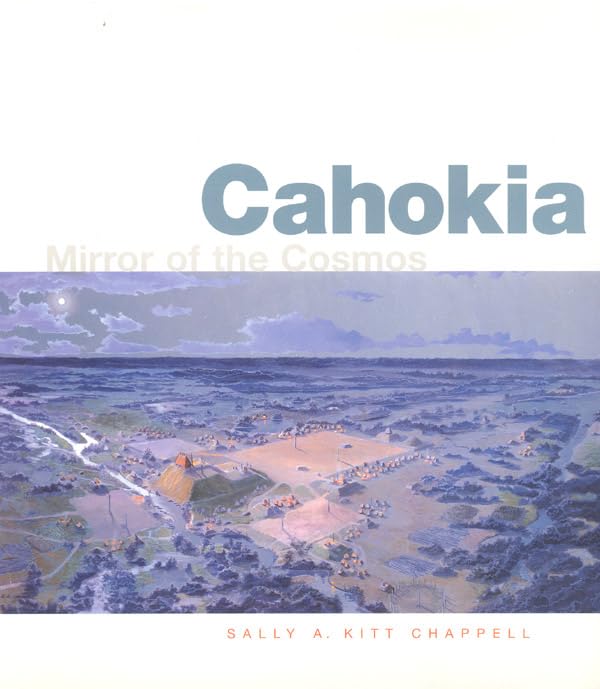
At the turn of the last millennium, a powerful Native American civilization emerged and flourished in the American Midwest. By A.D. 1050 the population of its capital city, Cahokia, was larger than that of London. Without the use of the wheel, beasts of burden, or metallurgy, its technology was of the Stone Age, yet its culture fostered widespread commerce, refined artistic expression, and monumental architecture. The model for this urbane world was nothing less than the cosmos itself. The climax of their ritual center was a fourtiered pyramid covering fourteen acre rising a hundred feet into the skythe tallest structure in the United States until 1867. This beautifully illustrated book traces the history of this sixsquaremile area in the central Mississippi Valley from the Big Bang to the present.Chappell seeks to answer fundamental questions about this unique, yet still relatively unknown space, which was designated a UNESCO World Heritage Site in 1982. How did this swampy land become so amenable to human life? Who were the remarkable people who lived here before the Europeans came? Why did the whole civilization disappear so rapidly? What became of the land in the centuries after the Mississippians abandoned it? And finally, what can we learn about ourselves as we look into the changing meaning of Cahokia through the ages?To explore these questions, Chappell probes a wide range of sources, including the work of astronomers, geographers, geologists, anthropologists, and archaeologists. Archival photographs and newspaper accounts, as well as interviews with those who work at the site and Native Americans on their annual pilgrimage to the site, bring the story up to the present.Tying together these many threads, Chappell weaves a rich tale of how different people conferred their values on the same piece of land and how the transformed landscape, in turn, inspired different values in themcultural, spiritual, agricultural, economic, and humanistic.
⚠️ WARNING (California Proposition 65):
This product may contain chemicals known to the State of California to cause cancer, birth defects, or other reproductive harm.
For more information, please visit www.P65Warnings.ca.gov.