
Title
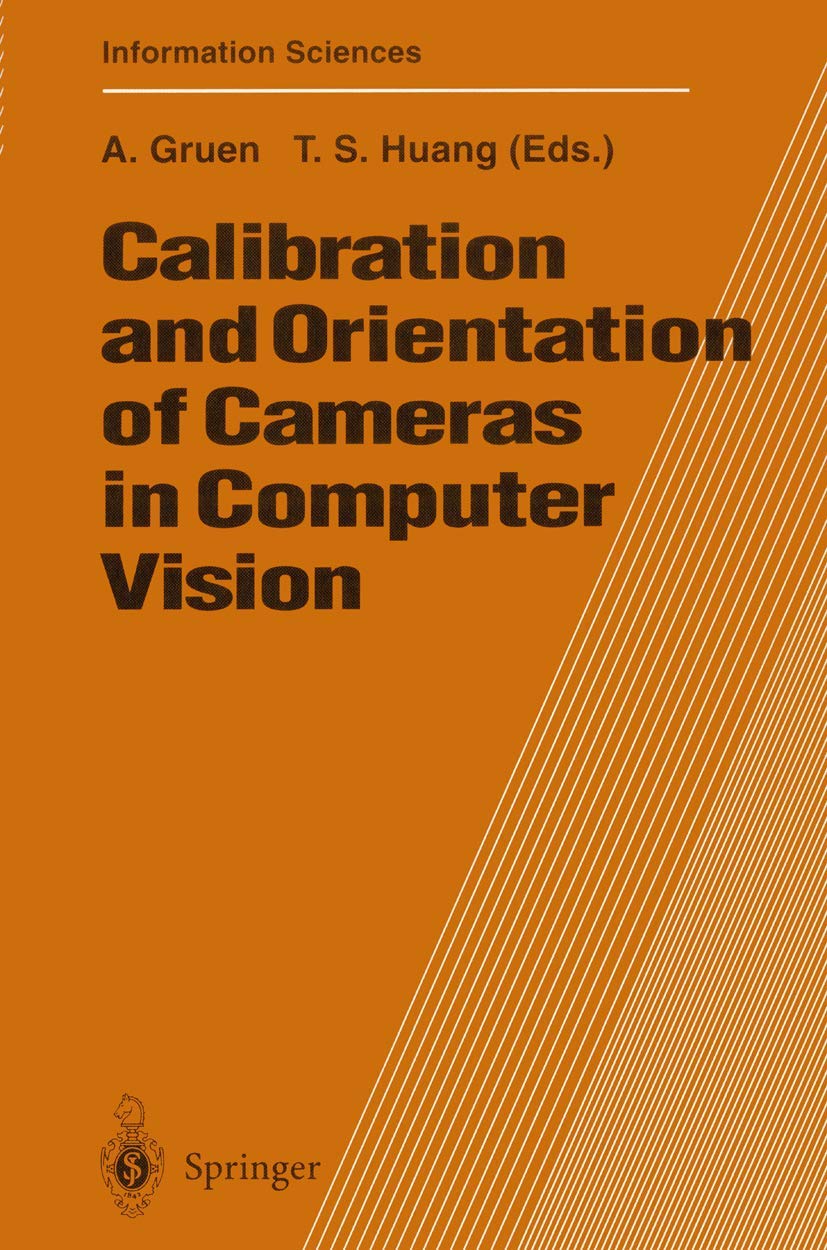
Calibration and Orientation of Cameras in Computer Vision (Springer Series in Information Sciences, 34),Used
Sold by Ergodebooks, an authorized reseller.
Returns accepted within 30 days | support@ergodebooks.com
Shipping Information
- Free Standard Shipping — United States only
- Processing Time: 3–5 business days
- Estimated Delivery: 6–10 business days after dispatch
- Double-boxed, fully insured & discreetly packaged
- Tracking number sent via email once dispatched
Returns & Refund
Returns accepted within 30 days of delivery.
Damaged or Defective Item
Free return shipping + replacement or full refund
Wrong Item Received
Free return shipping + replacement or full refund
Change of Mind
Return shipping at customer's expense · 25% restocking fee applies
Payment Option

This book was conceived during the Workshop "Calibration and Orientation of Cameras in Computer Vision" at the XVIIth Congress of the ISPRS (In ternational Society of Photogrammetry and Remote Sensing), in July 1992 in Washington, D. C. The goal of this workshop was to bring photogrammetry and computer vision experts together in order to exchange ideas, concepts and approaches in camera calibration and orientation. These topics have been addressed in photogrammetry research for a long time, starting in the sec ond half of the 19th century. Over the years standard procedures have been developed and implemented, in particular for metric cameras, such that in the photogrammetric community such issues were considered as solved prob lems. With the increased use of nonmetric cameras (in photogrammetry they are revealingly called "amateur" cameras), especially CCD cameras, and the exciting possibilities of acquiring long image sequences quite effortlessly and processing image data automatically, online and even in realtime, the need to take a new and fresh look at various calibration and orientation issues became obvious. Here most activities emerged through the computer vision commu nity, which was somewhat unaware as to what had already been achieved in photogrammetry. On the other hand, photogrammetrists seemed to ignore the new and interesting studies, in particular on the problems of orienta tion, that were being performed by computer vision experts.
⚠️ WARNING (California Proposition 65):
This product may contain chemicals known to the State of California to cause cancer, birth defects, or other reproductive harm.
For more information, please visit www.P65Warnings.ca.gov.