If you have any questions, you are always welcome to contact us. We'll get back to you as soon as possible, withing 24 hours on weekdays.
Customer service
All questions about your order, return and delivery must be sent to our customer service team by e-mail at yourstore@yourdomain.com
Sale & Press
If you are interested in selling our products, need more information about our brand or wish to make a collaboration, please contact us at press@yourdomain.com
Help
If you have any questions, you are always welcome to contact us. We'll get back to you as soon as possible, withing 24 hours on weekdays.
Customer service
All questions about your order, return and delivery must be sent to our customer service team by e-mail at yourstore@yourdomain.com
Sale & Press
If you are interested in selling our products, need more information about our brand or wish to make a collaboration, please contact us at press@yourdomain.com
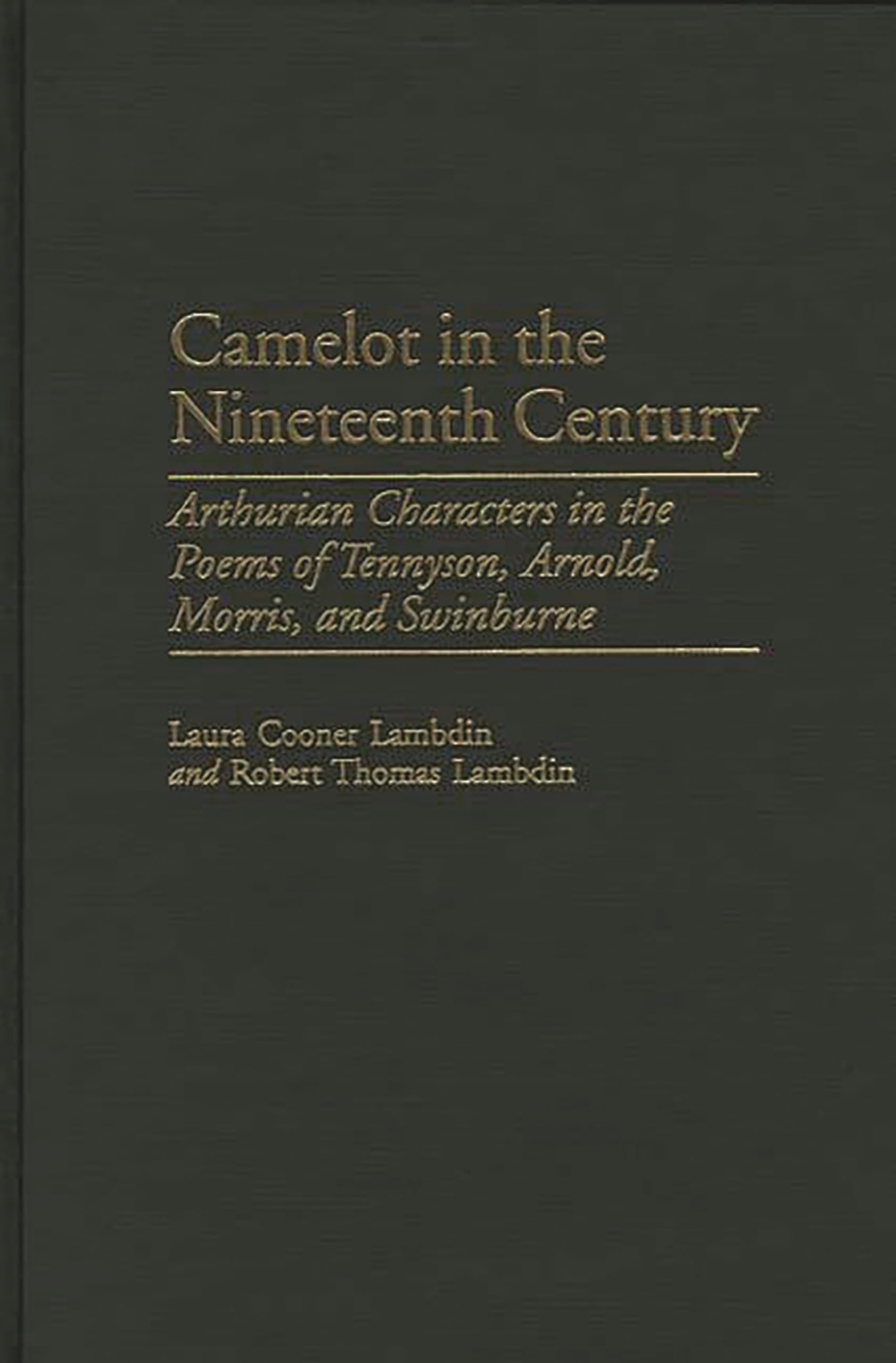
For centuries, accounts of King Arthur and his court have fascinated historians, scholars, poets, and readers. Each age has added material to reflect its own cultural attitudes, but no era has supplemented the earlier versions more than the poets of the Medieval Revival of nineteenthcentury England. This book examines how Arthurian legend was read and rewritten during that period by four enduring writers: Alfred Lord Tennyson, Matthew Arnold, William Morris, and Algernon Charles Swinburne. While other works have looked at Arthurian legend in light of nineteenthcentury social conditions, this volume focuses on how these poets approached love and death in their works, and how the legend of Arthur shaped their vision.An introductory chapter traces Arthurian legend from its inception. The chapters that follow are each devoted to a particular author's use of Arthurian material in an exploration of love and death. For Tennyson, love leads to trust, and when trust is shattered, death soon follows. Arnold, on the other hand, advocates moderation, so that the loss of a loved one produces neither debilitating agony nor only a mild melancholy. Morris concentrates on the differences between physical and spiritual love, while Swinburne presents a world tormented by love and in which death is the only release.
⚠️ WARNING (California Proposition 65):
This product may contain chemicals known to the State of California to cause cancer,
birth defects, or other reproductive harm.
For MAP (Minimum Advertised Price) violations and Intellectual Property (IP) or Trademark concerns, please contact:
support@ergodebooks.com
⚠️ California Proposition 65 Warning: Some products sold on this website may expose you to chemicals known to the State of California to cause cancer, birth defects, or other reproductive harm. For more information, visit www.P65Warnings.ca.gov.