
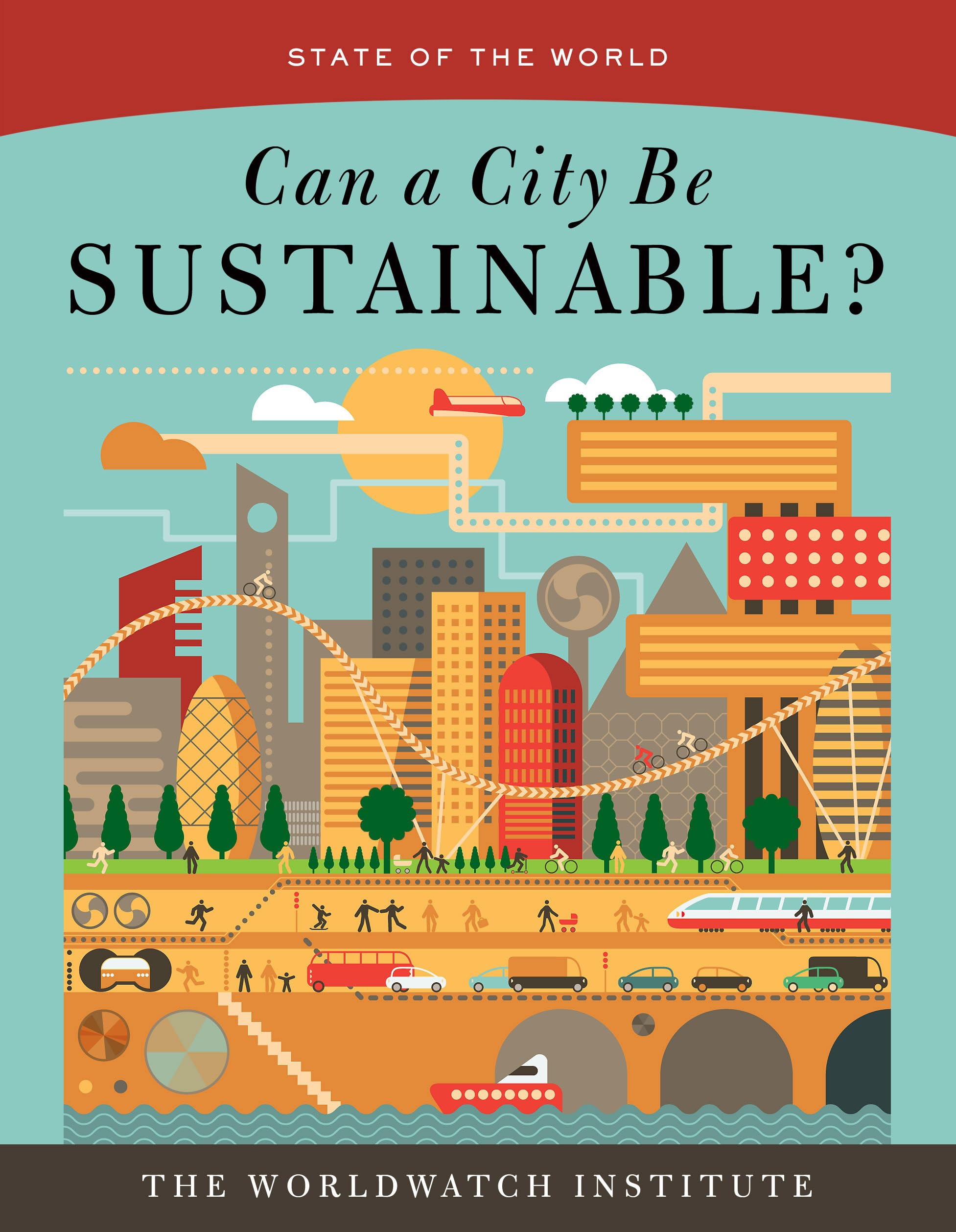
Title
Can A City Be Sustainable? (State Of The World),Used
Sold by Ergodebooks, an authorized reseller.
Returns accepted within 30 days | support@ergodebooks.com
Shipping Information
- Free Standard Shipping — United States only
- Processing Time: 3–5 business days
- Estimated Delivery: 6–10 business days after dispatch
- Double-boxed, fully insured & discreetly packaged
- Tracking number sent via email once dispatched
Returns & Refund
Returns accepted within 30 days of delivery.
Damaged or Defective Item
Free return shipping + replacement or full refund
Wrong Item Received
Free return shipping + replacement or full refund
Change of Mind
Return shipping at customer's expense · 25% restocking fee applies
Payment Option

Cities are the worlds future. Today, more than half of the global population3.7 billion peopleare urban dwellers, and that number is expected to double by 2050. There is no question that cities are growing; the only debate is over how they will grow. Will we invest in the physical and social infrastructure necessary for livable, equitable, and sustainable cities? In the latest edition of State of the World, the flagship publication of the Worldwatch Institute, experts from around the globe examine the core principles of sustainable urbanism and profile cities that are putting them into practice.State of the World first puts our current moment in context, tracing cities in the arc of human history. It also examines the basic structural elements of every city: materials and fuels; people and economics; and biodiversity. In part two, professionals working on some of the worlds most inventive urban sustainability projects share their firsthand experience. Success stories come from places as diverse as Ahmedabad, India; Freiburg, Germany; and Shanghai, China. In many cases, local people are acting to improve their cities, even when national efforts are stalled. Parts three and four examine crosscutting issues that affect the success of all cities. Topics range from the nittygritty of handling waste and developing public transportation to civic participation and navigating dysfunctional government.Throughout, readers discover the most pressing challenges facing communities and the most promising solutions currently being developed. The result is a snapshot of cities today and a vision for global urban sustainability tomorrow.
⚠️ WARNING (California Proposition 65):
This product may contain chemicals known to the State of California to cause cancer, birth defects, or other reproductive harm.
For more information, please visit www.P65Warnings.ca.gov.
- Q: What is the page count of the book? A: The book has four hundred forty-eight pages. This extensive length allows for a thorough exploration of sustainable urbanism.
- Q: What are the dimensions of this book? A: The dimensions are six point five inches in length, one inch in width, and eight point thirty-nine inches in height. These measurements make it a standard-sized paperback.
- Q: Who is the author of 'Can a City Be Sustainable?' A: The author is The Worldwatch Institute. They are known for their expertise in global sustainability issues.
- Q: What is the binding type of this book? A: The book is paperback bound. This makes it lightweight and easy to handle for reading.
- Q: What category does this book fall under? A: It falls under the category of Urban & Land Use Planning. This genre focuses on sustainable practices in urban development.
- Q: How do I read this book effectively? A: You can read it like any standard book, starting from the beginning and progressing through the chapters. It's suitable for anyone interested in urban sustainability.
- Q: Is this book suitable for beginners in urban studies? A: Yes, it is suitable for beginners. The book provides foundational knowledge as well as advanced case studies.
- Q: Can this book be used for academic purposes? A: Yes, it is appropriate for academic use. It offers insights and case studies that can support research in urban planning.
- Q: Is there a specific reading level for this book? A: The reading level is suitable for adults and older teens. It contains complex themes related to urban sustainability.
- Q: How should I keep this book in good condition? A: Store the book in a cool, dry place and avoid direct sunlight. This will help preserve the binding and pages.
- Q: Can I clean the book if it gets dirty? A: Yes, you can gently wipe the cover with a dry cloth. Avoid using water or cleaning solutions that could damage the pages.
- Q: What is the shelf life of this book? A: There is no specific shelf life for books. However, keeping it in good condition can ensure it remains useful for many years.
- Q: Is this book safe for all ages? A: Yes, the content is appropriate for a general audience. However, it is more suited for readers with an interest in urban issues.
- Q: How does this book compare to others in the urban planning genre? A: This book offers a unique perspective by profiling successful sustainability projects worldwide, making it stand out among others.
- Q: What if the book arrives damaged? A: If the book arrives damaged, you should contact the retailer for a replacement or refund. Most retailers have return policies for damaged items.
- Q: What should I do if I have issues with the book's content? A: If you have issues, consider discussing it with peers or educators in urban studies. Engaging with others can provide clarity and enhance understanding.