
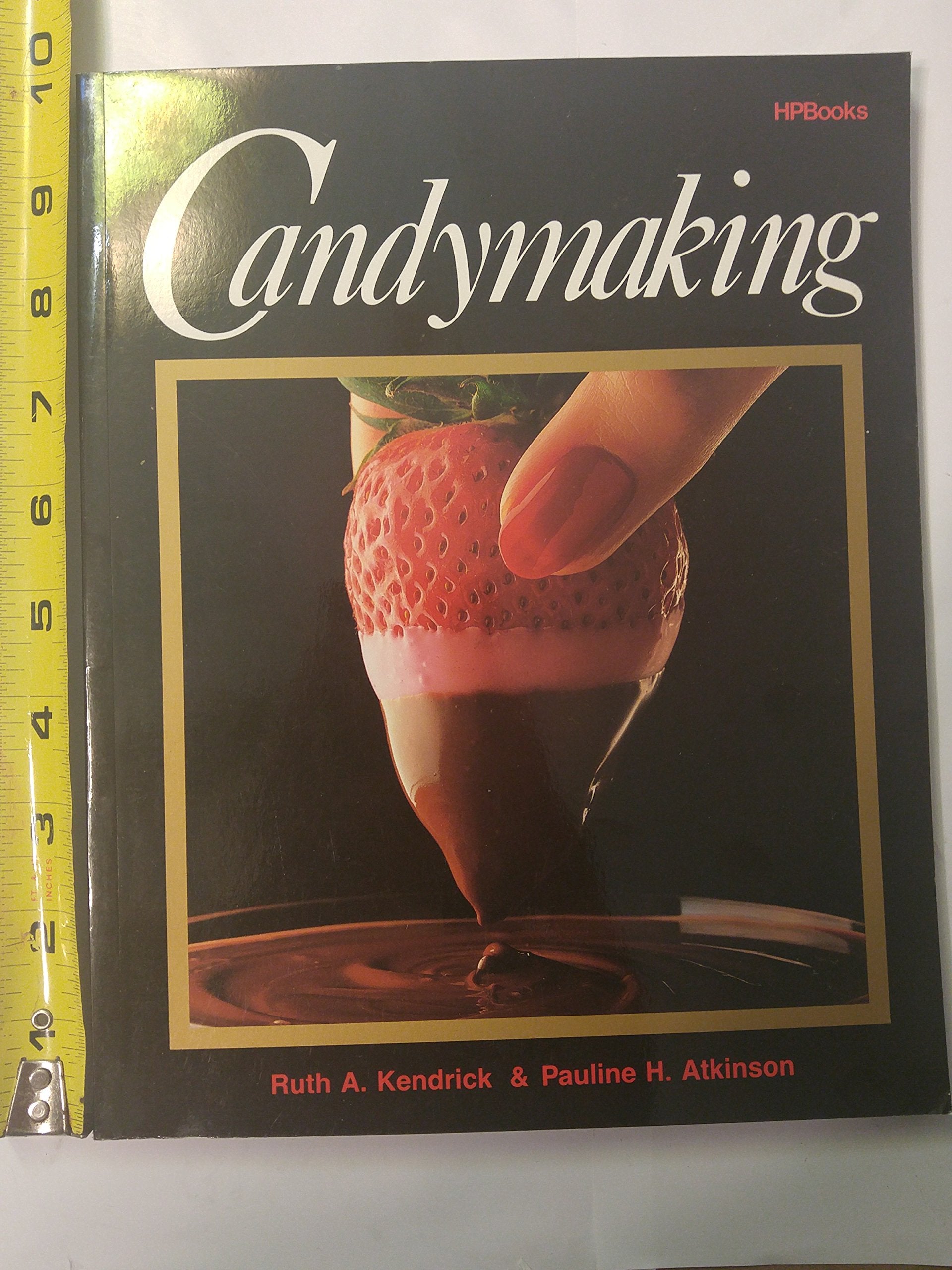
Title
Candymaking,New
Sold by Ergodebooks, an authorized reseller.
Returns accepted within 30 days | support@ergodebooks.com
Shipping Information
- Free Standard Shipping — United States only
- Processing Time: 3–5 business days
- Estimated Delivery: 6–10 business days after dispatch
- Double-boxed, fully insured & discreetly packaged
- Tracking number sent via email once dispatched
Returns & Refund
Returns accepted within 30 days of delivery.
Damaged or Defective Item
Free return shipping + replacement or full refund
Wrong Item Received
Free return shipping + replacement or full refund
Change of Mind
Return shipping at customer's expense · 25% restocking fee applies
Payment Option

Demonstrates basic candy making techniques and shares recipes for fondants, truffles, fudges, caramels, brittles, hard candies, nougats, divinity, taffies, buttermints, and molded candies
⚠️ WARNING (California Proposition 65):
This product may contain chemicals known to the State of California to cause cancer, birth defects, or other reproductive harm.
For more information, please visit www.P65Warnings.ca.gov.
- Q: How many pages does the book Candymaking have? A: This book contains one hundred sixty pages. It provides comprehensive information on candy making techniques and recipes.
- Q: What is the binding type of Candymaking? A: The book is paperback bound. This makes it lightweight and easy to handle while reading or following recipes.
- Q: Who is the author of Candymaking? A: The author is Ruth A. Kendrick. She shares her expertise on various candy making methods and recipes.
- Q: What are the dimensions of Candymaking? A: The book measures seven point eight four inches in length, zero point three five inches in width, and nine point eight inches in height. These dimensions make it a convenient size for home kitchens.
- Q: What candy recipes are included in this book? A: Candymaking features recipes for fondants, truffles, fudges, caramels, brittles, hard candies, nougats, divinity, taffies, buttermints, and molded candies. It covers a wide range of candy types for various tastes.
- Q: Is Candymaking suitable for beginners? A: Yes, it is suitable for beginners. The book demonstrates basic candy making techniques, making it accessible for those new to the craft.
- Q: How do I use the recipes in Candymaking? A: You can follow the step-by-step instructions provided for each recipe. Each recipe is designed to guide you through the candy making process from start to finish.
- Q: Are the candies in Candymaking safe for kids? A: Yes, the candies can be made safe for kids. However, adult supervision is recommended during the cooking process, especially with hot sugar.
- Q: Can I find recipes for sugar-free candies in Candymaking? A: No, this book does not specifically include sugar-free candy recipes. The focus is on traditional candy making techniques using sugar.
- Q: What is the best way to store candies made from Candymaking? A: Candies should be stored in a cool, dry place in an airtight container. This helps maintain freshness and prevents them from becoming sticky.
- Q: How do I clean my workspace after making candy? A: You should clean your workspace with warm, soapy water. Sugar can be sticky, so it’s important to remove any residue promptly.
- Q: Can I use alternative ingredients in the recipes? A: Yes, you can substitute ingredients as needed. However, be mindful that this may alter the texture and flavor of the final product.
- Q: What tools do I need for candy making as per Candymaking? A: You will need a candy thermometer, mixing bowls, and baking sheets. These tools are essential for measuring temperatures and shaping your candies.
- Q: Is there any specific safety advice in Candymaking? A: Yes, the book advises caution when working with hot sugar. Always use proper tools and keep children away from hot surfaces.
- Q: What types of candies are the hardest to make in Candymaking? A: Candies like nougats and brittles can be challenging due to their specific temperature requirements and techniques. Beginners may want to start with simpler recipes.