
Title
Cannibals and Philosophers: Bodies of Enlightenment,Used
Sold by Ergodebooks, an authorized reseller.
Returns accepted within 30 days | support@ergodebooks.com
Shipping Information
- Free Standard Shipping — United States only
- Processing Time: 3–5 business days
- Estimated Delivery: 6–10 business days after dispatch
- Double-boxed, fully insured & discreetly packaged
- Tracking number sent via email once dispatched
Returns & Refund
Returns accepted within 30 days of delivery.
Damaged or Defective Item
Free return shipping + replacement or full refund
Wrong Item Received
Free return shipping + replacement or full refund
Change of Mind
Return shipping at customer's expense · 25% restocking fee applies
Payment Option

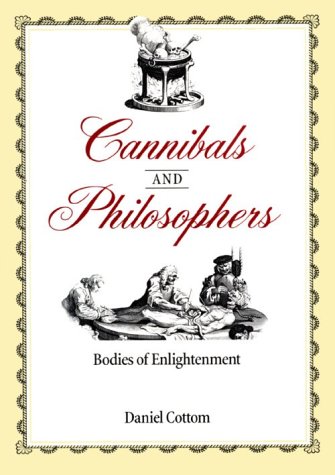
Gnawing at the heart of the age of Enlightenment was the selfcontradicting, selfabhorring, selfconsuming figure of the cannibal: the unavoidable figure of radical metamorphosis. In the image of cannibalism, Western selfregard and its vision of otherness in nature, culture, and spirit came to a momentous crisis.'from Cannibals and PhilosophersTaking us to the heart of the Enlightenment via the stomach, Daniel Cottom argues that the period was from the beginning obsessed with guts and disgust as much as it was with mind and reason. In Cannibals and Philosophers Cottom traces how human flesh became a new thing in the Enlightenmenta flesh of sensibility, a surface of stimuli that at once inspired and disturbed artists and philosophers. Examining paintings, digestion, machines, spa waters, and kissing as cultural forms, and interweaving these examinations with new readings of literary and philosophical texts, Cottom locates a new focus on the inner workings of the body, a 'visceral turn' in Enlightenment thinking. The most radical image of this visceral turn appeared in the figure of the cannibala figure who, in popular imagination, bore a striking resemblance to the image of the philosopher.Cottom looks into the anatomy of the age by way of the dissected rayfish in Jean Simon Chardin's famous still life, The Ray, and the mechanical guts of Jacques de Vaucanson's duck, a robotic sculpture that appeared to both eat and digest food. He then provides a detailed analysis of the spa at Bath during the time of Beau Nash, when 'taking the waters' engaged complex scientific, aesthetic, and social issues. Examining depictions of cannibalism from Montaigne to the Marquis de Sade to Hegel, with special attention to the voyages of Captain James Cook and Defoe's Robinson Crusoe, Cottom shows how the cannibal came to be merchandised as an object of consumptionand how the philosopher came to be the cannibal's apologist. The book concludes with an analysis of the kiss, particularly Thomas De Quincey's portrayal of the deathbed kisses of Immanuel Kant and Admiral Horatio Nelson.Focusing on literature, art, philosophy, science, technology, anthropology, popular culture, and social history, Cottom provides a broad context to his eclectic subjects. Cannibals and Philosophers is a wideranging and lively work of cultural studies that complicates the traditional view of the Enlightenment.
⚠️ WARNING (California Proposition 65):
This product may contain chemicals known to the State of California to cause cancer, birth defects, or other reproductive harm.
For more information, please visit www.P65Warnings.ca.gov.
- Q: What is the main theme of 'Cannibals and Philosophers: Bodies of Enlightenment'? A: The main theme explores the self-contradicting figure of the cannibal during the Enlightenment, examining how this figure reflects Western self-regard and its vision of otherness in various contexts.
- Q: Who is the author of the book and what are his credentials? A: The author is Daniel Cottom, PhD, a professor known for his expertise in cultural studies and criticism.
- Q: What kind of condition is the used book in? A: The used book is in good condition, indicating that it has been previously owned but remains readable and presentable.
- Q: How many pages does 'Cannibals and Philosophers: Bodies of Enlightenment' have? A: The book has a total of 296 pages.
- Q: What is the publication date of this book? A: The book was published on April 17, 2001.
- Q: What topics does the book cover? A: The book covers a wide range of topics including literature, art, philosophy, science, technology, anthropology, and social history, focusing on the cultural implications of cannibalism and Enlightenment thought.
- Q: Is this book suitable for academic study? A: Yes, 'Cannibals and Philosophers' is suitable for academic study as it provides insightful analysis and cultural context relevant to Enlightenment studies and criticism.
- Q: What is the binding type of the book? A: The book is bound in hardcover, which generally offers better durability compared to paperback editions.
- Q: Does the book include illustrations or images? A: While the book's description does not specify, it discusses various cultural forms and artworks, suggesting it may include illustrations to support the text.
- Q: What genre does this book fall under? A: The book falls under the genre of Criticism & Theory, focusing on critical analysis of cultural and philosophical themes.