
Title
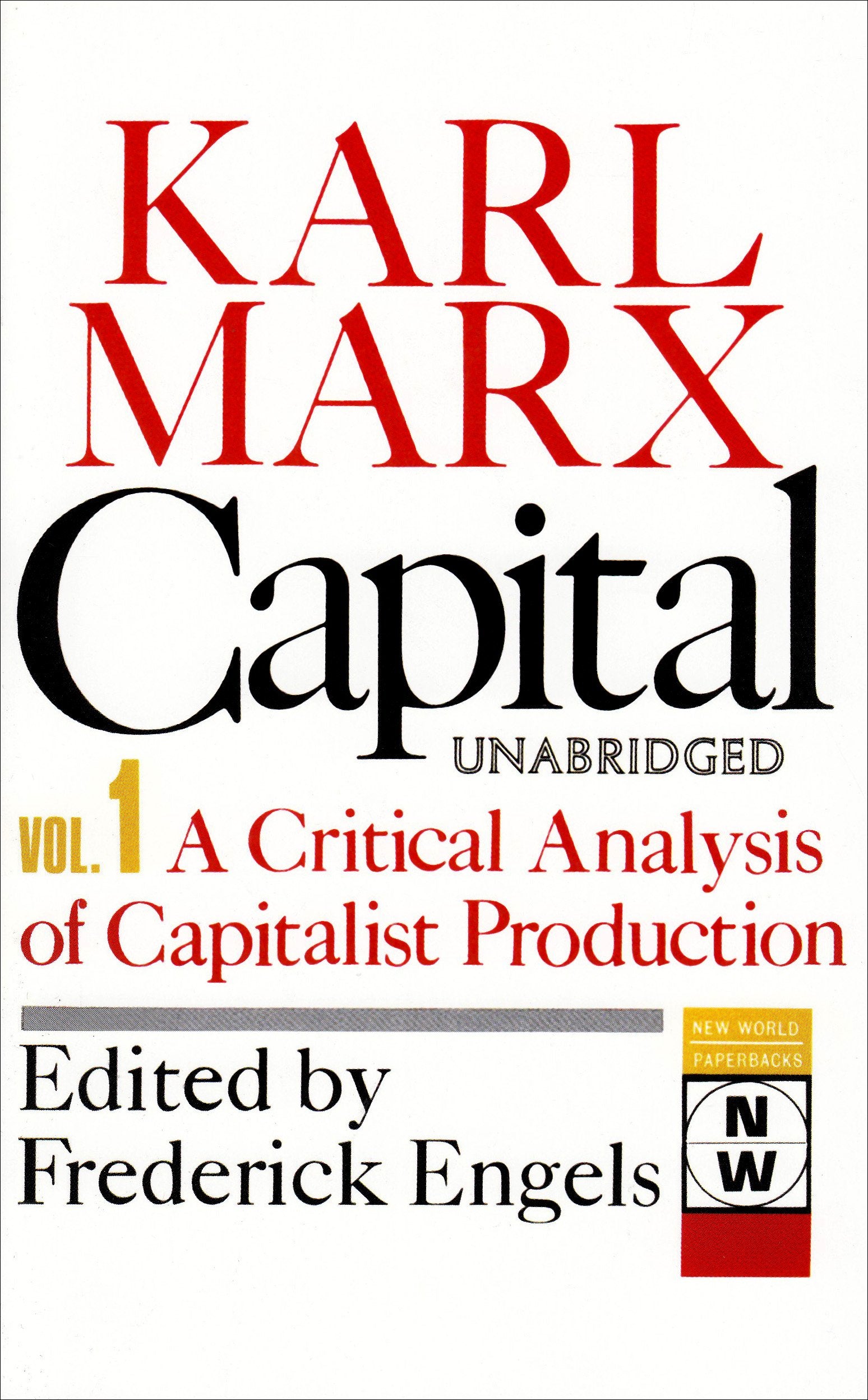
Capital: A Critical Analysis of Capitalist Production: The Process of Capitalist Production (New World Paperbacks),New
Sold by Ergodebooks, an authorized reseller.
Returns accepted within 30 days | support@ergodebooks.com
Shipping Information
- Free Standard Shipping — United States only
- Processing Time: 3–5 business days
- Estimated Delivery: 6–10 business days after dispatch
- Double-boxed, fully insured & discreetly packaged
- Tracking number sent via email once dispatched
Returns & Refund
Returns accepted within 30 days of delivery.
Damaged or Defective Item
Free return shipping + replacement or full refund
Wrong Item Received
Free return shipping + replacement or full refund
Change of Mind
Return shipping at customer's expense · 25% restocking fee applies
Payment Option

Capital. Volume I: The Process of Production of Capital by Karl Marx.In Volume I, the only part of Marx's multivolume Capital: Critique of Political Economy to be published during his lifetime, Marx elucidates the production of capital. This volume is, possibly, the most important book in workingclass history and is a major work of modern economic thought. 864 pages.Table of ContentsContentsPart OneCommodities and MoneyChapter 1: The CommodityChapter 2: ExchangChapter 3: Money, or the Circulation of CommoditiesPart TwoThe Transformation of Money into CapitalChapter 4: The General Formula for CapitalChapter 5: Contridictions in the General Formula of CapitalChapter 6: The Buying and Selling of LabourPowerPart ThreeThe Production of Absolute SurplusValueChapter 7: The Labour Process and the Process of Producing Surplus ValueChapter8: Constant Capital and Variable CapitalChapter 9: The Rate of SurplusValueChapter10: The WorkingDayChapter 11: Rate and Mass of SurplusValuePart FourThe Production of Relative SurplusValueChapter 12: The Concept of Relative SurplusValueChapter 13: CooperationChapter 14: The Division of Labour and ManufactureChapter 15: Machinery and LargeScale IndustryPart FiveThe Production of Absolute and Relative SurplusValueChapter 16: The Rise of Surplus ValueChapter 17: Changes of Magnitude in the price of LaborPower and in SurplusValuePart SixWagesChapter 19: The Transformation of the Value (and Respective Price) of LabourPower into WagesChapter 20: TimeWagesChapter 21: PieceWagesChapter 22: National Differences of WagesPart Seven:The Process of Accumulation of CapitalChapter 23: Simple ReproductionChapter 24: The Transformation of SurplusValue into CapitalChapter 25, Sections 3 and 4: The General Law of Capitalist AccumulationPart EightPrimitive AccumulationChapter 26: The Secret of Primitive AccumulationChapter 27: Expropriation of the Agricultural Population From the LandChapter 28: Bloody Legislation Against the Expropriated, from the End of the 15th Century. Forcing Down of Wages by Acts of ParliamentChapter 29: Genesis of the Capitalist FarmerChapter 30: Reaction of the Agricultural Revolution on Industry. Creation of the HomeMarket for Industrial CapitalChapter 31: The Genesis of the Industrial CapitalistChapter 32: Historical Tendency of Capitalist AccumulationChapter 33: The Modern Theory of Colonisation
⚠️ WARNING (California Proposition 65):
This product may contain chemicals known to the State of California to cause cancer, birth defects, or other reproductive harm.
For more information, please visit www.P65Warnings.ca.gov.
- Q: What is the main topic of 'Capital: A Critical Analysis of Capitalist Production'? A: The book primarily discusses the process of capitalist production, analyzing the nature of commodities, money, and labor within a capitalist system.
- Q: Who is the author of this book? A: The author is Karl Marx, a prominent philosopher, economist, and social theorist known for his critique of political economy.
- Q: How many pages does this book contain? A: The book contains a total of 864 pages.
- Q: What is the publication date of this edition? A: This edition was published on January 1, 1967.
- Q: Is this book available in a hardcover format? A: This particular edition is a paperback format; other editions may be available in hardcover.
- Q: What condition is the book in? A: The book is listed as 'Used Book in Good Condition', meaning it may show some signs of wear but is still readable.
- Q: What are the key themes explored in this book? A: Key themes include the production of capital, the transformation of money into capital, and the concept of surplus-value, among others.
- Q: Is this book suitable for beginners in economic theory? A: While it is a foundational text in economic theory, readers may benefit from some prior knowledge of Marxist concepts for a better understanding.
- Q: What are some notable chapters in this book? A: Notable chapters include 'The Commodity', 'The General Formula for Capital', and 'The Process of Accumulation of Capital'.
- Q: Can this book be used for academic purposes? A: Yes, it is widely used in academic settings for courses related to economics, political science, and social theory.