If you have any questions, you are always welcome to contact us. We'll get back to you as soon as possible, withing 24 hours on weekdays.
Customer service
All questions about your order, return and delivery must be sent to our customer service team by e-mail at yourstore@yourdomain.com
Sale & Press
If you are interested in selling our products, need more information about our brand or wish to make a collaboration, please contact us at press@yourdomain.com
Help
If you have any questions, you are always welcome to contact us. We'll get back to you as soon as possible, withing 24 hours on weekdays.
Customer service
All questions about your order, return and delivery must be sent to our customer service team by e-mail at yourstore@yourdomain.com
Sale & Press
If you are interested in selling our products, need more information about our brand or wish to make a collaboration, please contact us at press@yourdomain.com
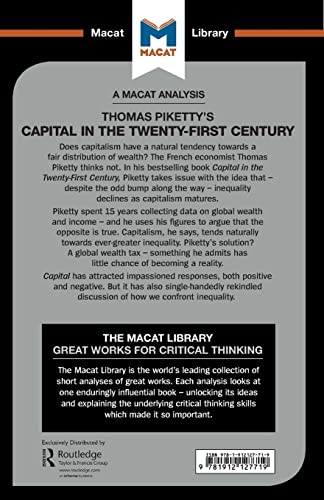
Thomas Piketty is a fine example of an evaluative thinker. In Capital in the TwentyFirst Century, he not only provides detailed and sustained explanations of why he sees existing arguments relating to income and wealth distribution as flawed, but also gives us very detailed evaluations of the significance of a vast amount of data explaining why incomes is distributed in the ways it is.As Piketty stresses, the distribution question deserves to be studied in a systematic and methodical fashion. This stress on evaluating the significance of data leads him to focus on the central evaluative questions, and look in turn at the acceptability, relevance, and adequacy of existing justifications for the unequal distribution of wealth. In doing so, Piketty applies his understanding of the data to answering the deeply important question of what political structures and what policies are necessary to move us towards a more equal society.Pikettys evaluation of the data supports his argument that inequality cannot be depended on to reduce over time: indeed, without government intervention, it is highly likely to increase. In addition, he evaluates international data to argue that poor countries do not necessarily become less poor as a result of foreign investment. This strong emphasis on the interrogation of data, rather than building mathematical models that are divorced from data, is a defining feature of Pikettys work.
⚠️ WARNING (California Proposition 65):
This product may contain chemicals known to the State of California to cause cancer,
birth defects, or other reproductive harm.
For MAP (Minimum Advertised Price) violations and Intellectual Property (IP) or Trademark concerns, please contact:
support@ergodebooks.com
⚠️ California Proposition 65 Warning: Some products sold on this website may expose you to chemicals known to the State of California to cause cancer, birth defects, or other reproductive harm. For more information, visit www.P65Warnings.ca.gov.