
Title
Capitalism V. Democracy: Money In Politics And The Free Market Constitution,Used
Sold by Ergodebooks, an authorized reseller.
Returns accepted within 30 days | support@ergodebooks.com
Shipping Information
- Free Standard Shipping — United States only
- Processing Time: 3–5 business days
- Estimated Delivery: 6–10 business days after dispatch
- Double-boxed, fully insured & discreetly packaged
- Tracking number sent via email once dispatched
Returns & Refund
Returns accepted within 30 days of delivery.
Damaged or Defective Item
Free return shipping + replacement or full refund
Wrong Item Received
Free return shipping + replacement or full refund
Change of Mind
Return shipping at customer's expense · 25% restocking fee applies
Payment Option

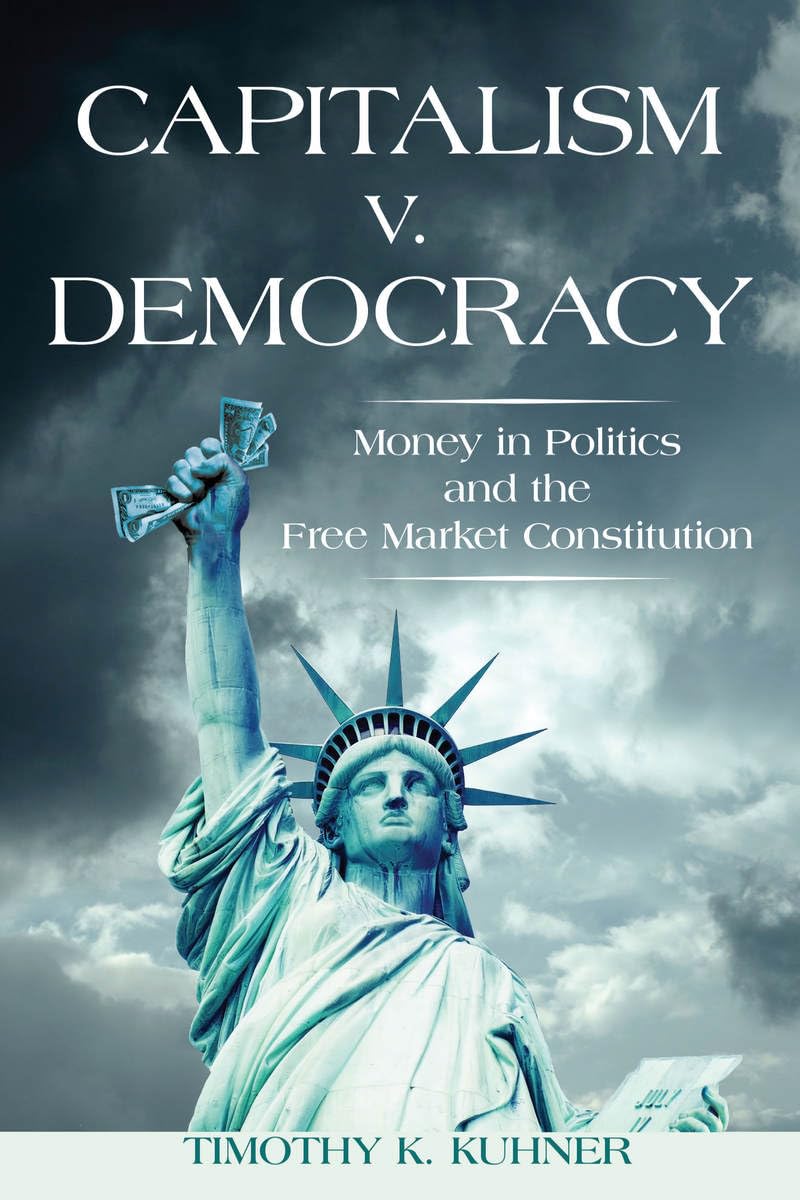
As of the latest national elections, it costs approximately $1 billion to become president, $10 million to become a Senator, and $1 million to become a Member of the House. Highpriced campaigns, an elite class of donors and spenders, superPACs, and increasing corporate political power have become the new normal in American politics. In Capitalism v. Democracy, Timothy Kuhner explains how these conditions have corrupted American democracy, turning it into a system of rule that favors the wealthy and marginalizes ordinary citizens. Kuhner maintains that these conditions have corrupted capitalism as well, routing economic competition through political channels and allowing politically powerful companies to evade market forces. The Supreme Court has brought about both forms of corruption by striking down campaign finance reforms that limited the role of money in politics. Exposing the extreme economic worldview that pollutes constitutional interpretation, Kuhner shows how the Court became the architect of American plutocracy.Capitalism v. Democracy offers the key to understanding why corporations are now citizens, money is political speech, limits on corporate spending are a form of censorship, democracy is a free market, and political equality and democratic integrity are unconstitutional constraints on money in politics. Supreme Court opinions have dictated these conditions in the name of the Constitution, as though the Constitution itself required the privatization of democracy. Kuhner explores the reasons behind these opinions, reveals that they form a blueprint for free market democracy, and demonstrates that this design corrupts both politics and markets. He argues that nothing short of a constitutional amendment can set the necessary boundaries between capitalism and democracy.
⚠️ WARNING (California Proposition 65):
This product may contain chemicals known to the State of California to cause cancer, birth defects, or other reproductive harm.
For more information, please visit www.P65Warnings.ca.gov.