
Title
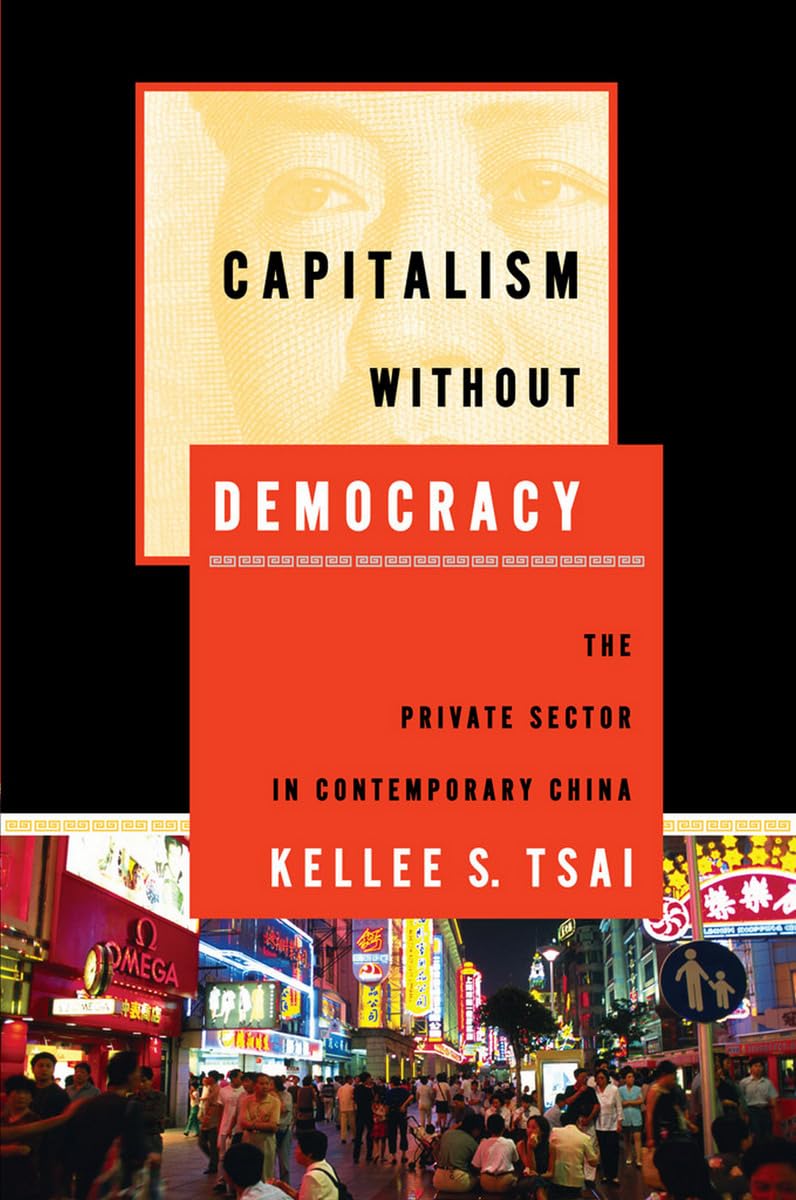
Capitalism without Democracy: The Private Sector in Contemporary China,Used
Sold by Ergodebooks, an authorized reseller.
Returns accepted within 30 days | support@ergodebooks.com
Shipping Information
- Free Standard Shipping — United States only
- Processing Time: 3–5 business days
- Estimated Delivery: 6–10 business days after dispatch
- Double-boxed, fully insured & discreetly packaged
- Tracking number sent via email once dispatched
Returns & Refund
Returns accepted within 30 days of delivery.
Damaged or Defective Item
Free return shipping + replacement or full refund
Wrong Item Received
Free return shipping + replacement or full refund
Change of Mind
Return shipping at customer's expense · 25% restocking fee applies
Payment Option

Over the past three decades, China has undergone a historic transformation. Once illegal, its private business sector now comprises 30 million businesses employing more than 200 million people and accounting for half of China's Gross Domestic Product. Yet despite the optimistic predictions of political observers and global business leaders, the triumph of capitalism has not led to substantial democratic reforms.In Capitalism without Democracy, Kellee S. Tsai focuses on the activities and aspirations of the private entrepreneurs who are driving China's economic growth. The famous images from 1989 of China's new capitalists supporting the students in Tiananmen Square are, Tsai finds, outdated and misleading. Chinese entrepreneurs are not agitating for democracy. Most are working eighteenhour days to stay in business, while others are saving for their one child's education or planning to leave the country. Many are Communist Party members."Remarkably," Tsai writes, "most entrepreneurs feel that the system generally works for them." She regards the quotidian activities of Chinese entrepreneurs as subtler and possibly more effective than voting, lobbying, and protesting in the streets. Indeed, major reforms in China's formal institutions have enhanced the private sector's legitimacy and security in the absence of mobilization by business owners. In discreet collaboration with local officials, entrepreneurs have created a range of adaptive informal institutions, which in turn, have fundamentally altered China's political and regulatory landscape.Based on years of research, hundreds of field interviews, and a sweeping nationwide survey of private entrepreneurs funded by the National Science Foundation, Capitalism without Democracy explodes the conventional wisdom about the relationship between economic liberalism and political freedom.
⚠️ WARNING (California Proposition 65):
This product may contain chemicals known to the State of California to cause cancer, birth defects, or other reproductive harm.
For more information, please visit www.P65Warnings.ca.gov.