If you have any questions, you are always welcome to contact us. We'll get back to you as soon as possible, withing 24 hours on weekdays.
Customer service
All questions about your order, return and delivery must be sent to our customer service team by e-mail at yourstore@yourdomain.com
Sale & Press
If you are interested in selling our products, need more information about our brand or wish to make a collaboration, please contact us at press@yourdomain.com
Help
If you have any questions, you are always welcome to contact us. We'll get back to you as soon as possible, withing 24 hours on weekdays.
Customer service
All questions about your order, return and delivery must be sent to our customer service team by e-mail at yourstore@yourdomain.com
Sale & Press
If you are interested in selling our products, need more information about our brand or wish to make a collaboration, please contact us at press@yourdomain.com
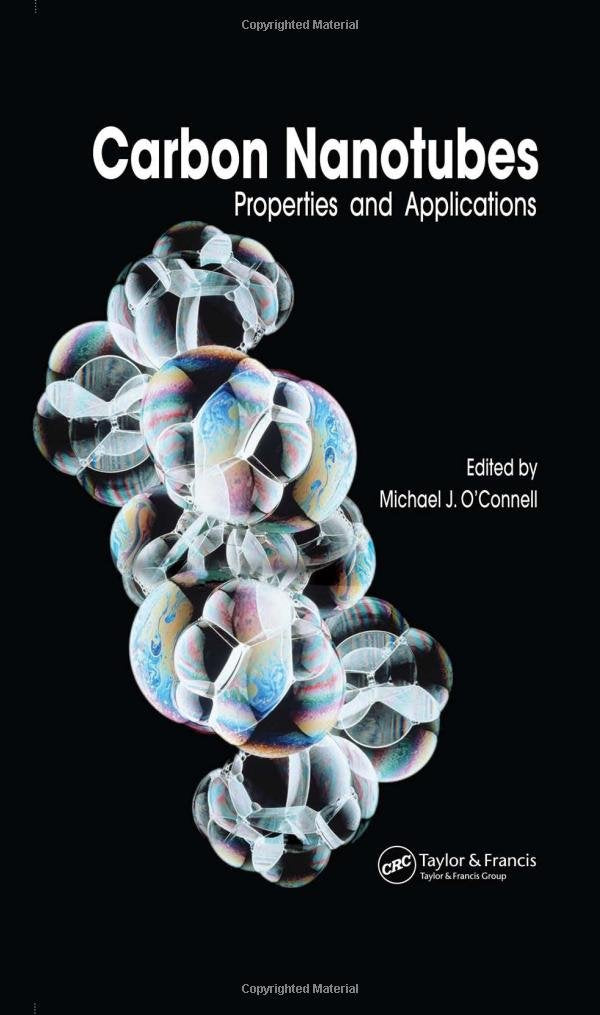
Since their discovery more than a decade ago, carbon nanotubes (CNTs) have held scientists and engineers in captive fascination, seated on the verge of enormous breakthroughs in areas such as medicine, electronics, and materials science, to name but a few. Taking a broad look at CNTs and the tools used to study them, Carbon Nanotubes: Properties and Applications comprises the efforts of leading nanotube researchers led by Michael OConnell, protg of the late father of nanotechnology, Richard Smalley. Each chapter is a selfcontained treatise on various aspects of CNT synthesis, characterization, modification, and applications.The book opens with a general introduction to the basic characteristics and the history of CNTs, followed by discussions on synthesis methods and the growth of peapod structures. Coverage then moves to electronic properties and band structures of singlewall nanotubes (SWNTs), magnetic properties, Raman spectroscopy of electronic and chemical behavior, and electromechanical properties and applications in NEMS (nanoelectromechanical systems). Turning to applications, the final sections of the book explore mechanical properties of SWNTs spun into fibers, sidewall functionalization in composites, and using SWNTs as tips for scanning probe microscopes.Taking a fresh look at this burgeoning field, Carbon Nanotubes: Properties and Applications points the way toward making CNTs commercially viable.
⚠️ WARNING (California Proposition 65):
This product may contain chemicals known to the State of California to cause cancer,
birth defects, or other reproductive harm.
For MAP (Minimum Advertised Price) violations and Intellectual Property (IP) or Trademark concerns, please contact:
support@ergodebooks.com
⚠️ California Proposition 65 Warning: Some products sold on this website may expose you to chemicals known to the State of California to cause cancer, birth defects, or other reproductive harm. For more information, visit www.P65Warnings.ca.gov.