
Title
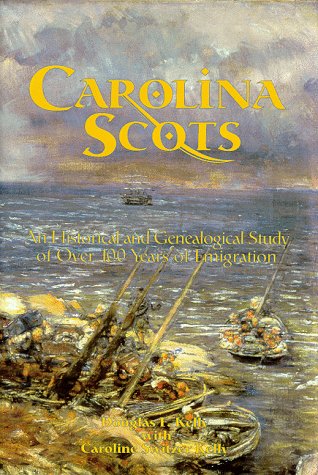
Carolina Scots, An Historical and Genealogical Study of Over 100 Years of Emigration,Used
Sold by Ergodebooks, an authorized reseller.
Returns accepted within 30 days | support@ergodebooks.com
Shipping Information
- Free Standard Shipping — United States only
- Processing Time: 3–5 business days
- Estimated Delivery: 6–10 business days after dispatch
- Double-boxed, fully insured & discreetly packaged
- Tracking number sent via email once dispatched
Returns & Refund
Returns accepted within 30 days of delivery.
Damaged or Defective Item
Free return shipping + replacement or full refund
Wrong Item Received
Free return shipping + replacement or full refund
Change of Mind
Return shipping at customer's expense · 25% restocking fee applies
Payment Option

Out of his experience of growing up in a typical Scottish family of the upper Cape Fear Valley in Eastern North Carolina in the 1940s and '50s, and of several years of study in Scotland in the '60s and '70s, Douglas Kelly has woven together the story of two cultures: Scottish Highland and Eastern Carolina. He combines colorful strands of cultural, linguistic, educational, political and religious history, with a careful genealogy of the first four or five generations of some sixtyfive different family groups, who emigrated from the Scottish Highlands and Islands to the Cape Fear Valley of North Carolina and the neighboring Pee Dee Valley of South Carolina, from 1739 to the early 1840s. North Carolina is believed to have been the largest Scottish settlement anywhere in the world outside Scotland, and its emigrants have formed the backbone of large sections of both Carolinas for some 250 years. It may become a classic study of one of the original headwaters of Southern culture: Carolina Gaeldom, which sent an overflowing stream of hundreds of thousands of settlers into the Deep South and Southwest throughout the 19th century, thus profoundly shaping this huge region, and playing its part in making America what it is today. It has been hailed as the only major study so far of the early emigrations prior to the Clearances.The story is made more real through over 100 photographs, maps and engravings from the period, chronicling the history of housing among these Scots from castles and huts in 18th century Scotland to still extant log cabins, upcountry mansions, slave quarters and old Presbyterian Churches in both N. and S. Carolina. There is also a unique appendix to Chapter III of Part I on the historic and current status of the Gaelic language in Carolina. (At one time it was the second language of the Cape Fear region). Help is provided throughout the genealogies on how to find more information, including rare and unpublished sources. The complete index lists more than 7,000 different names, in addition to place names and subject matter.
⚠️ WARNING (California Proposition 65):
This product may contain chemicals known to the State of California to cause cancer, birth defects, or other reproductive harm.
For more information, please visit www.P65Warnings.ca.gov.