
Title

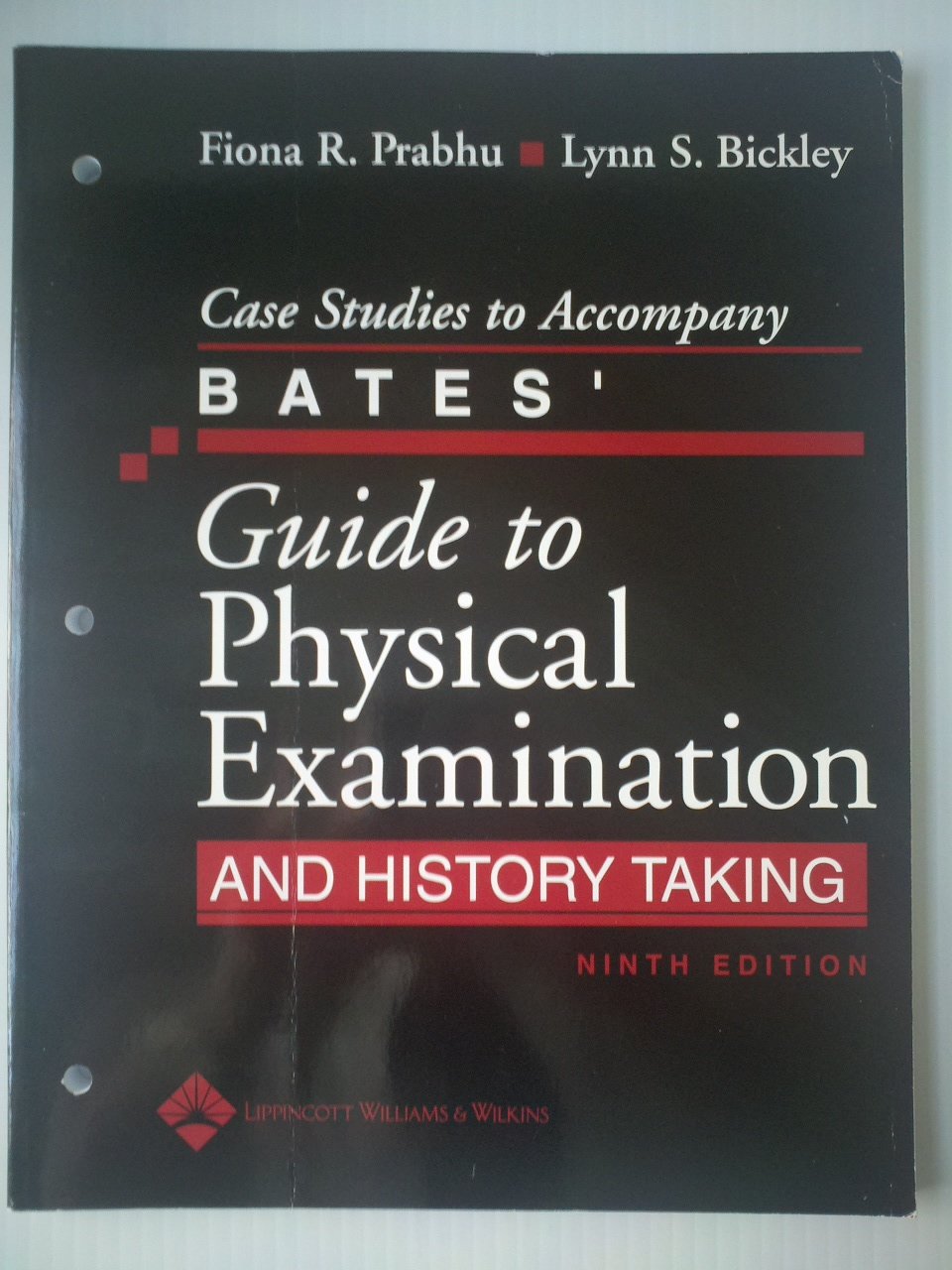
Case Studies to Accompany Bates' Guide to Physical Examination and History Taking,Used
Sold by Ergodebooks, an authorized reseller.
Returns accepted within 30 days | support@ergodebooks.com
Shipping Information
- Free Standard Shipping — United States only
- Processing Time: 3–5 business days
- Estimated Delivery: 6–10 business days after dispatch
- Double-boxed, fully insured & discreetly packaged
- Tracking number sent via email once dispatched
Returns & Refund
Returns accepted within 30 days of delivery.
Damaged or Defective Item
Free return shipping + replacement or full refund
Wrong Item Received
Free return shipping + replacement or full refund
Change of Mind
Return shipping at customer's expense · 25% restocking fee applies
Payment Option

Want to learn real diagnostic skills?Start with real cases!The perfect companion to Bates' Guide to Physical Examination and History Taking , this practical study resource uses actual case vignettes to help you enhance your physical examination, diagnostic, and critical thinking skills.Following the structure of the parent textbook, most chapters feature one or more case vignettes, providing a chief complaint and a brief medical history. Based on this information, you'll then select the appropriate physical exam techniques, integrate informatin from the patient's history and physical exam, and formulate hypotheses leading to a differential diagnosis.Enchance your clinical judgment with these features: Primary care focus addresses a range of common complaintsincluding unexplained weight loss, earache, stomach pain, persistent cough, breast lumps, constipation, low back pain, and dizziness. Lists of physical findings for each case help you understand the importance of proper documentation. Multiple choice, matching, and labeling activities help to reaffirm your understanding. Appendix with answers lets you check the accuracy of your responses and identify areas in need of further study. Let this handson resource help you apply essential principles to practice, enhance physical examination skills, improve clinical thinking, and sharpen diagnostic accuracy.
⚠️ WARNING (California Proposition 65):
This product may contain chemicals known to the State of California to cause cancer, birth defects, or other reproductive harm.
For more information, please visit www.P65Warnings.ca.gov.
- Q: What is the main purpose of the book 'Case Studies to Accompany Bates' Guide to Physical Examination and History Taking'? A: The book is designed to enhance diagnostic skills by using real case vignettes that help improve physical examination, critical thinking, and clinical judgment.
- Q: How many pages does this book contain? A: The book contains 144 pages, providing a concise yet comprehensive resource for learning.
- Q: Who is the author of this book? A: The author of the book is Fiona R. Prabhu MD, who brings expertise in the field of physical examination and history taking.
- Q: Is this book suitable for beginners in medical studies? A: Yes, the book is suitable for beginners as it uses real cases to guide learners through essential examination techniques and clinical reasoning.
- Q: What types of activities are included in the book to reinforce learning? A: The book includes multiple choice, matching, and labeling activities that help reinforce understanding and application of physical examination techniques.
- Q: Does the book provide answers to the activities for self-assessment? A: Yes, the book includes an appendix with answers that allow readers to check their responses and identify areas for further study.
- Q: What is the binding type of this book? A: The book is available in paperback binding, making it a durable and portable study resource.
- Q: When was this book published? A: The book was published on November 16, 2005.
- Q: What is the focus of the case studies included in the book? A: The case studies focus on primary care and address a range of common complaints such as unexplained weight loss, earache, and persistent cough.
- Q: How does this book help enhance clinical judgment? A: The book provides practical scenarios that require the integration of patient history, physical exam findings, and diagnostic reasoning to formulate hypotheses.