
Title
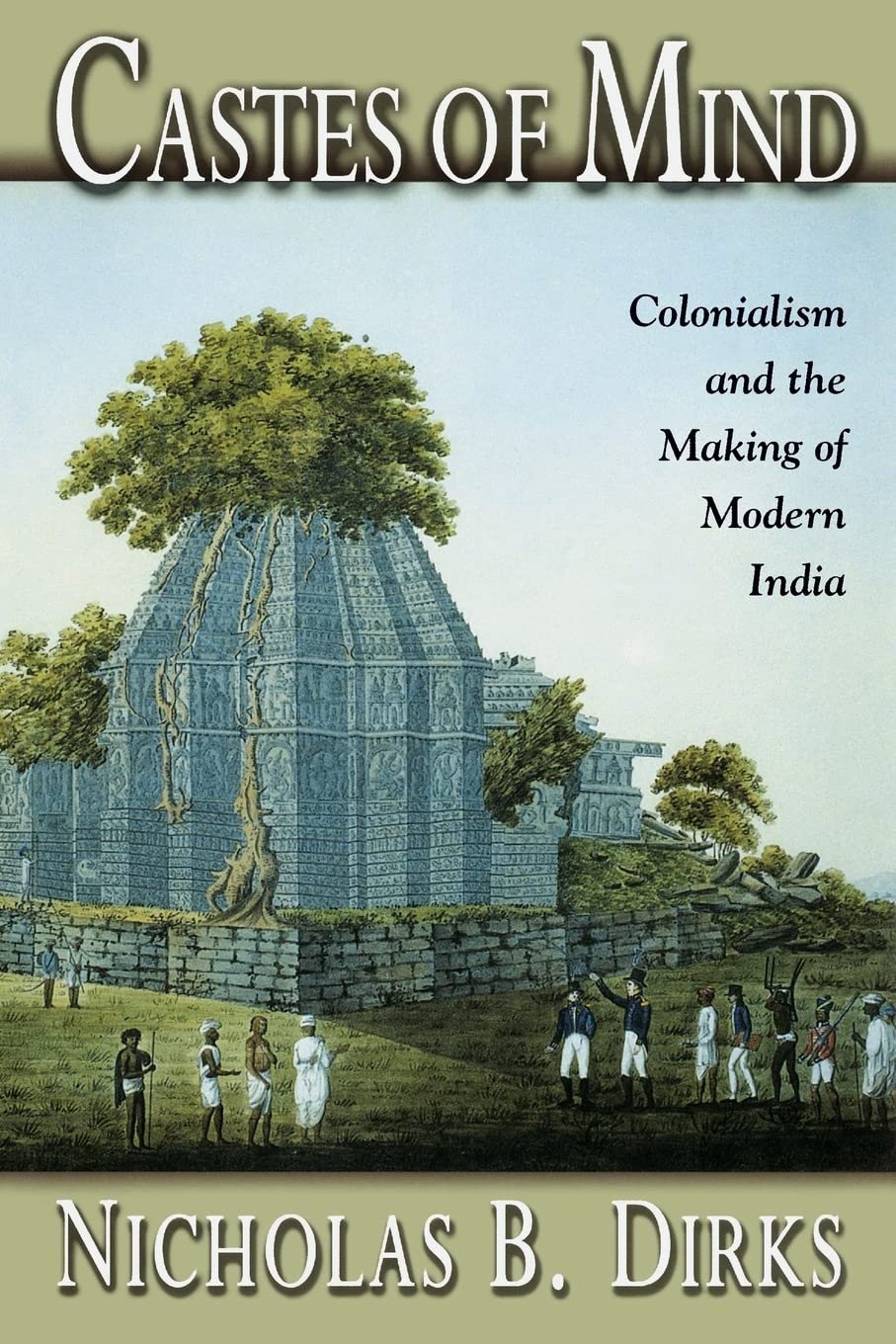
Castes of Mind: Colonialism and the Making of Modern India.,New
Sold by Ergodebooks, an authorized reseller.
Returns accepted within 30 days | support@ergodebooks.com
Shipping Information
- Free Standard Shipping — United States only
- Processing Time: 3–5 business days
- Estimated Delivery: 6–10 business days after dispatch
- Double-boxed, fully insured & discreetly packaged
- Tracking number sent via email once dispatched
Returns & Refund
Returns accepted within 30 days of delivery.
Damaged or Defective Item
Free return shipping + replacement or full refund
Wrong Item Received
Free return shipping + replacement or full refund
Change of Mind
Return shipping at customer's expense · 25% restocking fee applies
Payment Option

When thinking of India, it is hard not to think of caste. In academic and common parlance alike, caste has become a central symbol for India, marking it as fundamentally different from other places while expressing its essence. Nicholas Dirks argues that caste is, in fact, neither an unchanged survival of ancient India nor a single system that reflects a core cultural value. Rather than a basic expression of Indian tradition, caste is a modern phenomenonthe product of a concrete historical encounter between India and British colonial rule. Dirks does not contend that caste was invented by the British. But under British domination caste did become a single term capable of naming and above all subsuming India's diverse forms of social identity and organization.Dirks traces the career of caste from the medieval kingdoms of southern India to the textual traces of early colonial archives; from the commentaries of an eighteenthcentury Jesuit to the enumerative obsessions of the latenineteenthcentury census; from the ethnographic writings of colonial administrators to those of twentiethcentury Indian scholars seeking to rescue ethnography from its colonial legacy. The book also surveys the rise of caste politics in the twentieth century, focusing in particular on the emergence of castebased movements that have threatened nationalist consensus.Castes of Mind is an ambitious book, written by an accomplished scholar with a rare mastery of centuries of Indian history and anthropology. It uses the idea of caste as the basis for a magisterial history of modern India. And in making a powerful case that the colonial past continues to haunt the Indian present, it makes an important contribution to current postcolonial theory and scholarship on contemporary Indian politics.
⚠️ WARNING (California Proposition 65):
This product may contain chemicals known to the State of California to cause cancer, birth defects, or other reproductive harm.
For more information, please visit www.P65Warnings.ca.gov.
- Q: What is the main theme of 'Castes of Mind' by Nicholas Dirks? A: 'Castes of Mind' explores the concept of caste in India, arguing that it is not simply an ancient tradition but a modern phenomenon shaped by British colonial rule.
- Q: Who is the author of 'Castes of Mind'? A: The author of 'Castes of Mind' is Nicholas B. Dirks, a scholar renowned for his expertise in Indian history and anthropology.
- Q: What is the publication date of 'Castes of Mind'? A: 'Castes of Mind' was published on November 1, 2001.
- Q: How many pages does 'Castes of Mind' have? A: 'Castes of Mind' has a total of 328 pages.
- Q: What is the binding type of 'Castes of Mind'? A: 'Castes of Mind' is available in a paperback binding.
- Q: Is 'Castes of Mind' a new or used book? A: 'Castes of Mind' is listed as a new book in good condition.
- Q: What edition of 'Castes of Mind' is available? A: The available edition of 'Castes of Mind' is the 1st Paperback Edition.
- Q: What topics does 'Castes of Mind' cover? A: 'Castes of Mind' covers the historical evolution of caste in India, the impact of British colonial rule, and the rise of caste politics in the twentieth century.
- Q: What makes 'Castes of Mind' significant in postcolonial studies? A: 'Castes of Mind' is significant for its contributions to postcolonial theory, particularly in understanding how colonial history continues to influence contemporary Indian politics.
- Q: Can 'Castes of Mind' be useful for understanding modern Indian politics? A: 'Castes of Mind' provides valuable insights into the historical context of caste and its role in modern Indian politics, making it a useful resource for readers interested in this topic.