
Title

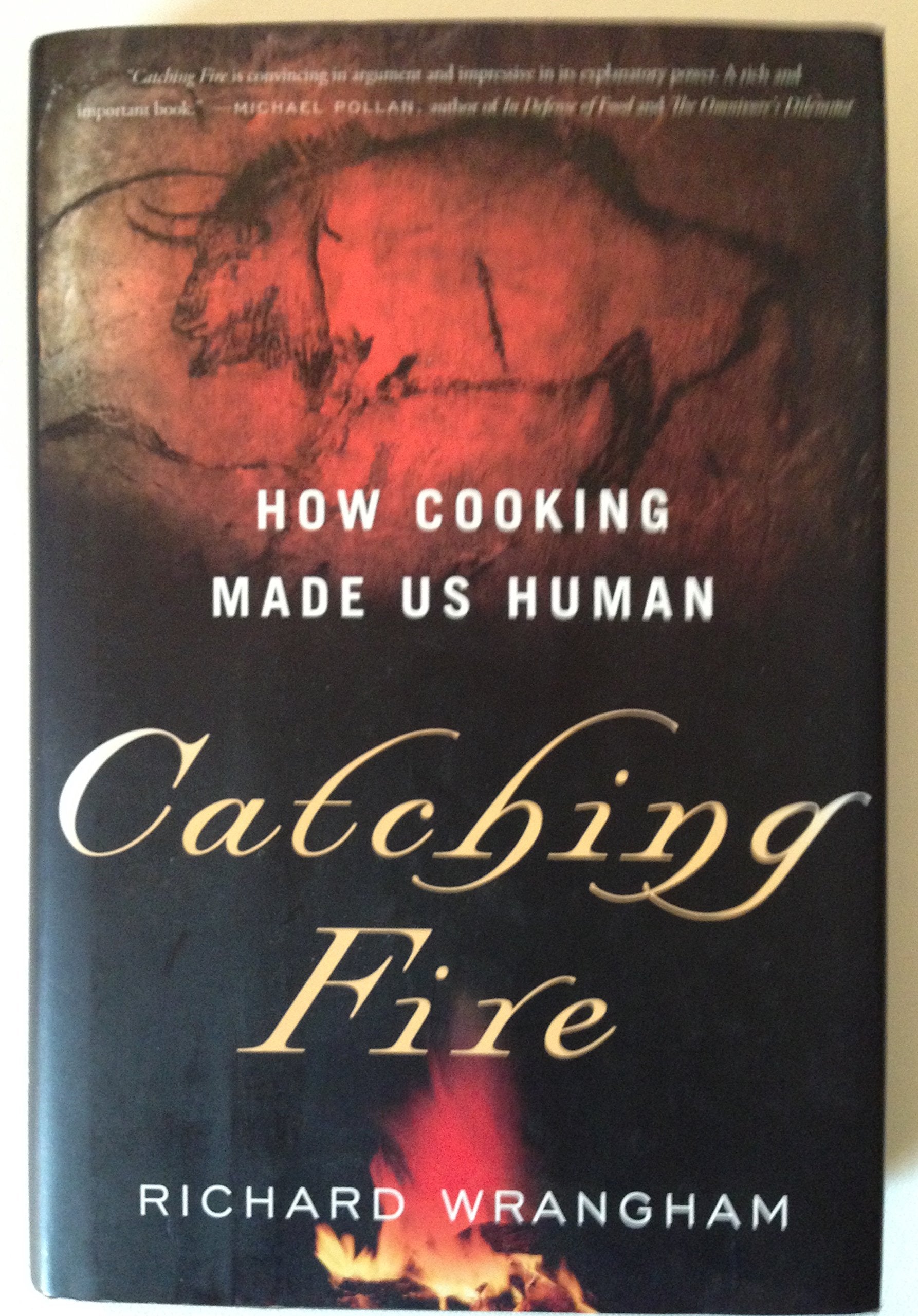
Catching Fire: How Cooking Made Us Human,Used
Sold by Ergodebooks, an authorized reseller.
Returns accepted within 30 days | support@ergodebooks.com
Shipping Information
- Free Standard Shipping — United States only
- Processing Time: 3–5 business days
- Estimated Delivery: 6–10 business days after dispatch
- Double-boxed, fully insured & discreetly packaged
- Tracking number sent via email once dispatched
Returns & Refund
Returns accepted within 30 days of delivery.
Damaged or Defective Item
Free return shipping + replacement or full refund
Wrong Item Received
Free return shipping + replacement or full refund
Change of Mind
Return shipping at customer's expense · 25% restocking fee applies
Payment Option

Ever since Darwin and The Descent of Man, the existence of humans has been attributed to our intelligence and adaptability. But in Catching Fire, renowned primatologist Richard Wrangham presents a startling alternative: our evolutionary success is the result of cooking. In a groundbreaking theory of our origins, Wrangham shows that the shift from raw to cooked foods was the key factor in human evolution. When our ancestors adapted to using fire, humanity began. Once our hominid ancestors began cooking their food, the human digestive tract shrank and the brain grew. Time once spent chewing tough raw food could be sued instead to hunt and to tend camp. Cooking became the basis for pair bonding and marriage, created the household, and even led to a sexual division of labor. Tracing the contemporary implications of our ancestors diets, Catching Fire sheds new light on how we came to be the social, intelligent, and sexual species we are today. A pathbreaking new theory of human evolution, Catching Fire will provoke controversy and fascinate anyone interested in our ancient originsor in our modern eating habits.
⚠️ WARNING (California Proposition 65):
This product may contain chemicals known to the State of California to cause cancer, birth defects, or other reproductive harm.
For more information, please visit www.P65Warnings.ca.gov.
- Q: What is the page count of 'Catching Fire: How Cooking Made Us Human'? A: The book has three hundred twenty pages. It's a hardcover edition published by Basic Books.
- Q: What are the dimensions of this book? A: The book measures five point five one inches in length, one inch in width, and eight point two seven inches in height.
- Q: Who is the author of 'Catching Fire'? A: The author is Richard Wrangham, a renowned primatologist known for his work in anthropology and human evolution.
- Q: How do I read 'Catching Fire'? A: You can read it like any other book. Just open the cover and start from the first page.
- Q: Is this book suitable for young adults? A: Yes, it's suitable for young adults and older readers. The content explores themes of human evolution and cooking.
- Q: What topics are covered in 'Catching Fire'? A: The book discusses human evolution, the significance of cooking, and its impact on social structures in our species.
- Q: How should I store this hardcover book? A: Store it upright on a shelf in a cool, dry place to prevent damage. Avoid direct sunlight to preserve the cover.
- Q: Is there a recommended way to care for this book? A: Keep it clean by dusting it regularly. Avoid bending the spine to maintain its condition.
- Q: Can I return 'Catching Fire' if I don't like it? A: Yes, most retailers offer return policies. Check the specific policy where you purchased the book.
- Q: What if the book arrives damaged? A: Contact the retailer for assistance. They typically have procedures in place for damaged items.
- Q: How does 'Catching Fire' compare to other anthropology books? A: This book offers a unique perspective focusing on cooking's role in human evolution, which sets it apart from other titles.
- Q: Is this book appropriate for someone unfamiliar with anthropology? A: Yes, it's written in an accessible style for general readers, making it suitable for those new to the topic.
- Q: What makes 'Catching Fire' a significant read? A: It's a groundbreaking theory that challenges traditional views on human evolution, making it thought-provoking for all readers.
- Q: Are there any illustrations or photos in the book? A: No, the book primarily focuses on text and theories without illustrations or photos.
- Q: What is the binding type of 'Catching Fire'? A: The book is bound in hardcover, providing durability and a premium feel.
- Q: Who published 'Catching Fire'? A: It was published by Basic Books, known for its scholarly and popular science titles.