
Title


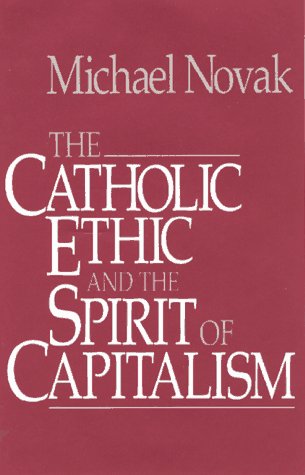
Catholic Ethic And The Spirit Of Capitalism,New
Sold by Ergodebooks, an authorized reseller.
Returns accepted within 30 days | support@ergodebooks.com
Shipping Information
- Free Standard Shipping — United States only
- Processing Time: 3–5 business days
- Estimated Delivery: 6–10 business days after dispatch
- Double-boxed, fully insured & discreetly packaged
- Tracking number sent via email once dispatched
Returns & Refund
Returns accepted within 30 days of delivery.
Damaged or Defective Item
Free return shipping + replacement or full refund
Wrong Item Received
Free return shipping + replacement or full refund
Change of Mind
Return shipping at customer's expense · 25% restocking fee applies
Payment Option

Any Vision Of Capitalisms Future Prospects Must Take Into Account The Powerful Cultural Influence Catholicism Has Exercised Throughout The World. The Church Had For Generations Been Reluctant To Come To Terms With Capitalism, But, As Michael Novak Argues In This Important Book, A Hundredyearlong Debate Within The Church Has Yielded A Richer And More Humane Vision Of Capitalism Than That Described In Max Webers Classic The Protestant Ethic And The Spirit Of Capitalism.Novak Notes That The Influential Catholic Intellectuals Who, Early In This Century Saw Through Webers Eyes An Economic System Marked By Ruthless Individualism And Cold Calculation Had Misread The Reality. For, As History Has Shown, The Lived Experience Of Capitalism Has Depended To A Far Greater Extent Than They Had Realized On A Culture Characterized By Opportunity, Cooperative Effort, Social Initiative, Creativity, And Invention.Drawing On The Major Works Of Modern Papal Thought, Novak Demonstrates How The Catholic Tradition Has Come To Reflect This Richer Interpretation Of Capitalist Culture. In 1891, Pope Leo Xiii Condemned Socialism As A Futile System, But Also Severely Criticized Existing Market Systems. In 1991, John Paul Ii Surprised Many By Conditionally Proposing 'A Business Economy, A Market Economy, Or Simply Free Economy' As A Model For Eastern Europe And The Third World. Novak Notes That As Early As 1963, This Future Pope Had Signaled His Commitment To Liberty. Later, As Archbishop Of Krakow, He Stressed The 'Creative Subjectivity' Of Workers, Made By God In His Image As Cocreators. Now, As Pope, He Calls For Economic Institutions Worthy Of A Creative People, And For Political And Cultural Reforms Attuned To A New 'Human Ecology' Of Family And Work.Novak Offers An Original And Penetrating Conception Of Social Justice, Rescuing It As A Personal Virtue Necessary For Social Activism. Since Pius Xi Made This Idea Canonical In 1931, The Term Has Been Rejected By The Right As An Oxymoron And Misused By The Left As A Party Platform. Novak Applies This Newly Formulated Notion Of Social Justice To The Urgent Worldwide Problems Of Ethnicity, Race, And Poverty. His Fresh Rethinking Of The Catholic Ethic Comes Just In Time To Challenge Citizens In Those Two Large And Historically Catholic Regions, Eastern Europe And Latin America, Now Taking Their First Steps As Market Economies, As Well As Those Of Us In The West Seeking A Realistic Moral Vision.
⚠️ WARNING (California Proposition 65):
This product may contain chemicals known to the State of California to cause cancer, birth defects, or other reproductive harm.
For more information, please visit www.P65Warnings.ca.gov.
- Q: How many pages does this book have? A: This book has three hundred fifty-two pages. It provides an in-depth exploration of Catholicism's influence on capitalism.
- Q: What is the binding type of this book? A: This book is hardcover. The sturdy binding enhances its durability and longevity.
- Q: What are the dimensions of this book? A: The dimensions of this book are six and a half inches in length, one and twenty-six hundredths inches in width, and nine and a half inches in height.
- Q: Who is the author of this book? A: The author of this book is Michael Novak. He is known for his significant contributions to discussions on capitalism and Catholic ethics.
- Q: What category does this book fall under? A: This book falls under the category of Religion and Spirituality. It addresses the intersection of faith and economic systems.
- Q: Is this book suitable for beginners in economics? A: Yes, this book is suitable for beginners in economics. It presents complex ideas in an accessible manner for a general audience.
- Q: What themes are explored in this book? A: This book explores themes of capitalism, social justice, and the ethical implications of economic systems from a Catholic perspective.
- Q: Can this book be used for academic study? A: Yes, this book is appropriate for academic study. It examines historical and contemporary economic thought influenced by Catholic teachings.
- Q: What is the reading level of this book? A: The reading level of this book is suitable for adults and advanced students. Its discussions require critical thinking and some prior knowledge of economics.
- Q: How should I care for this hardcover book? A: To care for this hardcover book, store it upright in a dry place. Avoid exposure to direct sunlight and moisture to prevent damage.
- Q: Is this book appropriate for children? A: No, this book is not appropriate for children. It deals with complex themes that are more suitable for adults.
- Q: What if the book arrives damaged? A: If the book arrives damaged, you can initiate a return or exchange through the retailer's customer service. Ensure to provide evidence of the damage.
- Q: Are there any safety concerns with this book? A: No, there are no safety concerns with this book. It contains no hazardous materials and is safe for general reading.
- Q: What makes this book unique? A: This book is unique in its blend of Catholic teachings with economic theory. It provides a fresh perspective on capitalism's moral dimensions.
- Q: How does this book compare to others in its genre? A: This book compares favorably to others in its genre by offering a comprehensive analysis of capitalism through a Catholic lens, which is often overlooked.
- Q: Can I gift this book to someone interested in religion? A: Yes, this book makes a thoughtful gift for someone interested in religion and economics. It stimulates critical discussions on these important topics.