
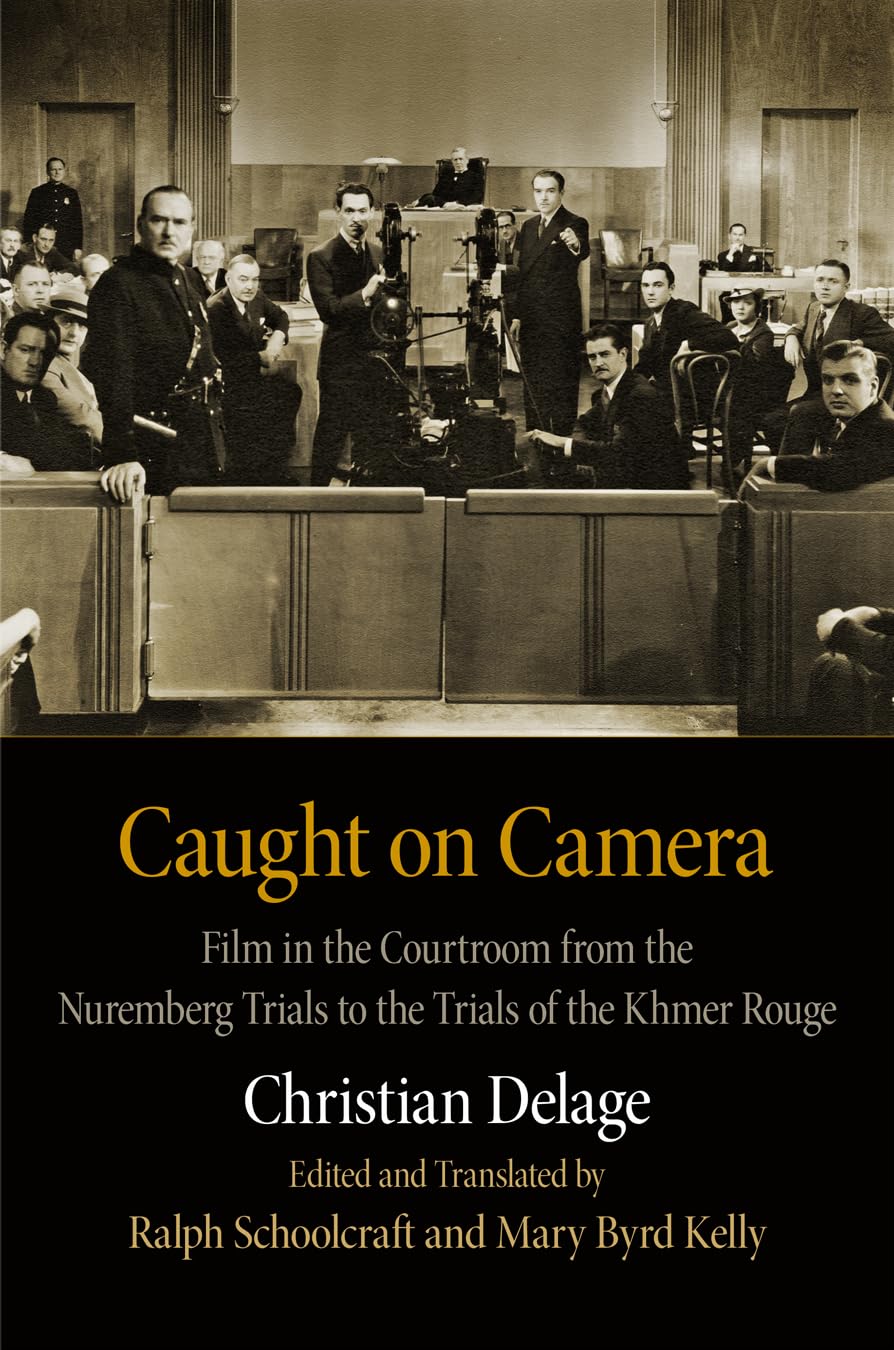
Title
Caught on Camera: Film in the Courtroom from the Nuremberg Trials to the Trials of the Khmer Rouge (Critical Authors and Issues),Used
Sold by Ergodebooks, an authorized reseller.
Returns accepted within 30 days | support@ergodebooks.com
Shipping Information
- Free Standard Shipping — United States only
- Processing Time: 3–5 business days
- Estimated Delivery: 6–10 business days after dispatch
- Double-boxed, fully insured & discreetly packaged
- Tracking number sent via email once dispatched
Returns & Refund
Returns accepted within 30 days of delivery.
Damaged or Defective Item
Free return shipping + replacement or full refund
Wrong Item Received
Free return shipping + replacement or full refund
Change of Mind
Return shipping at customer's expense · 25% restocking fee applies
Payment Option

When the Allied forces of World War II formed an international tribunal to prosecute Nazi war crimes, they introduced two major innovations to court procedure. The prosecution projected film footage and newsreels shot by British, Soviet, and American soldiers as they discovered Nazi camps. These images, presented as human testimony and material evidence, were instrumental in naming and prosecuting war crimes. At the same time, the Nuremberg tribunal was filmed so that the memory of 'the greatest trial in history' would remain strong in future generations. In the decades that followed, the use of film in the courtroom greatly influenced the conduct of the Eichmann trialand subsequently the trials of Klaus Barbie, Paul Touvier, and Maurice Papon in France, as well as the proceedings against Slobodan Miloevi and the Khmer Rouge Kang Kek lew.Combining the practical knowledge of a renowned director with the perspective of a historian and media specialist, Christian Delage examines archival footage from these trials and explores the conditions and consequences of using film for the purposes of justice and memory. Revised and expanded from the original French publication, Caught on Camera retraces the steps by which the United States pioneered jurisprudence that sanctioned the introduction of film as evidence and then established the precedent of preserving an audiovisual record of those proceedings. From the Nuremberg trials to the current Khmer Rouge trials, Delage considers how national attitudes toward the introduction of filmic evidence in court vary widely, and how different countries have sought to use film as a recordkeeping medium. Caught on Camera demonstrates how reproduced images, as evidence, testimony, and archival documentation, have influenced the writing of modern history.
⚠️ WARNING (California Proposition 65):
This product may contain chemicals known to the State of California to cause cancer, birth defects, or other reproductive harm.
For more information, please visit www.P65Warnings.ca.gov.