
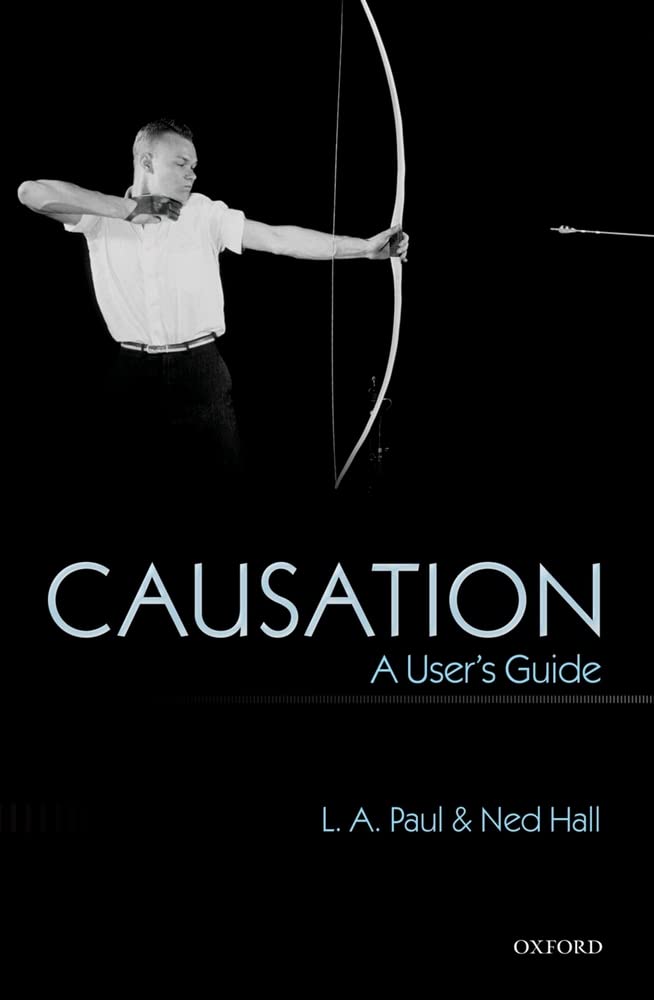
Title
Causation: A User's Guide,Used
Sold by Ergodebooks, an authorized reseller.
Returns accepted within 30 days | support@ergodebooks.com
Shipping Information
- Free Standard Shipping — United States only
- Processing Time: 3–5 business days
- Estimated Delivery: 6–10 business days after dispatch
- Double-boxed, fully insured & discreetly packaged
- Tracking number sent via email once dispatched
Returns & Refund
Returns accepted within 30 days of delivery.
Damaged or Defective Item
Free return shipping + replacement or full refund
Wrong Item Received
Free return shipping + replacement or full refund
Change of Mind
Return shipping at customer's expense · 25% restocking fee applies
Payment Option

Causation is at once familiar and mysterious. Many believe that the causal relation is not directly observable, but that we nevertheless can somehow detect its presence in the world. Common sense seems to have a firm grip on causation, and much work in the natural and social sciences relies on the idea. Yet neither common sense nor extensive philosophical debate has led us to anything like agreement on the correct analysis of the concept of causation, or an account of the metaphysical nature of the causal relation. Contemporary debates are driven by opposing motivations, conflicting intuitions, and unarticulated methodological assumptions.Causation: A User's Guide cuts a clear path through this confusing but vital landscape. L. A. Paul and Ned Hall guide the reader through the most important philosophical treatments of causation, negotiating the terrain by taking a set of examples as landmarks. Special attention is given to counterfactual and related analyses of causation. Using a methodological principle based on the close examination of potential counterexamples, they clarify the central themes of the debate about causation, and cover questions about causation involving omissions or absences, preemption and other species of redundant causation, and the possibility that causation is not transitive. Along the way, Paul and Hall examine several contemporary proposals for analyzing the nature of causation and assess their merits and overall methodological cogency.The book is designed to be of value both to trained specialists and those coming to the problem of causation for the first time. It provides the reader with a broad and sophisticated view of the metaphysics of the causal relation.
⚠️ WARNING (California Proposition 65):
This product may contain chemicals known to the State of California to cause cancer, birth defects, or other reproductive harm.
For more information, please visit www.P65Warnings.ca.gov.