
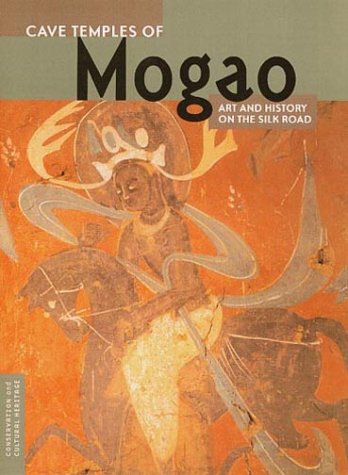
Title
Cave Temples Of Mogao: Art And History On The Silk Road (Conservation & Cultural Heritage)
Sold by Ergodebooks, an authorized reseller.
Returns accepted within 30 days | support@ergodebooks.com
Shipping Information
- Free Standard Shipping — United States only
- Processing Time: 3–5 business days
- Estimated Delivery: 6–10 business days after dispatch
- Double-boxed, fully insured & discreetly packaged
- Tracking number sent via email once dispatched
Returns & Refund
Returns accepted within 30 days of delivery.
Damaged or Defective Item
Free return shipping + replacement or full refund
Wrong Item Received
Free return shipping + replacement or full refund
Change of Mind
Return shipping at customer's expense · 25% restocking fee applies
Payment Option

The Mogao Grottoes In China, Situated Near The Oasis Town Of Dunhuang On The Fabled Silk Road, Constitute One Of The World'S Most Significant Sites Of Buddhist Art. In Some Five Hundred Caves Carved Into Rock Cliffs At The Edge Of The Gobi Desert Are Preserved One Thousand Years Of Exquisite Murals And Sculpture. Mogao, Founded By Buddhist Monks As An Isolated Monastery In The Late Fourth Century, Evolved Into An Artistic And Spiritual Center Whose Renown Extended From The Chinese Capital To The Far Western Kingdoms Of The Silk Road. Among Its Treasures Are Miles Of Stunning Wall Paintings, More Than Two Thousand Statues, Magnificent Works On Silk And Paper, And Thousands Of Ancient Manuscripts, Such As Sutras, Poems, And Prayer Sheets, Which In 1900 Were Found Sealed In One Of The Caves And Then Dispersed To Museums Throughout The World.Illustrated In Color Throughout, Cave Temples Of Mogao Combines Lavish Photographs Of The Caves And Their Art With The Fascinating History Of Mogao, Dunhuang, And The Silk Road To Create A Vivid Portrait Of This Remarkable Site. Chapters Discuss The Development Of The Cave Temples, The Iconography Of The Wall Paintings, And The Extraordinary Story Of The Rare Manuscripts, Including The Oldest Printed Book In Existence, A Ninthcentury Copy Of The Diamond Sutra. The Book Also Describes The Longterm Collaboration Between The Getty Conservation Institute And Chinese Authorities In Conservation Projects At Mogao As Well As The Caves And The Museum That Can Be Visited Today. The Publication Of This Book Coincides With The Centenary Of The Discovery Of The Manuscripts In The Library Cave.
⚠️ WARNING (California Proposition 65):
This product may contain chemicals known to the State of California to cause cancer, birth defects, or other reproductive harm.
For more information, please visit www.P65Warnings.ca.gov.
- Q: What is the main focus of 'Cave Temples of Mogao: Art and History on the Silk Road'? A: The book primarily focuses on the Mogao grottoes in China, highlighting their significance as a major site of Buddhist art along the Silk Road, featuring detailed discussions on the art, history, and conservation of these caves.
- Q: Who is the author of this book? A: The author of 'Cave Temples of Mogao' is Roderick Whitfield, who provides insights into the artistic and historical importance of the Mogao caves.
- Q: How many pages does the book have? A: The book contains 144 pages, providing a comprehensive overview of the Mogao grottoes and their cultural relevance.
- Q: What type of binding does this book have? A: This edition is available in a paperback binding, making it a flexible and lightweight option for readers.
- Q: When was 'Cave Temples of Mogao' published? A: The book was published on November 30, 2000.
- Q: Is there any information about conservation efforts in the book? A: Yes, the book discusses the long-term collaboration between the Getty Conservation Institute and Chinese authorities on conservation projects at Mogao.
- Q: What kind of illustrations can be found in the book? A: The book is richly illustrated in color throughout, featuring lavish photographs of the caves, their art, and historical context.
- Q: Does the book cover the history of the Silk Road? A: Yes, it provides context about the Silk Road's history, discussing how the Mogao caves were influenced by and contributed to the cultural exchanges along this route.
- Q: What is the significance of the manuscripts mentioned in the book? A: The book highlights the discovery of ancient manuscripts in the Library Cave, including the oldest printed book, a ninth-century copy of the Diamond Sutra, emphasizing their historical importance.
- Q: Is this book suitable for academic purposes? A: Yes, 'Cave Temples of Mogao' is suitable for academic purposes, offering valuable insights into art history, conservation, and cultural heritage.