If you have any questions, you are always welcome to contact us. We'll get back to you as soon as possible, withing 24 hours on weekdays.
Customer service
All questions about your order, return and delivery must be sent to our customer service team by e-mail at yourstore@yourdomain.com
Sale & Press
If you are interested in selling our products, need more information about our brand or wish to make a collaboration, please contact us at press@yourdomain.com
Help
If you have any questions, you are always welcome to contact us. We'll get back to you as soon as possible, withing 24 hours on weekdays.
Customer service
All questions about your order, return and delivery must be sent to our customer service team by e-mail at yourstore@yourdomain.com
Sale & Press
If you are interested in selling our products, need more information about our brand or wish to make a collaboration, please contact us at press@yourdomain.com
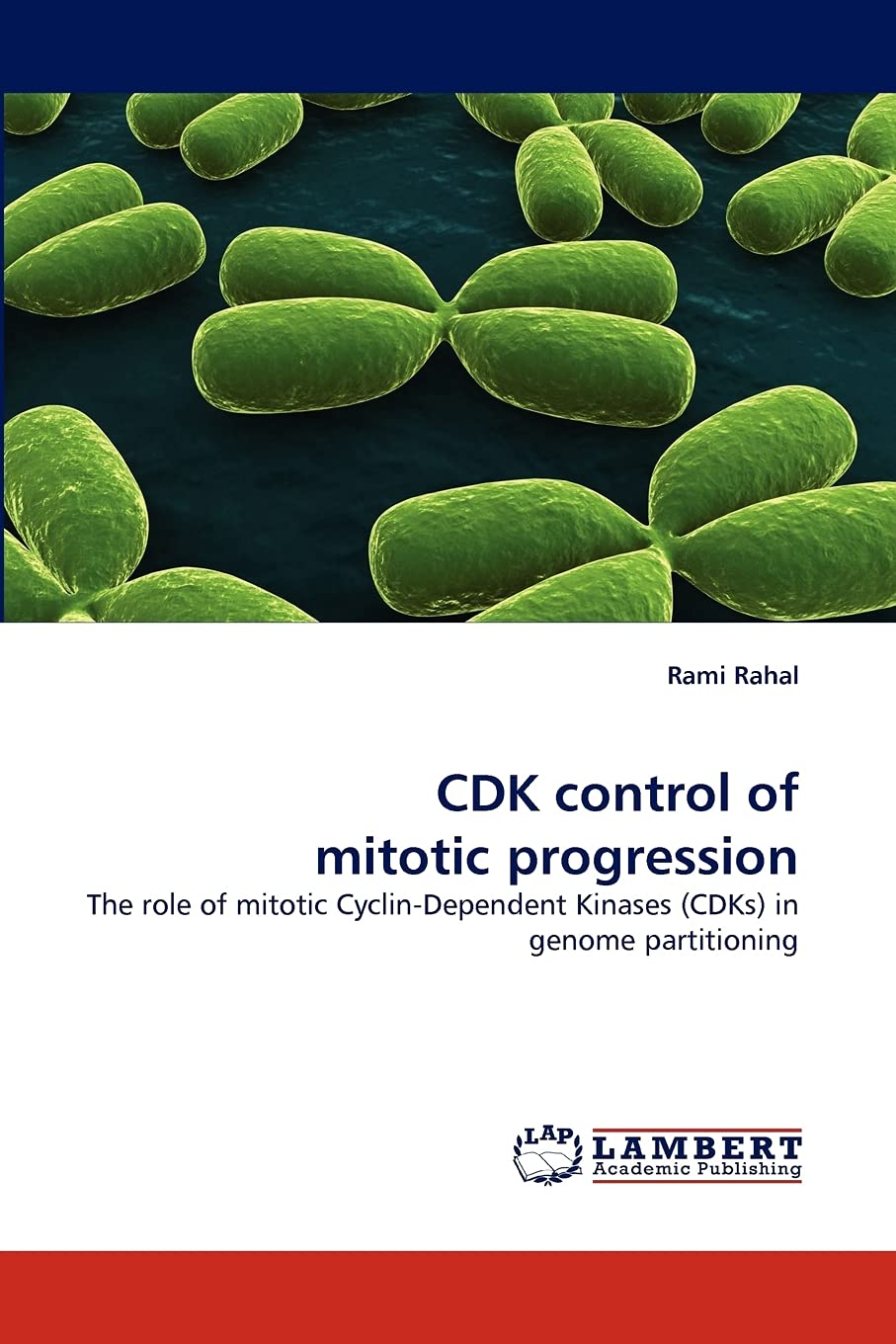
Mitotic cyclindependent kinases (CDKs) are best known for their essential functions in triggering entry into Mphase, where they have established roles in nuclear envelope breakdown and chromosome condensation. Whether mitotic CDKs have essential functions within mitosis is unclear. The work presented in this book indicates that mitotic CDKs, Clb1/2CDKs or Clb2/3CDKs, have two essential roles in mitotic progression. First, mitotic CDK activity was found to be required for the timely degradation of Securin/Pds1 at the metaphaseanaphase transition, demonstrating a requirement for mitotic CDKs in APC/CCdc20 activation in vivo. Second, mitotic CDK activity was necessary for the elongation of the mitotic spindle in anaphase. This requirement for mitotic CDKs is independent of cohesin removal and thus constitutes a novel role for CDK activity in mitotic progression. The dual roles of CDK in initiating loss of sisterchromatid cohesion and spindle elongation suggest a mechanism by which cells can couple and coordinate these events during mitosis. In addition, these results support a model in which incremental changes in mitotic CDK activity trigger consecutive mitotic events.
⚠️ WARNING (California Proposition 65):
This product may contain chemicals known to the State of California to cause cancer,
birth defects, or other reproductive harm.
For MAP (Minimum Advertised Price) violations and Intellectual Property (IP) or Trademark concerns, please contact:
support@ergodebooks.com
⚠️ California Proposition 65 Warning: Some products sold on this website may expose you to chemicals known to the State of California to cause cancer, birth defects, or other reproductive harm. For more information, visit www.P65Warnings.ca.gov.