
Title
Celestial Calculations: A Gentle Introduction to Computational Astronomy (Mit Press),Used
Sold by Ergodebooks, an authorized reseller.
Returns accepted within 30 days | support@ergodebooks.com
Shipping Information
- Free Standard Shipping — United States only
- Processing Time: 3–5 business days
- Estimated Delivery: 6–10 business days after dispatch
- Double-boxed, fully insured & discreetly packaged
- Tracking number sent via email once dispatched
Returns & Refund
Returns accepted within 30 days of delivery.
Damaged or Defective Item
Free return shipping + replacement or full refund
Wrong Item Received
Free return shipping + replacement or full refund
Change of Mind
Return shipping at customer's expense · 25% restocking fee applies
Payment Option

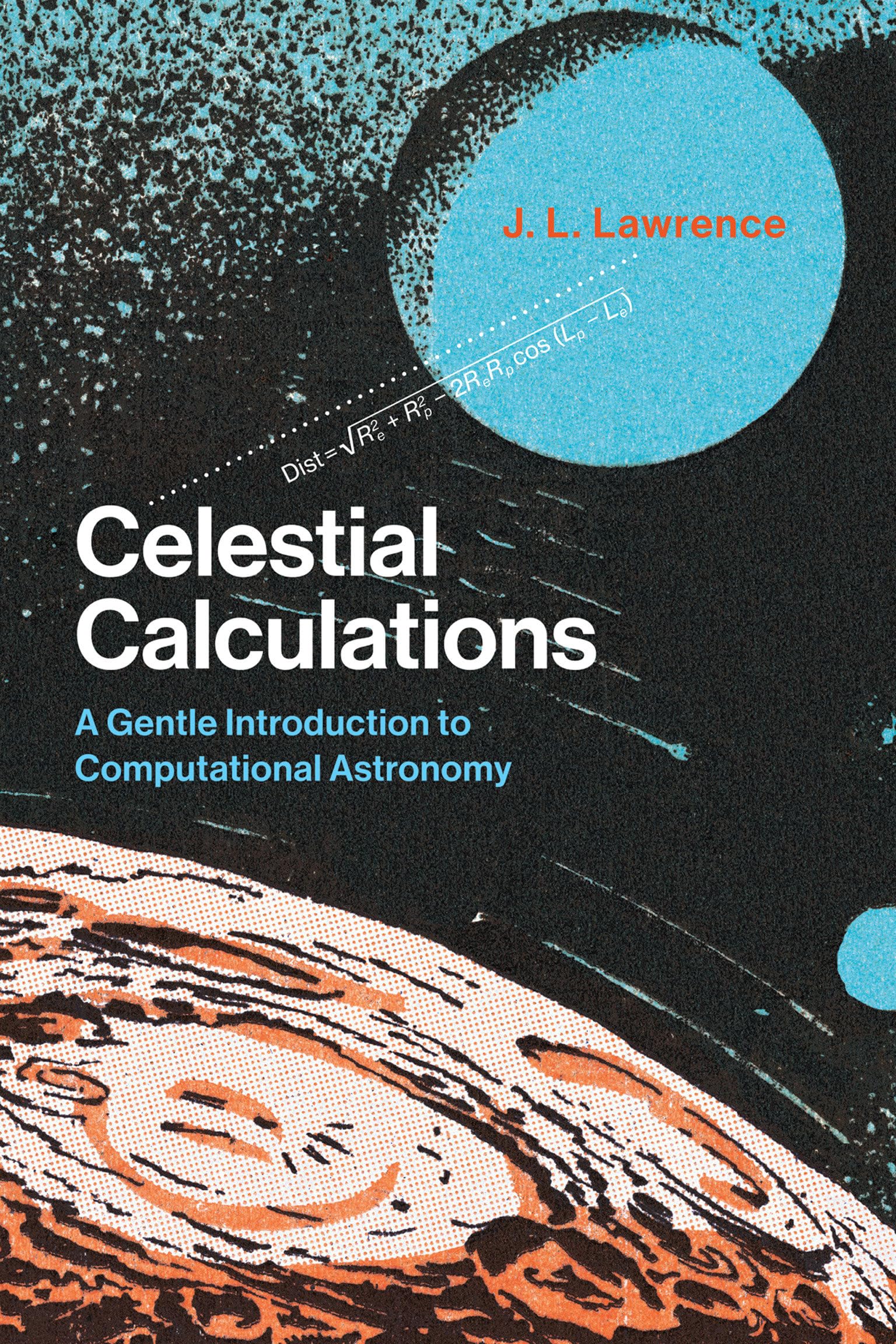
How to predict and calculate the positions of stars, planets, the sun, the moon, and satellites using a personal computer and high school mathematics.Our knowledge of the universe is expanding rapidly, as space probes launched decades ago begin to send information back to earth. There has never been a better time to learn about how planets, stars, and satellites move through the heavens. This book is for amateur astronomers who want to move beyond pictures of constellations in star guides and solve the mysteries of a starry night. It is a book for readers who have wondered, for example, where Saturn will appear in the night sky, when the sun will rise and set, or how long the space station will be over their location. In Celestial Calculations, J. L. Lawrence shows readers how to find the answers to these and other astronomy questions with only a personal computer and high school math. Using an easytofollow stepbystep approach, Lawrence explains what calculations are required, why they are needed, and how they all fit together.Lawrence begins with basic principles: unit of measure conversions, time conversions, and coordinate systems. He combines these concepts into a computer program that can calculate the location of a star, and uses the same methods for predicting the locations of the sun, moon, and planets. He then shows how to use these methods for locating the many satellites we have sent into orbit. Finally, he describes a variety of resources and tools available to the amateur astronomer, including star charts and astronomical tables. Diagrams illustrate the major concepts, and computer programs that implement the algorithms are included. Photographs of actual celestial objects accompany the text, and interesting astronomical facts are interspersed throughout.Source code (in Python 3, JAVA, and Visual Basic) and executables for all the programs and examples presented in the book are available for download at https://CelestialCalculations.github.io.
⚠️ WARNING (California Proposition 65):
This product may contain chemicals known to the State of California to cause cancer, birth defects, or other reproductive harm.
For more information, please visit www.P65Warnings.ca.gov.