
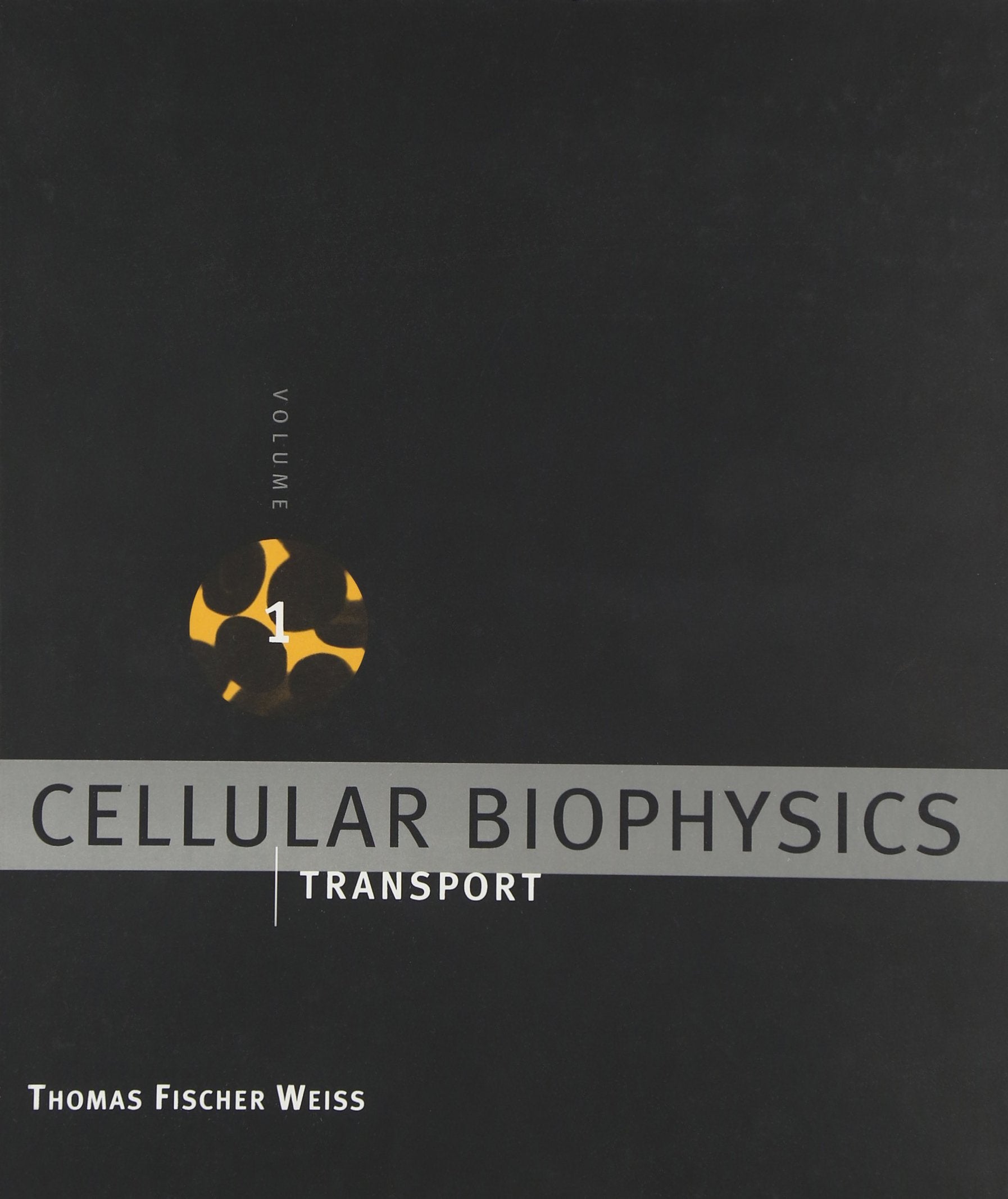
Title
Cellular Biophysics, Vol. 1: Transport,Used
Sold by Ergodebooks, an authorized reseller.
Returns accepted within 30 days | support@ergodebooks.com
Shipping Information
- Free Standard Shipping — United States only
- Processing Time: 3–5 business days
- Estimated Delivery: 6–10 business days after dispatch
- Double-boxed, fully insured & discreetly packaged
- Tracking number sent via email once dispatched
Returns & Refund
Returns accepted within 30 days of delivery.
Damaged or Defective Item
Free return shipping + replacement or full refund
Wrong Item Received
Free return shipping + replacement or full refund
Change of Mind
Return shipping at customer's expense · 25% restocking fee applies
Payment Option

Cellular Biophysics is a quantitatively oriented basic physiology text for senior undergraduate and graduate students in bioengineering, biophysics, physiology, and neuroscience programs. It will also serve as a major reference work for biophysicists.Developed from the author's notes for a course that he has taught at MIT for many years, these books provide a clear and logical explanation of the foundations of cell biophysics, teaching transport and the electrical properties of cells from a combined biological, physical, and engineering viewpoint.Each volume contains introductory chapters that motivate the material and present it in a broad historical context. Important experimental results and methods are described. Theories are derived almost always from first principles so that students develop an understanding of not only the predictions of the theory but also its limitations. Theoretical results are compared carefully with experimental findings and new results appear throughout. There are many timetested exercises and problems as well as extensive lists of references.The volume on transport is unique in that no other text on this important topic develops it clearly and systematically at the student level. It explains all the principal mechanisms by which matter is transported across cellular membranes and describes the homeostatic mechanisms that allow cells to maintain their concentrations of solutes, their volume, and the potential across the membrane. Chapters are organized by individual transport mechanisms diffusion, osmosis, coupled solute and solvent transport, carriermediated transport, and ion transport (both passive and active). A final chapter discusses the interplay of all these mechanisms in cellular homeostasis.
⚠️ WARNING (California Proposition 65):
This product may contain chemicals known to the State of California to cause cancer, birth defects, or other reproductive harm.
For more information, please visit www.P65Warnings.ca.gov.
- Q: What is the page count of this book? A: This book has six hundred pages. It provides a comprehensive overview of cellular biophysics, making it suitable for advanced students.
- Q: What are the dimensions of 'Cellular Biophysics, Vol. 1: Transport'? A: The book measures eight and a half inches in length, one and three-quarters inches in width, and nine and a half inches in height.
- Q: What type of binding does this book have? A: This book is bound in hardcover. This durable binding ensures longevity and is suitable for frequent use.
- Q: Who is the author of this book? A: The author is Thomas Fischer Weiss. He has taught the content at MIT for many years, offering a well-informed perspective.
- Q: Is this book suitable for undergraduate students? A: Yes, it is designed for senior undergraduate and graduate students. The text is tailored to those in bioengineering, biophysics, physiology, and neuroscience.
- Q: How does this book explain the concepts of transport? A: The book explains transport mechanisms clearly and systematically. It covers diffusion, osmosis, and other transport types to aid understanding.
- Q: Can I use this book as a reference for research? A: Yes, it serves as a major reference work for biophysicists. The extensive lists of references and exercises support advanced studies.
- Q: Is there a chapter on cellular homeostasis? A: Yes, there is a final chapter dedicated to cellular homeostasis. It discusses how transport mechanisms work together to maintain cell balance.
- Q: What kind of exercises does this book include? A: It includes many time-tested exercises and problems. These are designed to reinforce the learning of complex concepts in cell biophysics.
- Q: Is this book appropriate for beginners? A: While it is suitable for advanced students, beginners may find it challenging. A foundational understanding of biophysics is recommended.
- Q: Does this book cover experimental methods? A: Yes, important experimental results and methods are described throughout the text. This provides practical context for theoretical concepts.
- Q: Are there illustrations or diagrams in the book? A: Yes, the book contains diagrams that help illustrate complex processes. These visuals aid in understanding transport mechanisms.
- Q: What topics are included in the introductory chapters? A: The introductory chapters motivate the material and present it in a broad historical context, setting the stage for deeper exploration.
- Q: Is the book focused on a specific aspect of biophysics? A: Yes, it focuses specifically on transport mechanisms within cellular biophysics. This specialization makes it unique in its field.
- Q: What is the publisher of this book? A: The book is published by MIT Press. This reputable publisher is known for high-quality academic texts.
- Q: Does the book discuss the limitations of theories? A: Yes, the book derives theories from first principles and discusses their limitations. This approach fosters a deeper understanding in students.