
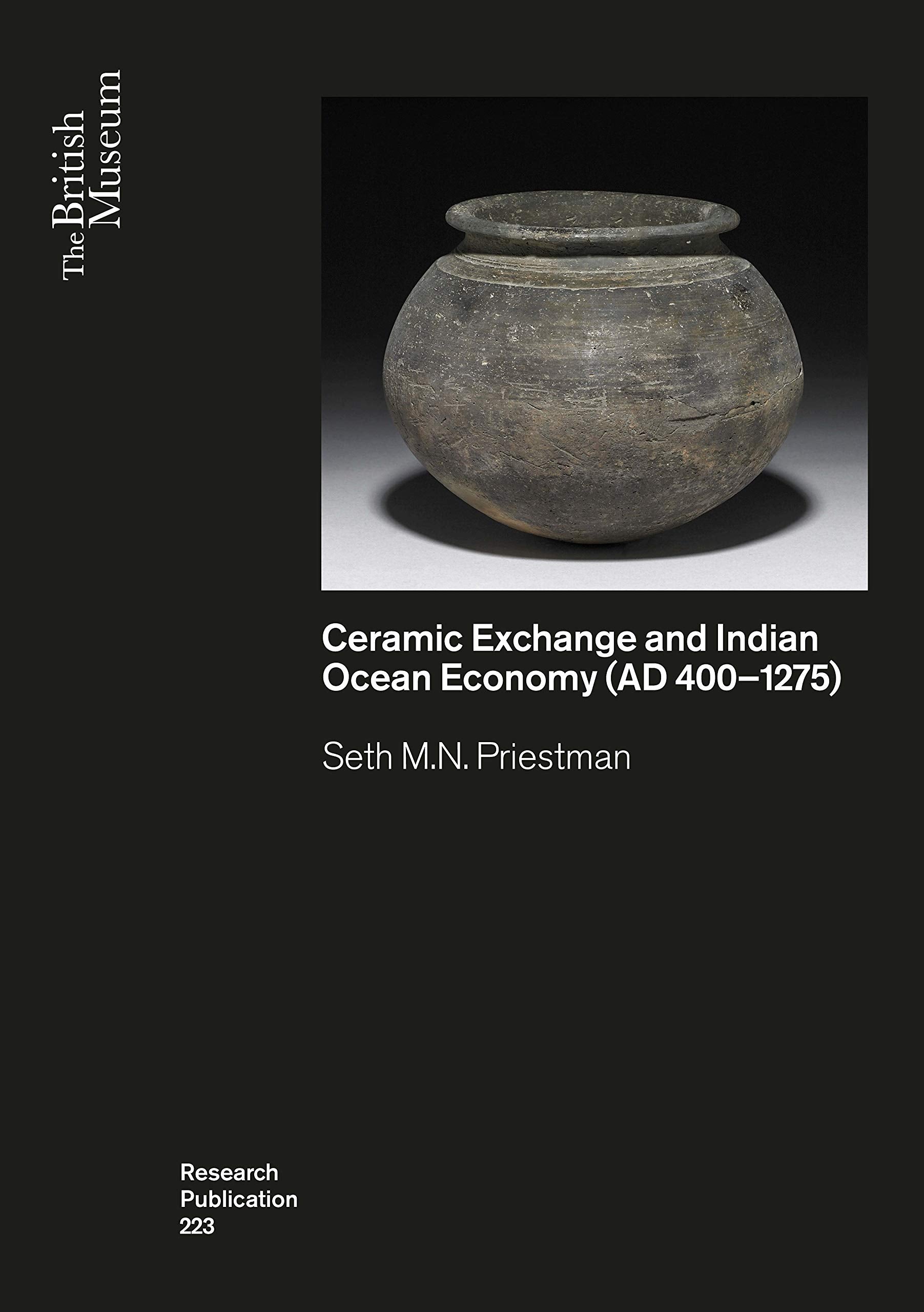
Title
Ceramic Exchange and the Indian Ocean Economy (AD 4001275): Volume I Analysis (British Museum Research Publications),Used
Sold by Ergodebooks, an authorized reseller.
Returns accepted within 30 days | support@ergodebooks.com
Shipping Information
- Free Standard Shipping — United States only
- Processing Time: 3–5 business days
- Estimated Delivery: 6–10 business days after dispatch
- Double-boxed, fully insured & discreetly packaged
- Tracking number sent via email once dispatched
Returns & Refund
Returns accepted within 30 days of delivery.
Damaged or Defective Item
Free return shipping + replacement or full refund
Wrong Item Received
Free return shipping + replacement or full refund
Change of Mind
Return shipping at customer's expense · 25% restocking fee applies
Payment Option

From AD 5001000, the Indian Ocean emerged as a global commercial center, and by around 750800 a sophisticated trade network had been established involving the movement of goods from Japan and China in the east, to southern Africa and Spain in the west. However, the Indian Oceans commercial system has been relatively understudied, with many of the key assumptions regarding its development based on narrative textual sources and selective archaeological evidence.This study sets out the case for the unique significance of quantified ceramic finds as an indicator of longterm changes in the scale and volume of maritime exchange in a period for which few other sources of systematic economic history survive. The publication presents archaeological data from thirteen sites distributed across the western Indian Ocean, including Siraf (Iran), Anuradhapura (Sri Lanka) and Manda (Kenya). The ceramic assemblages are considered in terms of their general compositional characteristics and the distinctions between local, regional and longdistance exchange. The volume concludes with a discussion of how this data can be used to address the broader issues of longterm economic change and the relationship between state power in the Middle East and the commercial networks of the Indian Ocean operating via the Persian Gulf.Table of ContentsAcknowledgementsChapter 1: Quantifying Change in the Indian Ocean Ceramic ExchangeChapter 2: An Integrated Ceramic Classification and ChronologyChapter 3: Ceramic QuantificationChapter 4: The Sites and FindsChapter 5: Quantitative Analysis of Ceramic ExchangeChapter 6: Composition of Ceramic ExchangeChapter 7: Ceramics and the Long Term Economic History of the Western Indian OceanBibliographyIndex
⚠️ WARNING (California Proposition 65):
This product may contain chemicals known to the State of California to cause cancer, birth defects, or other reproductive harm.
For more information, please visit www.P65Warnings.ca.gov.