If you have any questions, you are always welcome to contact us. We'll get back to you as soon as possible, withing 24 hours on weekdays.
Customer service
All questions about your order, return and delivery must be sent to our customer service team by e-mail at yourstore@yourdomain.com
Sale & Press
If you are interested in selling our products, need more information about our brand or wish to make a collaboration, please contact us at press@yourdomain.com
Help
If you have any questions, you are always welcome to contact us. We'll get back to you as soon as possible, withing 24 hours on weekdays.
Customer service
All questions about your order, return and delivery must be sent to our customer service team by e-mail at yourstore@yourdomain.com
Sale & Press
If you are interested in selling our products, need more information about our brand or wish to make a collaboration, please contact us at press@yourdomain.com
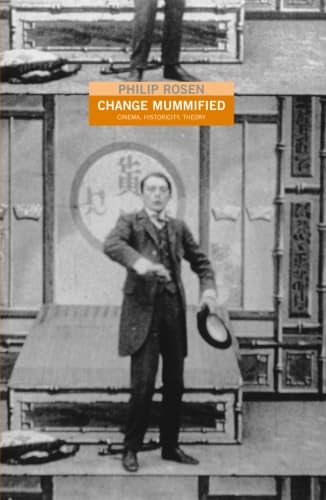
Exploring the modern category of history in relation to film theory, film textuality, and film history, Change Mummified makes a persuasive argument for the centrality of historicity to film as well as the special importance of film in historical culture. What do we make of the concern for recovering the past that is consistently manifested in so many influential modes of cinema, from Hollywood to documentary and postcolonial film? How is film related to the many modern practices that define themselves as configuring pastness in the present, such as architectural preservation, theme parks, and, above all, professional historical research? What is the relation of history in film to other media such as television and digital imaging? How does emphasizing the connection between film and modern historicity affect the theorization and historicization of film and modern media culture?Pursuing the full implications of film as cultural production, Philip Rosen reconceptualizes modern historicity as a combination of characteristic epistemological structures on the one hand, and the social imperative to regulate or manage time on the other. Emphasizing a fundamental constellation of pursuit of the real, indexical signification and the need to control time, he interrogates a spectrum of film theory and film texts. His argument refocuses the category of temporality for film and cultural theory while rethinking the importance of historicity.An original and sustained meditation on the historiographic status of cinematic signs, Change Mummified is both an intervention in film and media studies and an argument for the continuing necessity of modern historical thinking in its contradictions.
⚠️ WARNING (California Proposition 65):
This product may contain chemicals known to the State of California to cause cancer,
birth defects, or other reproductive harm.
Q: What is the main focus of 'Change Mummified: Cinema, Historicity, Theory'?A: The book explores the intersections between history and film, emphasizing the importance of historicity in cinematic culture and how film relates to modern practices of preserving the past.
Q: Who is the author of this book?A: The author of 'Change Mummified' is Philip Rosen.
Q: What is the publication date of this book?A: The book was published on January 1, 2001.
Q: What are the key themes discussed in 'Change Mummified'?A: Key themes include the relationship between film and history, the role of cinematic signs in understanding temporality, and the significance of historicity in modern media culture.
Q: Is this book suitable for students of film studies?A: Yes, it is an original contribution to film and media studies, making it suitable for students and scholars interested in these fields.
Q: What is the condition of the book?A: The book is listed as 'New'.
Q: How many pages does 'Change Mummified' have?A: The book contains 472 pages.
Q: What type of binding does this book have?A: The book is available in paperback binding.
Q: What are the features of this book?A: The main feature is that it is a used book in good condition.
Q: Does this book include any illustrations or photographs?A: The product details do not specify if the book includes illustrations or photographs.
For MAP (Minimum Advertised Price) violations and Intellectual Property (IP) or Trademark concerns, please contact:
support@ergodebooks.com
⚠️ California Proposition 65 Warning: Some products sold on this website may expose you to chemicals known to the State of California to cause cancer, birth defects, or other reproductive harm. For more information, visit www.P65Warnings.ca.gov.