
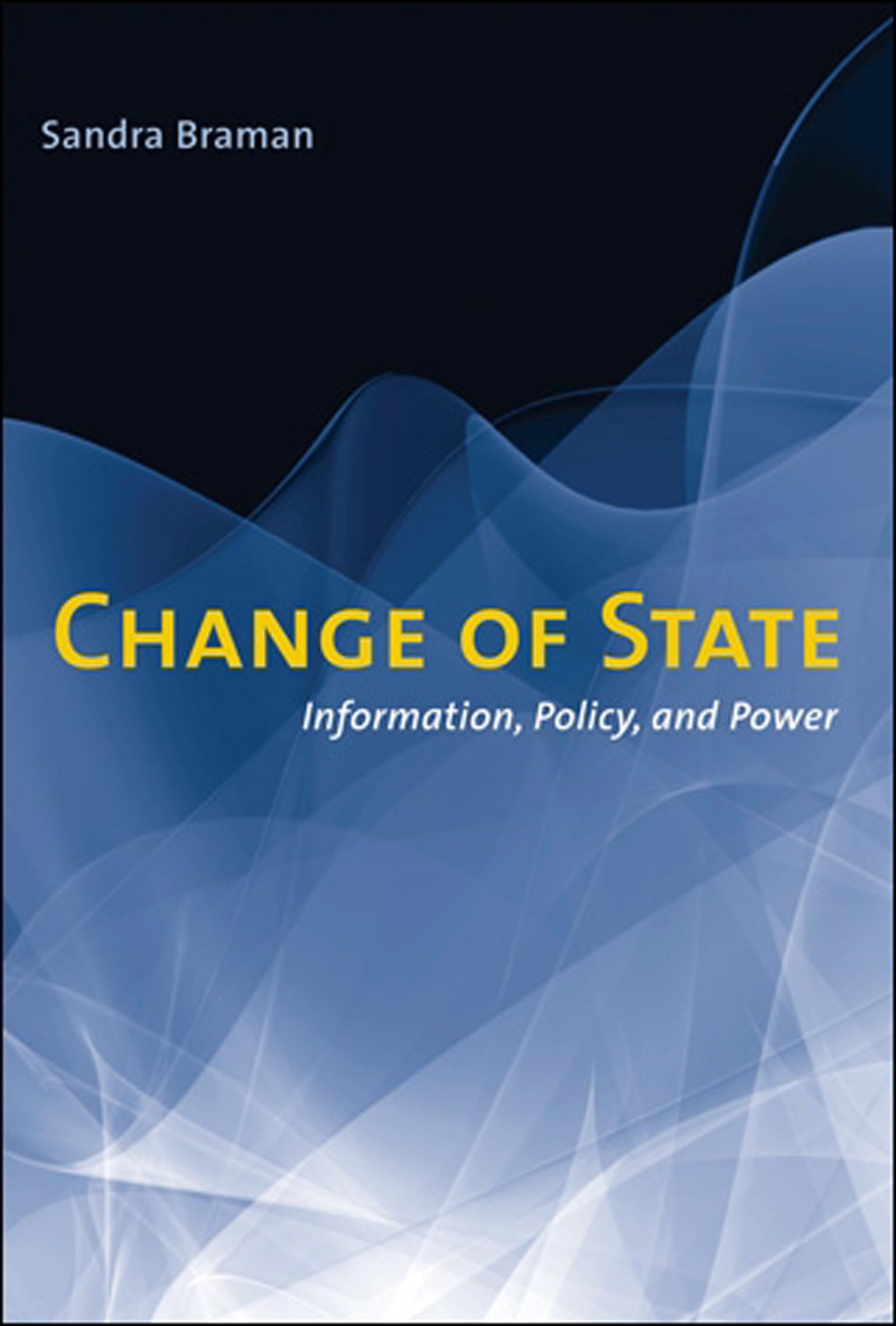
Title
Change of State: Information, Policy, and Power,Used
Sold by Ergodebooks, an authorized reseller.
Returns accepted within 30 days | support@ergodebooks.com
Shipping Information
- Free Standard Shipping — United States only
- Processing Time: 3–5 business days
- Estimated Delivery: 6–10 business days after dispatch
- Double-boxed, fully insured & discreetly packaged
- Tracking number sent via email once dispatched
Returns & Refund
Returns accepted within 30 days of delivery.
Damaged or Defective Item
Free return shipping + replacement or full refund
Wrong Item Received
Free return shipping + replacement or full refund
Change of Mind
Return shipping at customer's expense · 25% restocking fee applies
Payment Option

How control over information creation, processing, flows, and use has become the most effective form of power: theoretical foundations and empirical examples of information policy in the U.S., an innovator informational state.As the informational state replaces the bureaucratic welfare state, control over information creation, processing, flows, and use has become the most effective form of power. In Change of State Sandra Braman examines the theoretical and practical ramifications of this "change of state." She looks at the ways in which governments are deliberate, explicit, and consistent in their use of information policy to exercise power, exploring not only such familiar topics as intellectual property rights and privacy but also areas in which policy is highly effective but little understood. Such lesserknown issues include hybrid citizenship, the use of "functionally equivalent borders" internally to allow exceptions to U.S. law, research funding, census methods, and network interconnection. Trends in information policy, argues Braman, both manifest and trigger change in the nature of governance itself.After laying the theoretical, conceptual, and historical foundations for understanding the informational state, Braman examines 20 information policy principles found in the U.S Constitution. She then explores the effects of U.S. information policy on the identity, structure, borders, and change processes of the state itself and on the individuals, communities, and organizations that make up the state. Looking across the breadth of the legal system, she presents current law as well as trends in and consequences of several information policy issues in each category affected.Change of State introduces information policy on two levels, coupling discussions of specific contemporary problems with more abstract analysis drawing on social theory and empirical research as well as law. Most important, the book provides a way of understanding how information policy brings about the fundamental social changes that come with the transformation to the informational state.
⚠️ WARNING (California Proposition 65):
This product may contain chemicals known to the State of California to cause cancer, birth defects, or other reproductive harm.
For more information, please visit www.P65Warnings.ca.gov.
- Q: What is the page count of 'Change of State: Information, Policy, and Power'? A: The book has five hundred forty-five pages. It provides an in-depth analysis of information policy and its implications.
- Q: What are the dimensions of this book? A: The book measures eight point nine inches in length, five point nine one inches in width, and one point one inches in height. These dimensions make it portable and easy to handle.
- Q: What type of binding does this book have? A: The book is bound in paperback. This type of binding is lightweight and flexible, ideal for casual reading.
- Q: Who is the author of 'Change of State'? A: The author is Sandra Braman. She is recognized for her expertise in information policy and its societal impacts.
- Q: What is the genre of this book? A: The book falls under the category of Computer Science. It explores the intersection of information policy and governance.
- Q: How should I approach reading this book? A: This book is suitable for readers interested in information policy and governance. It combines theoretical and practical insights for a comprehensive understanding.
- Q: Is this book suitable for beginners in the field of information policy? A: Yes, it is suitable for beginners. The book lays theoretical foundations alongside practical examples, making complex ideas accessible.
- Q: What is the main theme of 'Change of State'? A: The main theme is the transformation of power dynamics through information control. It examines how governance is reshaped by information policy.
- Q: Are there any specific case studies in the book? A: Yes, the book includes empirical examples of information policy in the U.S. It discusses lesser-known issues like hybrid citizenship and census methods.
- Q: How do I keep this book in good condition? A: To maintain the book's condition, store it in a cool, dry place away from direct sunlight. Avoid bending or folding the pages.
- Q: Can I clean the book if it gets dirty? A: Yes, you can clean it gently. Use a soft, dry cloth to wipe the covers and avoid using water or cleaning solutions.
- Q: Is this book recommended for academic use? A: Yes, it is highly recommended for academic use. It provides a thorough exploration of information policy relevant for research and study.
- Q: What if the book arrives damaged? A: If the book arrives damaged, you should contact the seller for a return or replacement. Most sellers have policies for damaged items.
- Q: Is there a warranty for this book? A: Typically, books do not come with a warranty. However, returns may be possible based on the seller’s policy.
- Q: Are there any online resources related to this book? A: Yes, there may be online discussions and reviews that provide additional insights into the book's themes and concepts.