If you have any questions, you are always welcome to contact us. We'll get back to you as soon as possible, withing 24 hours on weekdays.
Customer service
All questions about your order, return and delivery must be sent to our customer service team by e-mail at yourstore@yourdomain.com
Sale & Press
If you are interested in selling our products, need more information about our brand or wish to make a collaboration, please contact us at press@yourdomain.com
Help
If you have any questions, you are always welcome to contact us. We'll get back to you as soon as possible, withing 24 hours on weekdays.
Customer service
All questions about your order, return and delivery must be sent to our customer service team by e-mail at yourstore@yourdomain.com
Sale & Press
If you are interested in selling our products, need more information about our brand or wish to make a collaboration, please contact us at press@yourdomain.com
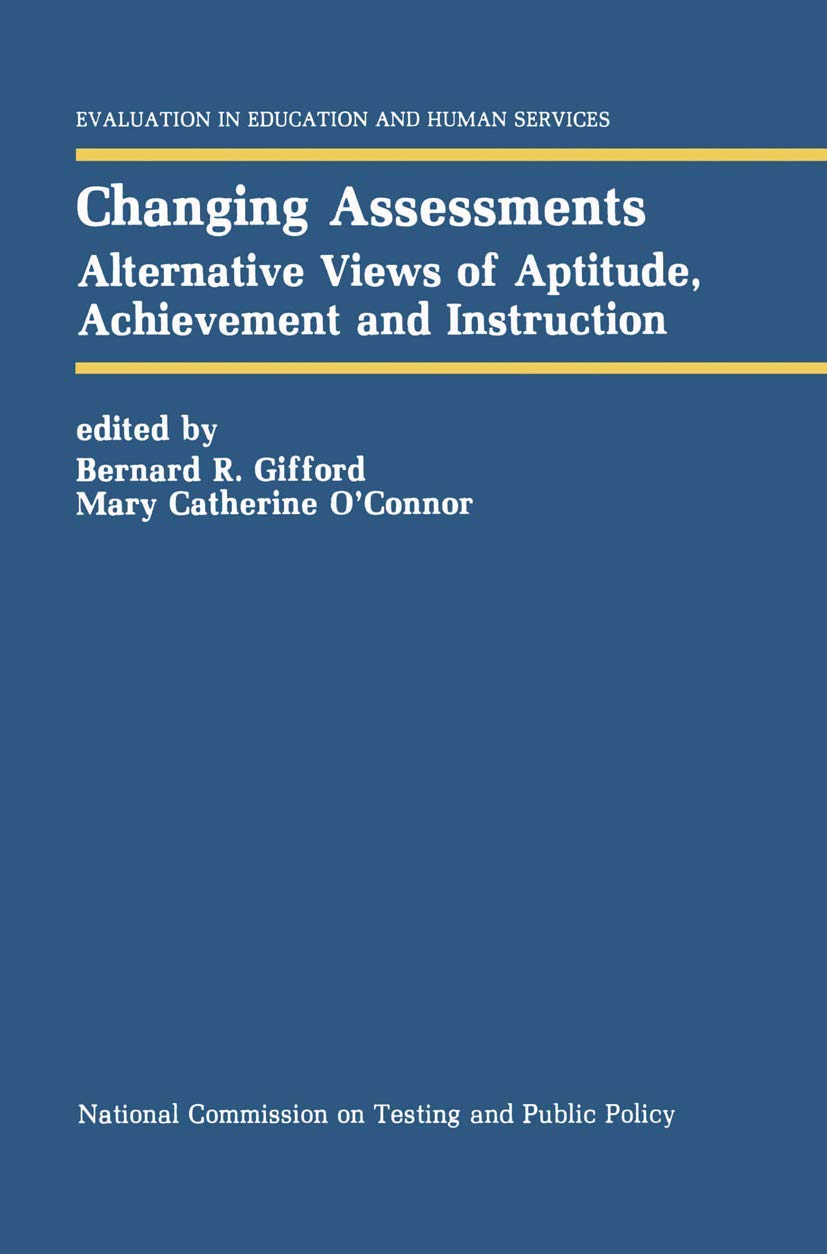
Bernard R. Gifford As we edge toward the year 2000, the information age is a reality; the global marketplace is increasingly competitive; and the U.S. labor force is shrinking. Today more than ever, our nation's economic and social wellbeing hinges on our ability to tap our human resourcesto identify talent, to nurture it, and to assess abilities and disabilities in ways that help every individual reach his or her full potential. In pursuing that goal, decisionmakers in education, industry, and government are relying increasingly on standardized tests: sets of question with identical directions, time limits and tasks for all testtakersdesigned to permit an inference about what someone knows or can do in a particular area. CALIBRATING DIFFERENCE Our emphasis on standardized testing rests on a premise that is so basic it often escapes notice: that we humans are different from each other in ways that are both meaningful and measurable. We differ in terms of cognitive ability; aptitude for performing different kinds of mental and physical tasks; temperament; and interests. But somehow, without sufficient examination, we have taken a great collective leap from that commonplace to the notion that there are precise, measurable gradations of innate ability that can be used to direct children to the right classrooms, and adults to the right job slots.
⚠️ WARNING (California Proposition 65):
This product may contain chemicals known to the State of California to cause cancer,
birth defects, or other reproductive harm.
For MAP (Minimum Advertised Price) violations and Intellectual Property (IP) or Trademark concerns, please contact:
support@ergodebooks.com
⚠️ California Proposition 65 Warning: Some products sold on this website may expose you to chemicals known to the State of California to cause cancer, birth defects, or other reproductive harm. For more information, visit www.P65Warnings.ca.gov.