
Title
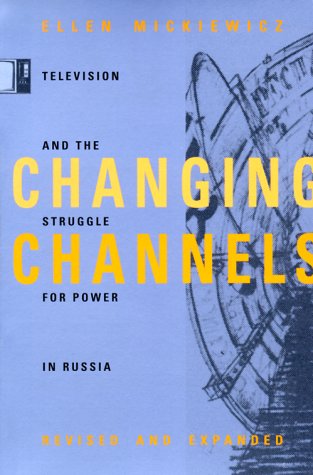
Changing Channels: Television And The Struggle For Power In Russia
Sold by Ergodebooks, an authorized reseller.
Returns accepted within 30 days | support@ergodebooks.com
Shipping Information
- Free Standard Shipping — United States only
- Processing Time: 3–5 business days
- Estimated Delivery: 6–10 business days after dispatch
- Double-boxed, fully insured & discreetly packaged
- Tracking number sent via email once dispatched
Returns & Refund
Returns accepted within 30 days of delivery.
Damaged or Defective Item
Free return shipping + replacement or full refund
Wrong Item Received
Free return shipping + replacement or full refund
Change of Mind
Return shipping at customer's expense · 25% restocking fee applies
Payment Option

New In Paperbackrevised And Expandedduring The Tumultuous 1990S, As Russia Struggled To Shed The Trappings Of The Soviet Empire, Television Viewing Emerged As An Enormous Influence On Russian Life. The Number Of Viewers Who Routinely Watch The Nightly News In Russia Matches The Number Of Americans Who Tune In To The Super Bowl, Thus Making Tv Coverage The Prized Asset For Which Political Leaders Intenselyand Sometimes Violentlycompete. In This Revised And Expanded Edition Of Changing Channels, Ellen Mickiewicz Provides Many Fascinating Insights, Describing The Knowing Ways In Which Ordinary Russians Watch The News, Skeptically Analyze Information, And Develop Strategies For Dealing With News Bias.Covering The Period From The Statecontrolled Television Broadcasts At The End Of The Soviet Union Through The Attempted Coup Against Gorbachev, The War In Chechnya, The Presidential Election Of 1996, And The Economic Collapse Of 1998, Mickiewicz Draws On Firsthand Research, Public Opinion Surveys, And Many Interviews With Key Players, Including Gorbachev Himself. By Examining The Role That Television Has Played In The Struggle To Create Political Pluralism In Russia, She Reveals How This Struggle Is Both Helped And Hindered By The Barrage Of Information, Advertisements, And Mediacreated Personalities That Populate The Airwaves. Perhaps Most Significantly, She Shows How Television Has Emerged As The Sole Emblem Of Legitimate Authority And Has Provided A Rare And Muchneeded Connection From One Area Of This Huge, Crisisladen Country To The Next.This New Edition Of Changing Channels Will Be Valued By Those Interested In Russian Studies, Politics, Media And Communications, And Cultural Studies, As Well As General Readers Who Desire An Uptodate View Of Crucial Developments In Russia At The End Of The Twentieth Century.
⚠️ WARNING (California Proposition 65):
This product may contain chemicals known to the State of California to cause cancer, birth defects, or other reproductive harm.
For more information, please visit www.P65Warnings.ca.gov.
- Q: How many pages does this book have? A: The book has four hundred pages. This length allows for a comprehensive exploration of the topic of television in Russia.
- Q: What is the binding type of this book? A: The book is paperback. This makes it lightweight and easy to handle for reading.
- Q: Who is the author of 'Changing Channels'? A: The author is Ellen Mickiewicz. She provides valuable insights into the role of television in Russian politics.
- Q: What is the size of the book? A: The book measures six and a half inches in length, one point twenty-six inches in width, and nine point forty-nine inches in height. These dimensions make it a standard size for paperback books.
- Q: Is this book suitable for academic study? A: Yes, this book is suitable for academic study. It is particularly valuable for those interested in Russian studies, politics, and media.
- Q: What topics are covered in this book? A: The book covers topics such as the influence of television on Russian life and political pluralism. It also examines historical events from the Soviet Union to the late twentieth century.
- Q: How should I store this paperback book? A: Store the book in a cool, dry place away from direct sunlight. This helps preserve its condition and prevents fading.
- Q: Can I read this book if I'm not a political science major? A: Yes, anyone can read this book. It is written for general readers who want to understand crucial developments in Russia.
- Q: What is the publication quality of this book? A: This book is classified as a used book in good condition. It maintains readability and usability despite being pre-owned.
- Q: Does this book include interviews with key figures? A: Yes, the book includes interviews with key figures, including Gorbachev. These firsthand accounts provide unique insights into the media landscape.
- Q: Is this book appropriate for young readers? A: No, this book is not specifically designed for young readers. It addresses complex political and social issues that may not be suitable for children.
- Q: What makes this edition revised and expanded? A: This edition includes updated information and insights reflecting recent developments in Russian media. Readers benefit from a more comprehensive understanding.
- Q: How does this book address media bias? A: The book describes how ordinary Russians analyze news and develop strategies to cope with media bias. It explores the critical thinking involved in media consumption.
- Q: What is the primary audience for this book? A: The primary audience includes students and professionals in Russian studies, media, and cultural studies. It appeals to anyone interested in contemporary Russian issues.
- Q: What historical events does this book discuss? A: The book discusses historical events including the end of the Soviet Union, the war in Chechnya, and the economic collapse of nineteen ninety-eight. These events provide context for the media analysis.