If you have any questions, you are always welcome to contact us. We'll get back to you as soon as possible, withing 24 hours on weekdays.
Customer service
All questions about your order, return and delivery must be sent to our customer service team by e-mail at yourstore@yourdomain.com
Sale & Press
If you are interested in selling our products, need more information about our brand or wish to make a collaboration, please contact us at press@yourdomain.com
Help
If you have any questions, you are always welcome to contact us. We'll get back to you as soon as possible, withing 24 hours on weekdays.
Customer service
All questions about your order, return and delivery must be sent to our customer service team by e-mail at yourstore@yourdomain.com
Sale & Press
If you are interested in selling our products, need more information about our brand or wish to make a collaboration, please contact us at press@yourdomain.com
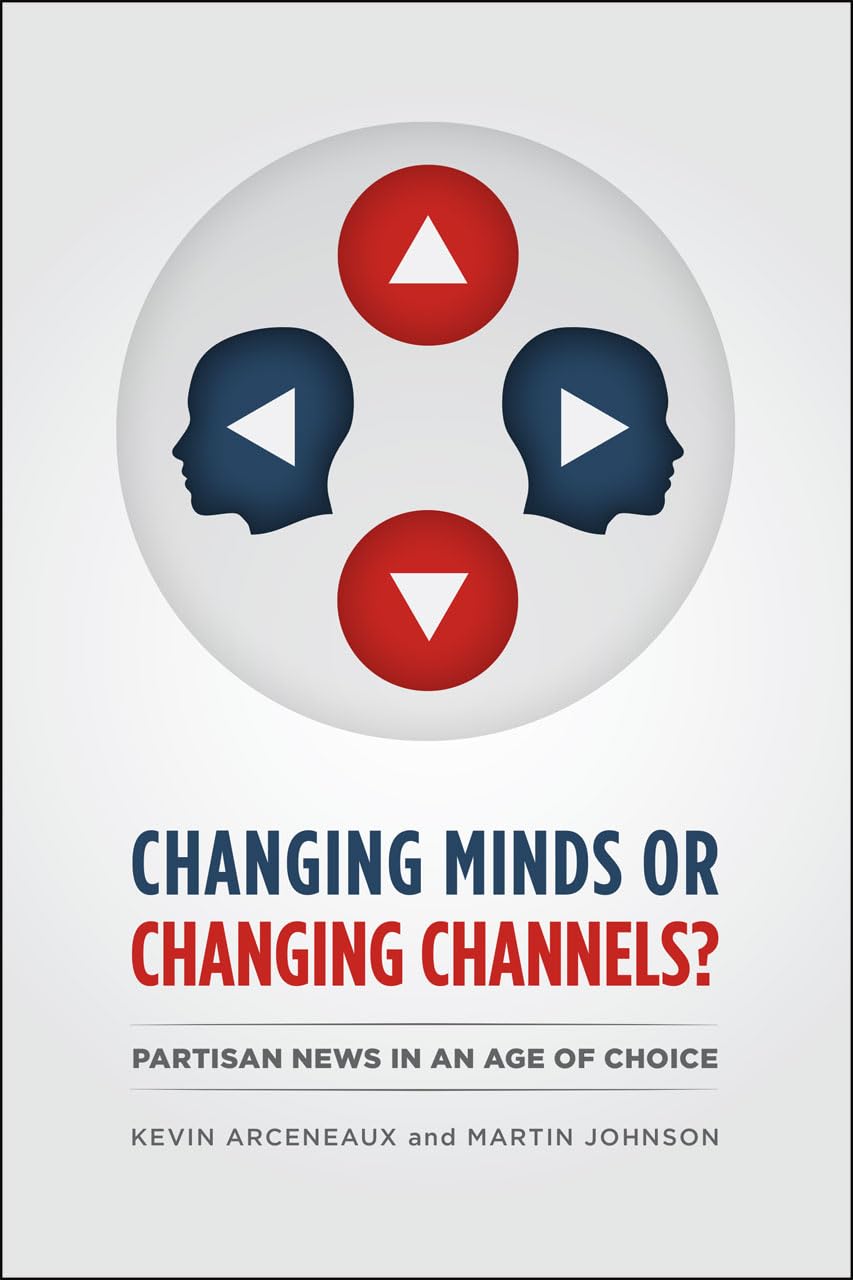
We live in an age of media saturation, where with a few clicks of the remoteor mousewe can tune in to programming where the facts fit our ideological predispositions. But what are the political consequences of this vast landscape of media choice? Partisan news has been roundly castigated for reinforcing prior beliefs and contributing to the highly polarized political environment we have today, but there is little evidence to support this claim, and much of what we know about the impact of news media come from studies that were conducted at a time when viewers chose from among six channels rather than scores.Through a series of innovative experiments, Kevin Arceneaux and Martin Johnson show that such criticism is unfounded. Americans who watch cable news are already polarized, and their exposure to partisan programming of their choice has little influence on their political positions. In fact, the opposite is true: viewers become more polarized when forced to watch programming that opposes their beliefs. A much more troubling consequence of the everexpanding media environment, the authors show, is that it has allowed people to tune out the news: the four toprated partisan news programs draw a mere three percent of the total number of people watching television.Overturning much of the conventional wisdom, Changing Minds or Changing Channels? demonstrate that the strong effects of media exposure found in past research are simply not applicable in todays more saturated media landscape.
⚠️ WARNING (California Proposition 65):
This product may contain chemicals known to the State of California to cause cancer,
birth defects, or other reproductive harm.
For MAP (Minimum Advertised Price) violations and Intellectual Property (IP) or Trademark concerns, please contact:
support@ergodebooks.com
⚠️ California Proposition 65 Warning: Some products sold on this website may expose you to chemicals known to the State of California to cause cancer, birth defects, or other reproductive harm. For more information, visit www.P65Warnings.ca.gov.