
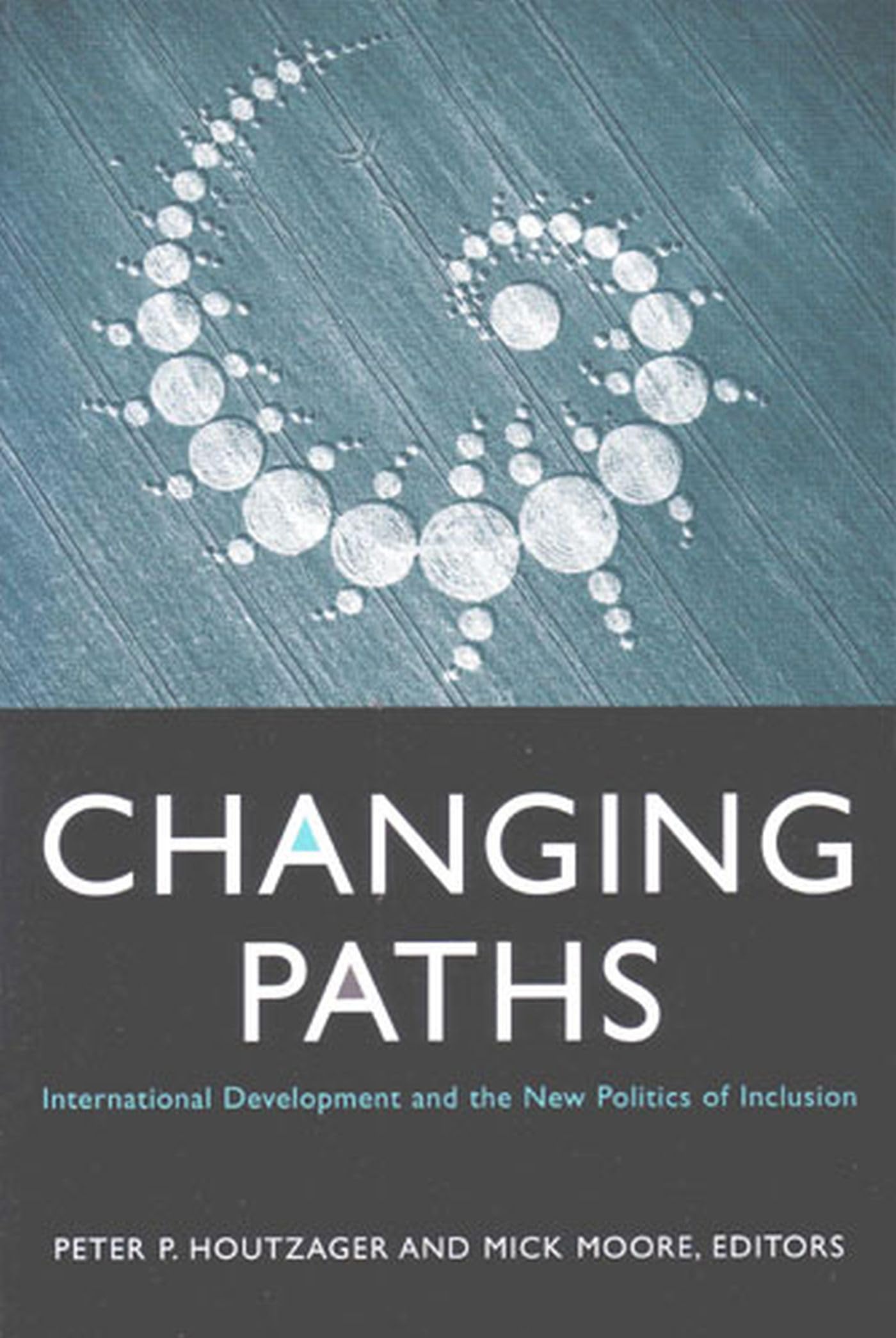
Title
Changing Paths: International Development and the New Politics of Inclusion,New
Sold by Ergodebooks, an authorized reseller.
Returns accepted within 30 days | support@ergodebooks.com
Shipping Information
- Free Standard Shipping — United States only
- Processing Time: 3–5 business days
- Estimated Delivery: 6–10 business days after dispatch
- Double-boxed, fully insured & discreetly packaged
- Tracking number sent via email once dispatched
Returns & Refund
Returns accepted within 30 days of delivery.
Damaged or Defective Item
Free return shipping + replacement or full refund
Wrong Item Received
Free return shipping + replacement or full refund
Change of Mind
Return shipping at customer's expense · 25% restocking fee applies
Payment Option

After two decades of marketizing, an array of national and international actors have become concerned with growing global inequality, the failure to reduce the numbers of very poor people in the world, and a perceived global backlash against international economic institutions. This new concern with poverty reduction and the political participation of excluded groups has set the stage for a new politics of inclusion within nations and in the international arena. The essays in this volume explore what forms the new politics of inclusion can take in low and middleincome countries. The contributors favor a politycentered approach that focuses on the political capacities of social and state actors to negotiate largescale collective solutions and that highlights various possible strategies to lift large numbers of people out of poverty and political subordination.The contributors suggest there is little basis for the radical polycentrism that colors so much contemporary development thought. They focus on how the political capabilities of different societal and state actors develop over time and how their development is influenced by state action and a variety of institutional and other factors. The final chapter draws insightful conclusions about the political limitations and opportunities presented by current international discourse on poverty.Peter P. Houtzager is a Fellow at the Institute of Development Studies, University of Sussex. He has been a visiting scholar at the Center for Latin American Studies, University of California, Berkeley, visiting lecturer at Stanford University, and lecturer at St. Mary's College. A political scientist with broad training in comparative politics and historicalinstitutional analysis, he has written extensively on the institutional roots of collective action.Mick Moore is a Fellow at the Institute of Development Studies, University of Sussex, as well as Director of the Centre for the Future State. He has been a visiting professor at the Massachusetts Institute of Technology. His professional interests include political and institutional aspects of poverty reduction and of economic policy and performance, the politics and administration of development, and good government.
⚠️ WARNING (California Proposition 65):
This product may contain chemicals known to the State of California to cause cancer, birth defects, or other reproductive harm.
For more information, please visit www.P65Warnings.ca.gov.