
Title
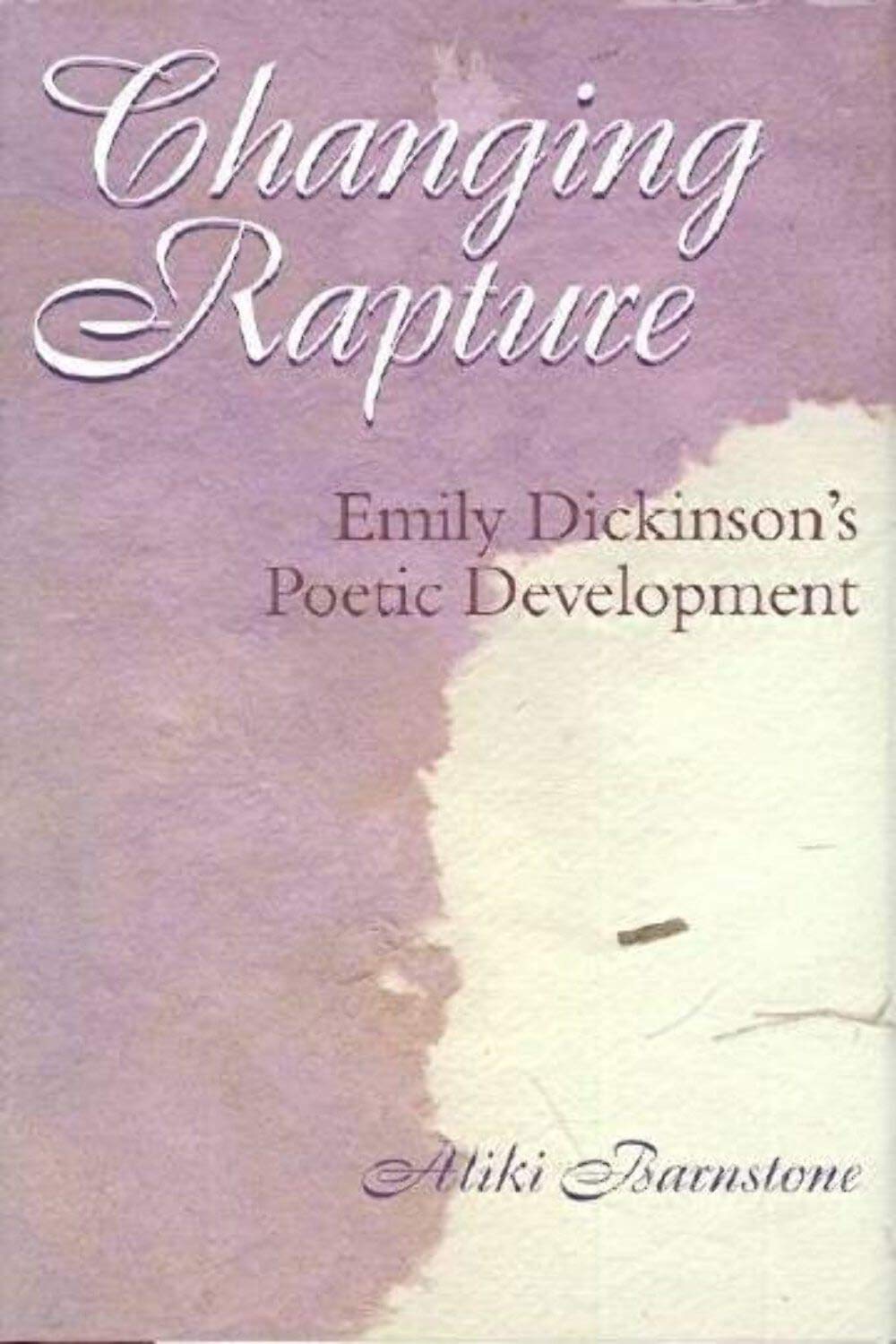
Changing Rapture: Emily Dickinson's Poetic Development,Used
Sold by Ergodebooks, an authorized reseller.
Returns accepted within 30 days | support@ergodebooks.com
Shipping Information
- Free Standard Shipping — United States only
- Processing Time: 3–5 business days
- Estimated Delivery: 6–10 business days after dispatch
- Double-boxed, fully insured & discreetly packaged
- Tracking number sent via email once dispatched
Returns & Refund
Returns accepted within 30 days of delivery.
Damaged or Defective Item
Free return shipping + replacement or full refund
Wrong Item Received
Free return shipping + replacement or full refund
Change of Mind
Return shipping at customer's expense · 25% restocking fee applies
Payment Option

Aliki Barnstone challenges the critical commonplace that Emily Dickinson's poetry did not change and evolve over the course of her career as a poet. She argues that this notion of her lack of development, while it contributes the established myth of the isolated and timeless Dickinson, has tended to diminish our appreciation of her as a poet and thinker, whose work is both an innovative artistic achievement and a cultural commentary. Throughout the book, Barnstone contextualizes Dickinson's evolving spiritual and poetic development within nineteenthcentury American culture.Barnstone identifies four major phases in Dickinson's development, which are marked by her struggle against the Calvinist tradition in which she was raised and her growing involvement with Transcendentalism. In the first phase, Dickinson critiques Calvinism and Sentimentalism through satire. In the second, intensely prolific period, she experiences an intellectual crisis, in which she masters the Calvinist theology that vexes her through a process Barnstone terms 'selfconversion.' In the third phase, the poet's work develops from a struggle with Calvinist selfannihilation and despair to a reworking of Emerson's Transcendental, exalted discovery of the self.Barnstone concludes her volume with an exploration of the recent debates over the textual problems in Dickinson's work, bringing them to bear on the canon of the poet's late work, which consists largely of letterpoems. Her whole life, Dickinson grappled with death, loss of loved ones, and the afterlife; at the end of her career, she developed her own intimate and relational form of literary immortality in letters.
⚠️ WARNING (California Proposition 65):
This product may contain chemicals known to the State of California to cause cancer, birth defects, or other reproductive harm.
For more information, please visit www.P65Warnings.ca.gov.