
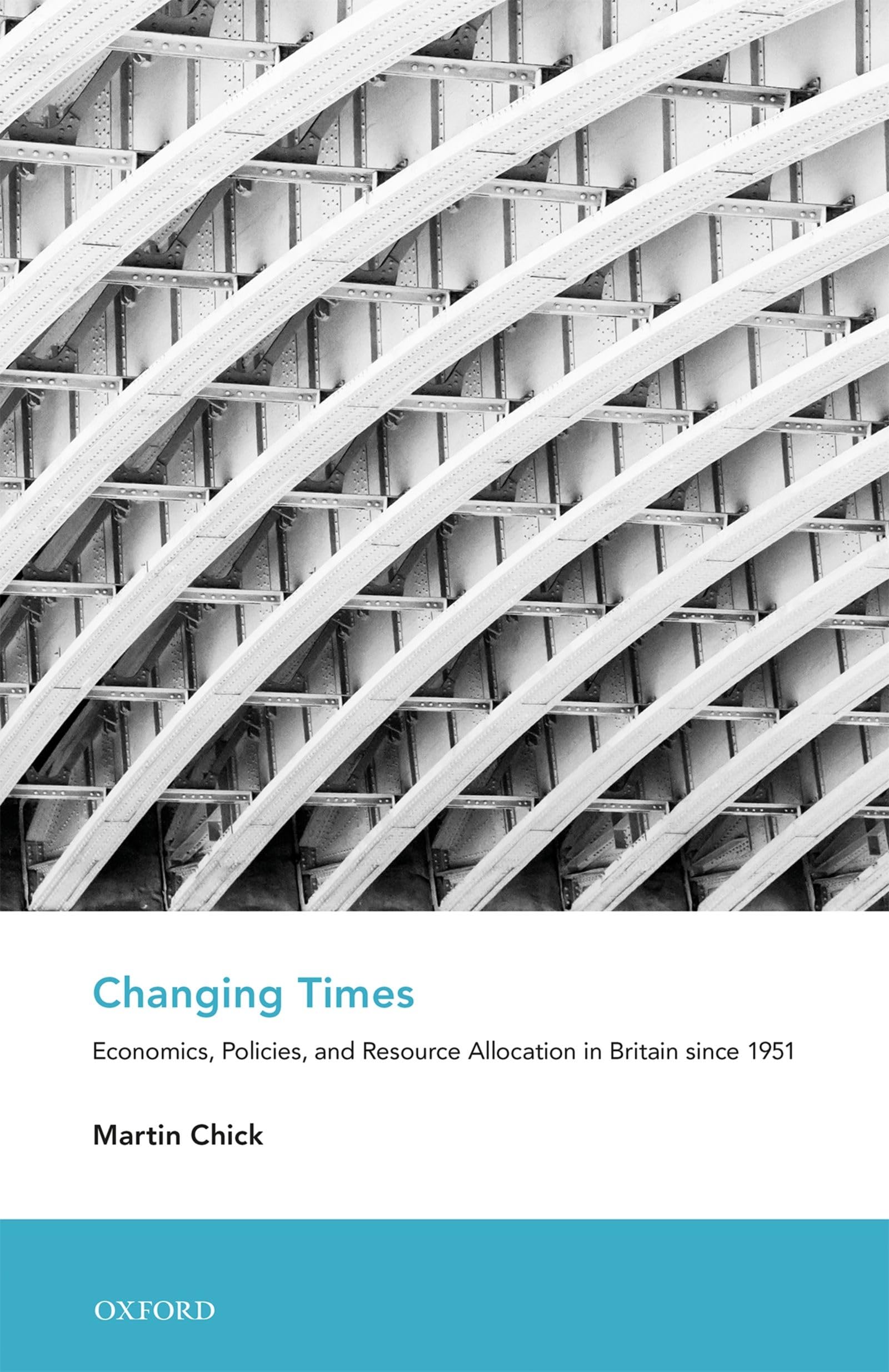
Title
Changing Times: Economics, Policies, and Resource Allocation in Britain since 1951 (An Economic and Social History of Britain),Used
Sold by Ergodebooks, an authorized reseller.
Returns accepted within 30 days | support@ergodebooks.com
Shipping Information
- Free Standard Shipping — United States only
- Processing Time: 3–5 business days
- Estimated Delivery: 6–10 business days after dispatch
- Double-boxed, fully insured & discreetly packaged
- Tracking number sent via email once dispatched
Returns & Refund
Returns accepted within 30 days of delivery.
Damaged or Defective Item
Free return shipping + replacement or full refund
Wrong Item Received
Free return shipping + replacement or full refund
Change of Mind
Return shipping at customer's expense · 25% restocking fee applies
Payment Option

This is a study of how, and why, the British economy has changed since 1951. It covers the Golden Age of 19451973 when unemployment was below one million; when governments built millions of council houses and flats; when electricity, telephones, and gas were supplied by nationalised monopolies; when income and wealth inequality were narrowing; and when the UK was not a member of the European Economic Community. Moving through the inflation, rising unemployment, and rapid contraction of the manufacturing industry from the mid 1970s, Changing Times examines the transfer of assets which was effected in the privatisation of public housing and nationalised industries from the early 1980s. The role of the State changed as public investment fell. The financing of oldage care, of state pensions, and of the National Health Service became of increasing concern and were less politically amenable to the approach of using private finance (the Private Finance Initiative and tuition fees) to fund former public obligations. Changes were made to the system of taxation, but public expenditure changed little as a share of national income, although the government now built little. Difficulties emerged in ensuring adequate housing for a growing population, and uncertainty grew as to where future investment in necessities like electricity supply would come from. Having narrowed in the Golden Age, inequality of income and wealth widened. Environmental concerns also grew, from the local smogs of the 1950s, through the concern with acid rain from the 1960s, to the current global concern with climate change. The financial crash of 2008 and the decision to 'Brexit' in the referendum of 2016 reduced economic growth and highlighted the extent of economic change since 1951. This is a study of that change.
⚠️ WARNING (California Proposition 65):
This product may contain chemicals known to the State of California to cause cancer, birth defects, or other reproductive harm.
For more information, please visit www.P65Warnings.ca.gov.