If you have any questions, you are always welcome to contact us. We'll get back to you as soon as possible, withing 24 hours on weekdays.
Customer service
All questions about your order, return and delivery must be sent to our customer service team by e-mail at yourstore@yourdomain.com
Sale & Press
If you are interested in selling our products, need more information about our brand or wish to make a collaboration, please contact us at press@yourdomain.com
Help
If you have any questions, you are always welcome to contact us. We'll get back to you as soon as possible, withing 24 hours on weekdays.
Customer service
All questions about your order, return and delivery must be sent to our customer service team by e-mail at yourstore@yourdomain.com
Sale & Press
If you are interested in selling our products, need more information about our brand or wish to make a collaboration, please contact us at press@yourdomain.com
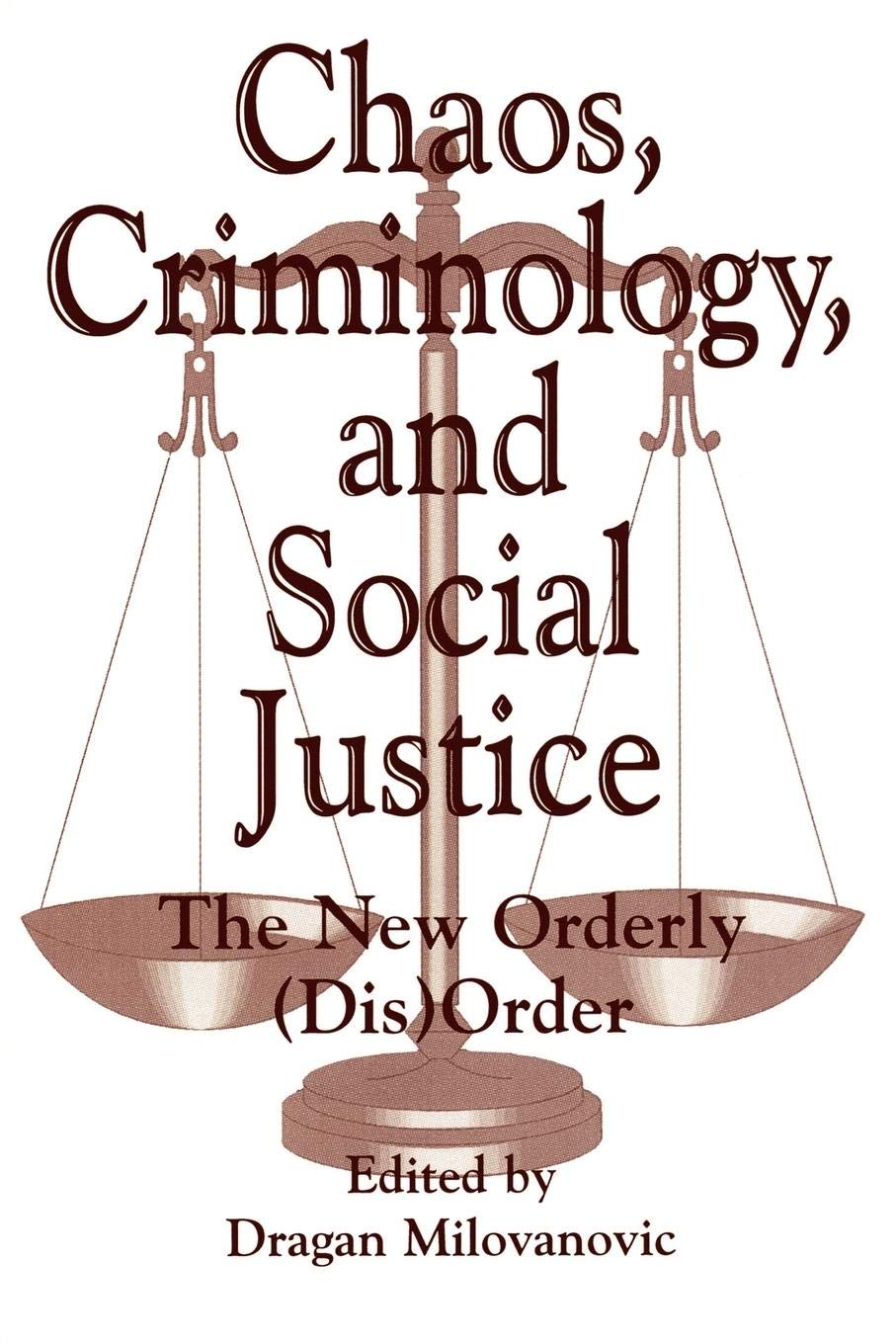
Chaos theory challenges the presumption that the cosmos is orderly, linear, and predictablebut it does not imply pure randomness and chance events. Rather, chaosinformed postmodernist analysis introduces a new vision by celebrating unexpected, surprise, ironic, contradictory, and emergent elements. Scholars in many disciplines are taking this perspective as an alternative to the entrenched structural functionalism and empiricism rooted in linear science. In the early 1990s studies began to emerge applying chaos theory to criminology, law, and social change. This book brings together some of the key thinkers in these areas. Part I situates chaos theory as a constitutive thread in contemporary critical thought in criminology and law. It seeks to provide the reader with a sensitivity to how chaos theory fits within the postmodern perspective and an understanding of its conceptual tools. Part II comprises chapters on applying the chaos perspective to critical criminology and law and, beyond, to peacemaking. Part III presents studies in chaosinformed perspectives on new social movement theory, social change, and the development of social justice. While the book emphasizes the usefulness of the conceptual tools of chaos theory in critical criminology and law, its ultimate goal goes beyond theorybuilding to provide vistas for understanding the contemporary social scene and for the development of the new just society.
⚠️ WARNING (California Proposition 65):
This product may contain chemicals known to the State of California to cause cancer,
birth defects, or other reproductive harm.
For MAP (Minimum Advertised Price) violations and Intellectual Property (IP) or Trademark concerns, please contact:
support@ergodebooks.com
⚠️ California Proposition 65 Warning: Some products sold on this website may expose you to chemicals known to the State of California to cause cancer, birth defects, or other reproductive harm. For more information, visit www.P65Warnings.ca.gov.