
Title
Chaotic Dynamics: An Introduction,New
Sold by Ergodebooks, an authorized reseller.
Returns accepted within 30 days | support@ergodebooks.com
Shipping Information
- Free Standard Shipping — United States only
- Processing Time: 3–5 business days
- Estimated Delivery: 6–10 business days after dispatch
- Double-boxed, fully insured & discreetly packaged
- Tracking number sent via email once dispatched
Returns & Refund
Returns accepted within 30 days of delivery.
Damaged or Defective Item
Free return shipping + replacement or full refund
Wrong Item Received
Free return shipping + replacement or full refund
Change of Mind
Return shipping at customer's expense · 25% restocking fee applies
Payment Option

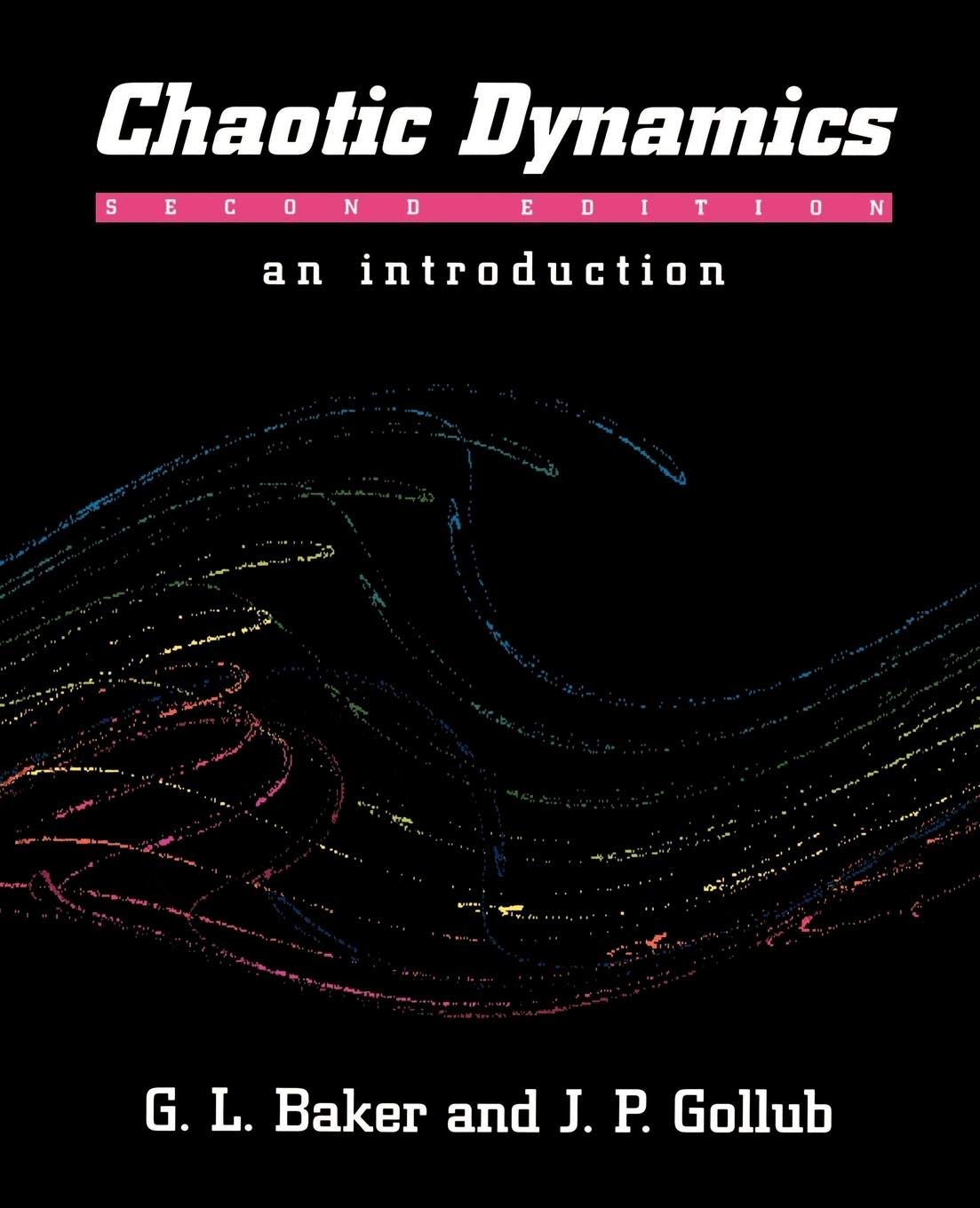
The previous edition of this text was the first to provide a quantitative introduction to chaos and nonlinear dynamics at the undergraduate level. It was widely praised for the clarity of writing and for the unique and effective way in which the authors presented the basic ideas. These same qualities characterize this revised and expanded second edition. Interest in chaotic dynamics has grown explosively in recent years. Applications to practically every scientific field have had a farreaching impact. As in the first edition, the authors present all the main features of chaotic dynamics using the damped, driven pendulum as the primary model. This second edition includes additional material on the analysis and characterization of chaotic data, and applications of chaos. This new edition of Chaotic Dynamics can be used as a text for courses on chaos for physics and engineering students at the second and thirdyear level.
⚠️ WARNING (California Proposition 65):
This product may contain chemicals known to the State of California to cause cancer, birth defects, or other reproductive harm.
For more information, please visit www.P65Warnings.ca.gov.
- Q: What is the main focus of 'Chaotic Dynamics: An Introduction'? A: The book provides a quantitative introduction to chaos and nonlinear dynamics, primarily using the damped, driven pendulum as a model.
- Q: Who is the author of this book? A: The author is Gregory L. Baker.
- Q: What edition is this book? A: This is the second edition of 'Chaotic Dynamics: An Introduction'.
- Q: When was the second edition published? A: The second edition was published on August 21, 2008.
- Q: How many pages does the book have? A: The book contains 256 pages.
- Q: What is the condition of the book? A: The book is listed as 'New'.
- Q: What subjects does this book cover? A: It covers chaotic dynamics and its applications across various scientific fields, making it suitable for physics and engineering students.
- Q: Is this book suitable for undergraduate students? A: Yes, it is designed as an introductory text for undergraduate students in chaos and nonlinear dynamics.
- Q: What are some key features of this book? A: Key features include clarity of writing, effective presentation of ideas, and additional material on the analysis and characterization of chaotic data.
- Q: Can this book be used as a textbook for courses? A: Yes, it can be used as a textbook for courses on chaos for second- and third-year physics and engineering students.