If you have any questions, you are always welcome to contact us. We'll get back to you as soon as possible, withing 24 hours on weekdays.
Customer service
All questions about your order, return and delivery must be sent to our customer service team by e-mail at yourstore@yourdomain.com
Sale & Press
If you are interested in selling our products, need more information about our brand or wish to make a collaboration, please contact us at press@yourdomain.com
Help
If you have any questions, you are always welcome to contact us. We'll get back to you as soon as possible, withing 24 hours on weekdays.
Customer service
All questions about your order, return and delivery must be sent to our customer service team by e-mail at yourstore@yourdomain.com
Sale & Press
If you are interested in selling our products, need more information about our brand or wish to make a collaboration, please contact us at press@yourdomain.com
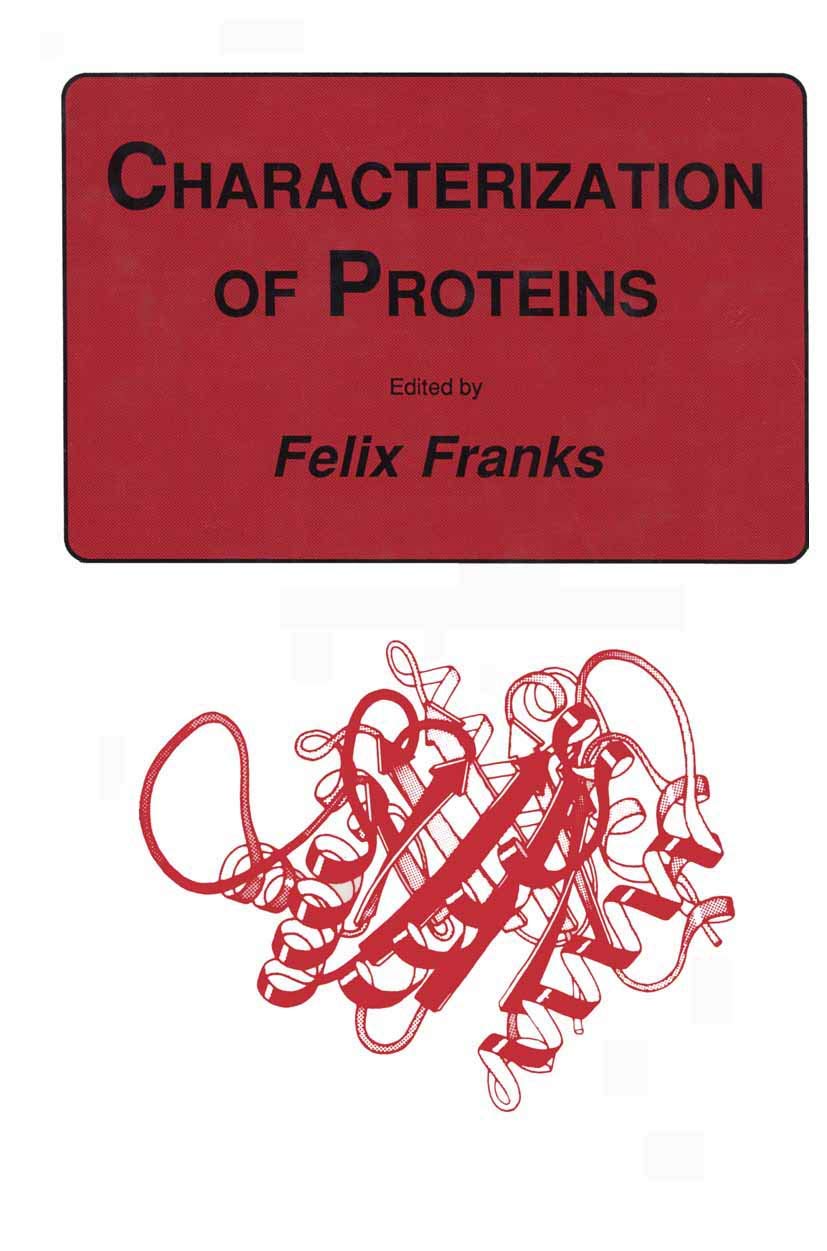
Proteins are the servants of life. They occur in all component parts of living organisms and are staggering in their functional var ty, despite their chemical similarity. Even the simplest singlecell organism contains a thousand different proteins, fulfilling a wide range of lifesupporting roles. Their production is controlled by the cells genetic machinery, and a malfunction of even one protein in the cell will give rise to pathological symptoms. Additions to the total number of known proteins are constantly being made on an increasing scale through the discovery of mutant strains or their production by genetic manipulation; this latter technology has become known as protein engineering. The in vivo functioning of proteins depends critically on the chemical structure of individual peptide chains, but also on the detailed folding of the chains themselves and on their assembly into larger supramolecular structures. The molecules and their fu tional assemblies possess a limited in vitro stability. Special methods are required for their intact isolation from the source material and for their analysis, both qualitatively and quantitatively. Proteins are also increasingly used as industrial components, e.g., in biosensors and immobilized enzymes, because of their specificity, selectivity, and sensitivity. This requires novel and refined proce ing methods by which the protein isolate can be converted into a form in which it can be utilized.
⚠️ WARNING (California Proposition 65):
This product may contain chemicals known to the State of California to cause cancer,
birth defects, or other reproductive harm.
For MAP (Minimum Advertised Price) violations and Intellectual Property (IP) or Trademark concerns, please contact:
support@ergodebooks.com
⚠️ California Proposition 65 Warning: Some products sold on this website may expose you to chemicals known to the State of California to cause cancer, birth defects, or other reproductive harm. For more information, visit www.P65Warnings.ca.gov.