
Title
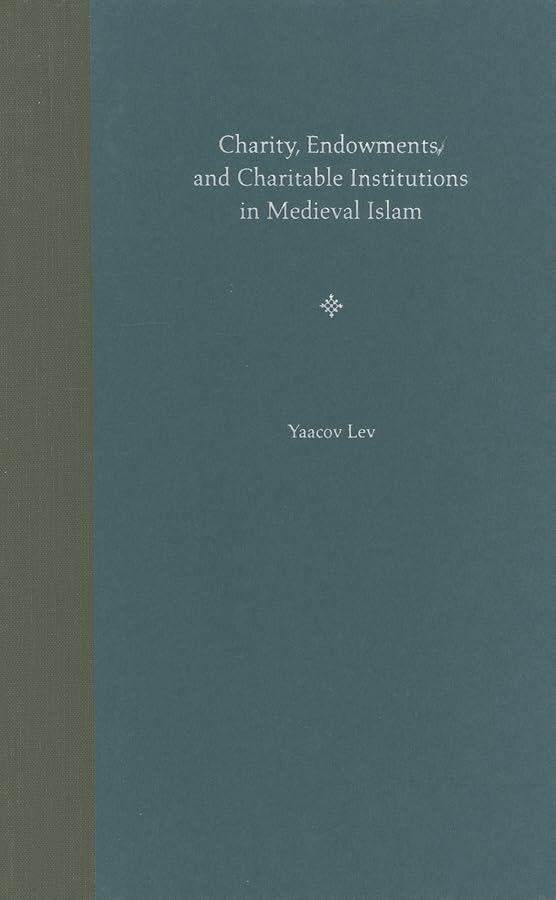
Charity, Endowments, And Charitable Institutions In Medieval Islam,Used
Sold by Ergodebooks, an authorized reseller.
Returns accepted within 30 days | support@ergodebooks.com
Shipping Information
- Free Standard Shipping — United States only
- Processing Time: 3–5 business days
- Estimated Delivery: 6–10 business days after dispatch
- Double-boxed, fully insured & discreetly packaged
- Tracking number sent via email once dispatched
Returns & Refund
Returns accepted within 30 days of delivery.
Damaged or Defective Item
Free return shipping + replacement or full refund
Wrong Item Received
Free return shipping + replacement or full refund
Change of Mind
Return shipping at customer's expense · 25% restocking fee applies
Payment Option

In this first comparative treatment of charity and charitable institutions in Islam and Muslim societies of the Middle East, Yaacov Lev mines a variety of primary sources, including Arabic chronicles, dictionaries, waqf (pious endowment) deeds, and epigraphic evidence. The book is not only broad in scope, covering a range of periods in medieval Islamincluding the Fatimids, Abbasids, Ayyubids, and the early Ottoman periodbut is also relevant to a range of issues and institutions, such as statecraft and political authority, urban society, law, education, health care, and gender. Charity is deeply embedded in the religious thought and teachings of the three monotheistic religions. This discussion, while focusing on medieval Islam, is set in a wider framework with many references to both Jewish and Christian parallels. Lev argues that medieval charity should be discussed within the context of monotheistic sacred charity, meaning redemptive almsgiving. As such, it transcends time and place and shows remarkable uniformity throughout changing historical circumstances.Lev examines three main topics: the meaning of charity to the individual, the social and political ramifications of almsgiving, and the impact of the institutionalized forms of charity (the awqaf system) on urban and rural societies. He analyzes the motives and attitudes of the donors (the caliphs, sultans, emirs, and the wealthy); the recipients of charity (the poor and the educated class); and the charitable institutions and services that provided the framework for conveyance (hospitals, Koranic schools, and law colleges, the ransom of captives, and support of orphans and widows).
⚠️ WARNING (California Proposition 65):
This product may contain chemicals known to the State of California to cause cancer, birth defects, or other reproductive harm.
For more information, please visit www.P65Warnings.ca.gov.