
Title
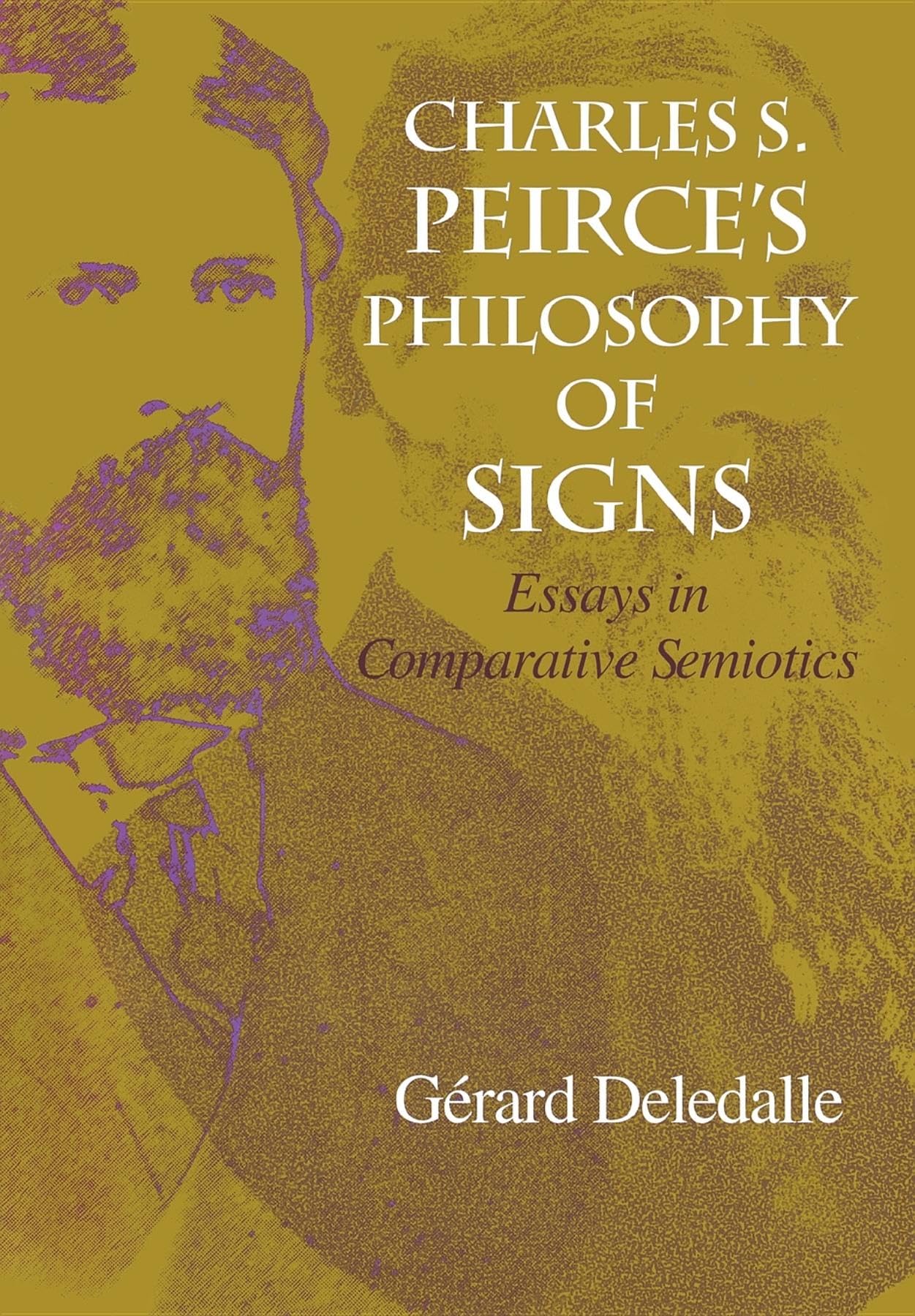
Charles S. Peirce's Philosophy of Signs: Essays in Comparative Semiotics (Advances in Semiotics series),Used
Sold by Ergodebooks, an authorized reseller.
Returns accepted within 30 days | support@ergodebooks.com
Shipping Information
- Free Standard Shipping — United States only
- Processing Time: 3–5 business days
- Estimated Delivery: 6–10 business days after dispatch
- Double-boxed, fully insured & discreetly packaged
- Tracking number sent via email once dispatched
Returns & Refund
Returns accepted within 30 days of delivery.
Damaged or Defective Item
Free return shipping + replacement or full refund
Wrong Item Received
Free return shipping + replacement or full refund
Change of Mind
Return shipping at customer's expense · 25% restocking fee applies
Payment Option

[Note: Picture of Peirce available]Charles S. Peirce's Philosophy of SignsEssays in Comparative SemioticsGrard DeledallePeirce's semiotics and metaphysics compared to the thought of other leading philosophers."This is essential reading for anyone who wants to find common ground between the best of American semiotics and betterknown European theories. Deledalle has done more than anyone else to introduce Peirce to European audiences, and now he sends Peirce home with some new flare."Nathan Houser, Director, Peirce Edition ProjectCharles S. Peirce's Philosophy of Signs examines Peirce's philosophy and semiotic thought from a European perspective, comparing the American's unique views with a wide variety of work by thinkers from the ancients to moderns. Parts I and II deal with the philosophical paradigms which are at the root of Peirce's new theory of signs, pragmatic and social. The main concepts analyzed are those of "sign" and "semiosis" and their respective trichotomies; formally in the case of "sign," in time in the case of semiosis. Part III is devoted to comparing Peirce's theory of semiotics as a form of logic to the work of other philosophers, including Bertrand Russell, Wittgenstein, Frege, Philodemus, Lady Welby, Saussure, Morris, Jakobson, and Marshall McLuhan. Part IV compares Peirce's "scientific metaphysics" with European metaphysics.Grard Deledalle holds the Doctorate in Philosophy from the Sorbonne. A research scholar at Columbia University and Attach at the Centre National de la Recherche Scientifique, Paris, he has also been Professor of Philosophy and Head of the Philosophy Department of the universities of Tunis, Perpignan, and Libreville. In 1990 he received the Herbert W. Schneider Award "for distinguished contributions to the understanding and development of American philosophy. In 2001, he was appointed vicepresident of the Charles S. Peirce Society.ContentsIntroductionPeirce Compared: Directions for UsePart ISemeiotic as PhilosophyPeirce's New Philosophical ParadigmsPeirce's Philosophy of SemeioticPeirce's First Pragmatic Papers (18771878)The Postscriptum of 1893Part IISemeiotic as SemioticsSign: Semiosis and RepresentamenSemiosis and TimeSign: The Concept and Its UseReading as TranslationPart IIIComparative SemioticsSemiotics and Logic: A Reply to Jerzy PelcSemeiotic and Greek Logic: Peirce and PhilodemusSemeiotic and Significs: Peirce and Lady WelbySemeiotic and Semiology: Peirce and SaussureSemeiotic and Semiotics: Peirce and MorrisSemeiotic and Linguistics: Peirce and JakobsonSemeiotic and Communication: Peirce and McLuhanSemeiotic and Epistemology: Peirce, Frege, and WittgensteinPart IVComparative MetaphysicsGnoseologyPerceiving and Knowing: Peirce, Wittgenstein, and GestalttheorieOntologyTranscendentals "of" or "without" Being: Peirce versus Aristotle and Thomas AquinasCosmologyChaos and Chance within Order and Continuity: Peirce between Plato and DarwinTheologyThe Reality of God: Peirce's Triune God and the Church's TrinityConclusionPeirce: A Lateral View
⚠️ WARNING (California Proposition 65):
This product may contain chemicals known to the State of California to cause cancer, birth defects, or other reproductive harm.
For more information, please visit www.P65Warnings.ca.gov.