
Title
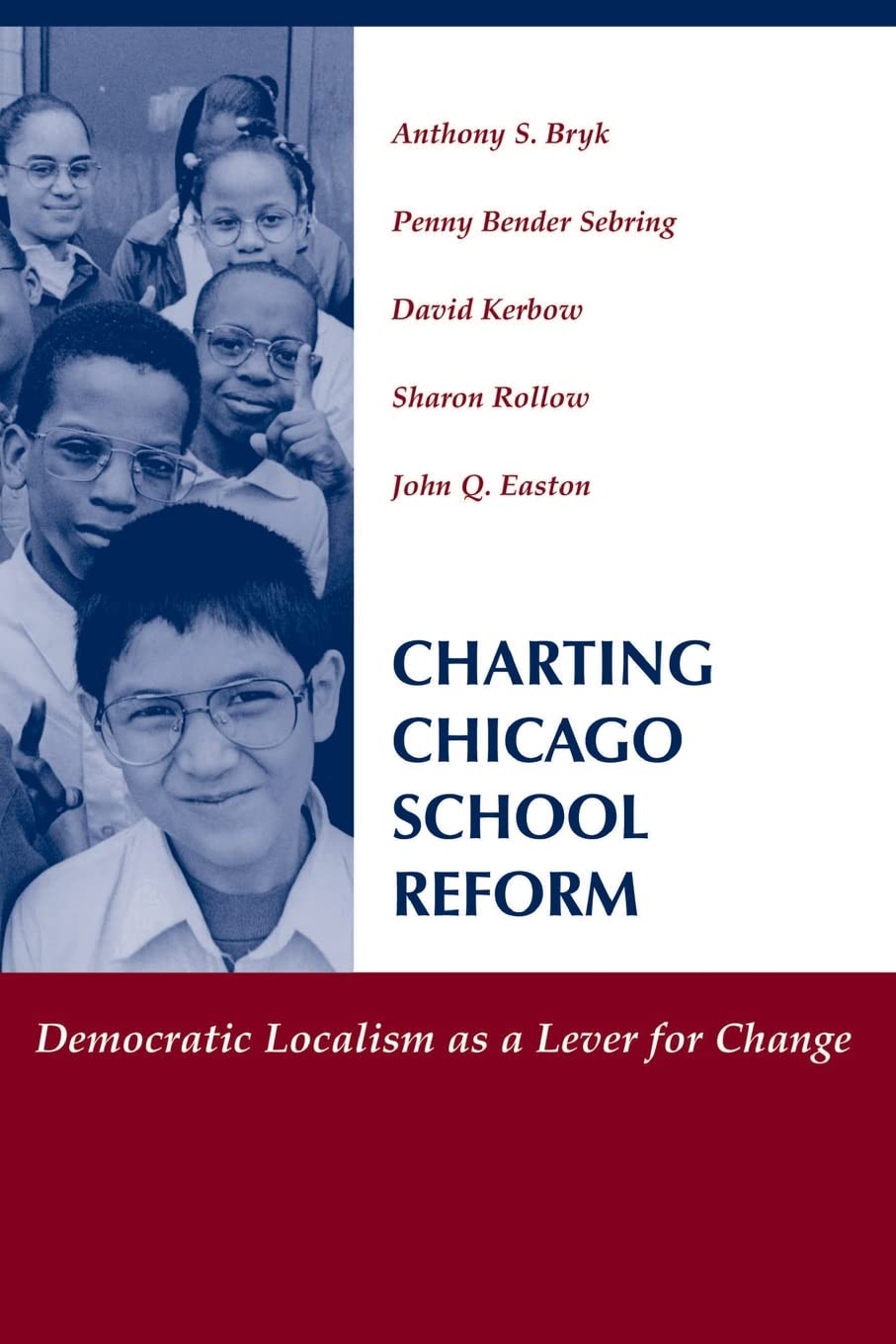
Charting Chicago School Reform: Democratic Localism As A Lever For Change,Used
Sold by Ergodebooks, an authorized reseller.
Returns accepted within 30 days | support@ergodebooks.com
Shipping Information
- Free Standard Shipping — United States only
- Processing Time: 3–5 business days
- Estimated Delivery: 6–10 business days after dispatch
- Double-boxed, fully insured & discreetly packaged
- Tracking number sent via email once dispatched
Returns & Refund
Returns accepted within 30 days of delivery.
Damaged or Defective Item
Free return shipping + replacement or full refund
Wrong Item Received
Free return shipping + replacement or full refund
Change of Mind
Return shipping at customer's expense · 25% restocking fee applies
Payment Option

In 1989, Chicago began an experiment with radical decentralization of power and authority. This book tells the story of what happened to Chicago's elementary schools in the first four years of this reform. Implicit in this reform is the theory that expanded local democratic participation would stimulate organizational change within schools, which in turn would foster improved teaching and learning. Using this theory as a framework, the authors marshal massive quantitative and qualitative data to examine how the reform actually unfolded at the school level.With longitudinal case study data on 22 schools, survey responses from principals and teachers in 269 schools, and supplementary systemwide administrative data, the authors identify four types of school politics: strong democracy, consolidated principal power, maintenance, and adversarial. In addition, they classify school change efforts as either systemic or unfocused. Bringing these strands together, the authors determine that, in about a third of the schools, expanded local democratic participation served as a strong lever for introducing systemic change focused on improved instruction. Finally, case studies of six actively restructuring schools illustrate how under decentralization the principal's role is recast, social support for change can grow, and ideas and information from external sources are brought to bear on school change initiatives. Few studies intertwine so completely extensive narratives and rigorous quantitative analyses. The result is a complex picture of the Chicago reform that joins the politics of local control to school change.This volume is intended for scholars in the fields of urban education, public policy, sociology of education, anthropology of education, and politics of education. Comprehensive and descriptive, it is an engaging text for graduate students and upperlevel undergraduates. Local, state, and federal policymakers who are concerned with urban education will find new and insightful material. The book should be on reading lists and in professional development seminars for school principals who want to garner community support for change and for school community leaders who want more responsive local institutions. Finally, educators, administrators, and activists in Chicago will appreciate this detailed analysis of the early years of reform.
⚠️ WARNING (California Proposition 65):
This product may contain chemicals known to the State of California to cause cancer, birth defects, or other reproductive harm.
For more information, please visit www.P65Warnings.ca.gov.