
Title
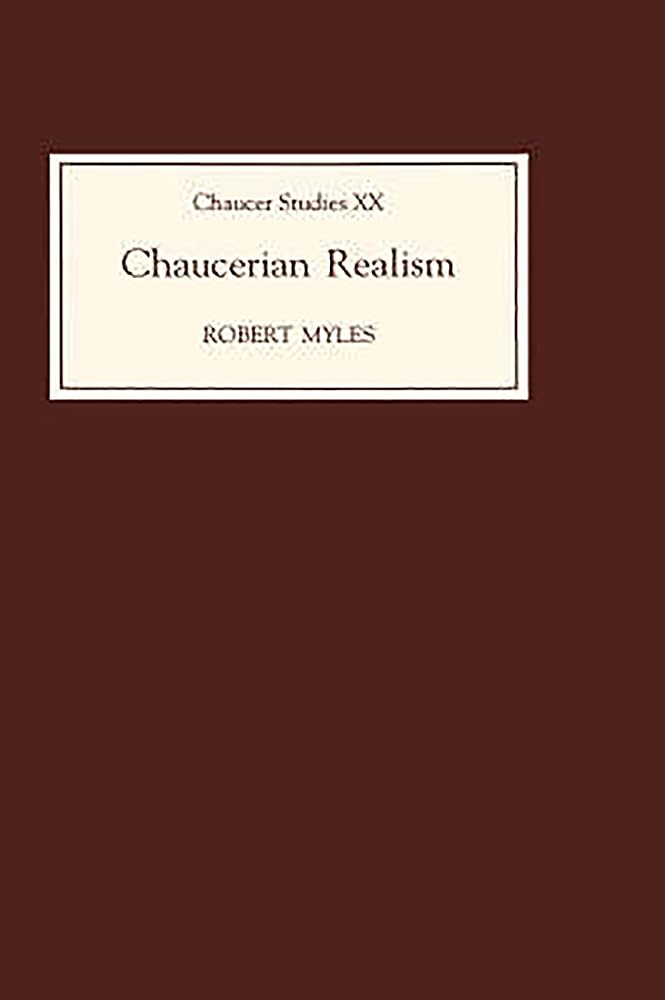
Chaucerian Realism (Chaucer Studies, 20) (Volume 20),Used
Sold by Ergodebooks, an authorized reseller.
Returns accepted within 30 days | support@ergodebooks.com
Shipping Information
- Free Standard Shipping — United States only
- Processing Time: 3–5 business days
- Estimated Delivery: 6–10 business days after dispatch
- Double-boxed, fully insured & discreetly packaged
- Tracking number sent via email once dispatched
Returns & Refund
Returns accepted within 30 days of delivery.
Damaged or Defective Item
Free return shipping + replacement or full refund
Wrong Item Received
Free return shipping + replacement or full refund
Change of Mind
Return shipping at customer's expense · 25% restocking fee applies
Payment Option

Myles challenges the convention of the medieval mind' and perceives new semantic sophistication in Chaucer's language.NB DSB BLURB ON CERTAIN OCCASIONS What is the difference between saying something and meaning it, and saying something and not meaning it? A modern question. A Chaucerian question. Through his analysis of intentionality and the metaphysics of speech, Robert Myles shows why Chaucer's appreciation of the functioning of language and thought could be modern'. Through his analysis of Chaucer's works, particularly the Friar's Tale, Myles demonstrates that Chaucer's understanding of these is modern and the myth of the medieval mind as other than our own is exploded. The medieval belief in intentionality, the objectdirectedness of all beings, allowed appreciationof a fact: thought and language areintentional. On a practical level Chaucer deliberately exploits threelevel semantics (signs are simultaneously minddrected and worlddirected) to create realistic' fiction in the modernliterary sense of the term. Myles also argues that Chaucer is a realist in the philosophical sense, a view which goes counter to the current of much recent criticism. This book will not only be a challenging addition to medievaland Chaucerian studies, but has interesting implications for the historical study of intentionality, semiotics and epistemology.DR ROBERT MYLESis senior lecturer at the English and French Language Centre, McGill University, and a research fellow at the Department of English, McGill University, Montreal, Canada.
⚠️ WARNING (California Proposition 65):
This product may contain chemicals known to the State of California to cause cancer, birth defects, or other reproductive harm.
For more information, please visit www.P65Warnings.ca.gov.