If you have any questions, you are always welcome to contact us. We'll get back to you as soon as possible, withing 24 hours on weekdays.
Customer service
All questions about your order, return and delivery must be sent to our customer service team by e-mail at yourstore@yourdomain.com
Sale & Press
If you are interested in selling our products, need more information about our brand or wish to make a collaboration, please contact us at press@yourdomain.com
Help
If you have any questions, you are always welcome to contact us. We'll get back to you as soon as possible, withing 24 hours on weekdays.
Customer service
All questions about your order, return and delivery must be sent to our customer service team by e-mail at yourstore@yourdomain.com
Sale & Press
If you are interested in selling our products, need more information about our brand or wish to make a collaboration, please contact us at press@yourdomain.com
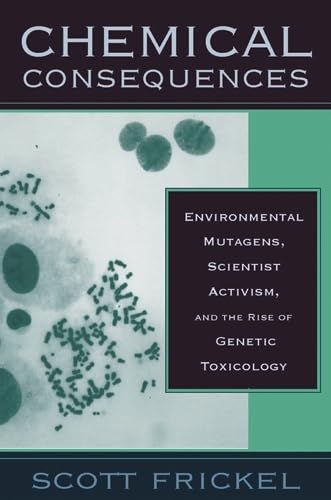
Hereis the first historical and sociological account of the formation of an interdisciplinary science known as genetic toxicology, and of the scientists social movement that created it.After research geneticists discovered that synthetic chemicals were capable of changing the genetic structure of living organisms, scientists began to explore how these chemicals affected gene structure and function. In the late 1960s, a small group of biologists became concerned that chemical mutagens represented a serious and possibly global environmental threat.Genetic toxicology is nurtured as much by public culture as by professional practices, reflecting the interplay of genetics research and environmental politics. Drawing on a wealth of resources, Scott Frickel examines the creation of this field through the lens of social movement theory. He reveals how a committed group of scientistactivists transformed chemical mutagens into environmental problems, mobilized existing research networks, recruited scientists and politicians, secured financial resources, and developed new ways of acquiring knowledge. The result is a book that vividly illustrates how science and activism were interwoven to create a discipline that remains a defining feature of environmental health science.
⚠️ WARNING (California Proposition 65):
This product may contain chemicals known to the State of California to cause cancer,
birth defects, or other reproductive harm.
For MAP (Minimum Advertised Price) violations and Intellectual Property (IP) or Trademark concerns, please contact:
support@ergodebooks.com
⚠️ California Proposition 65 Warning: Some products sold on this website may expose you to chemicals known to the State of California to cause cancer, birth defects, or other reproductive harm. For more information, visit www.P65Warnings.ca.gov.