
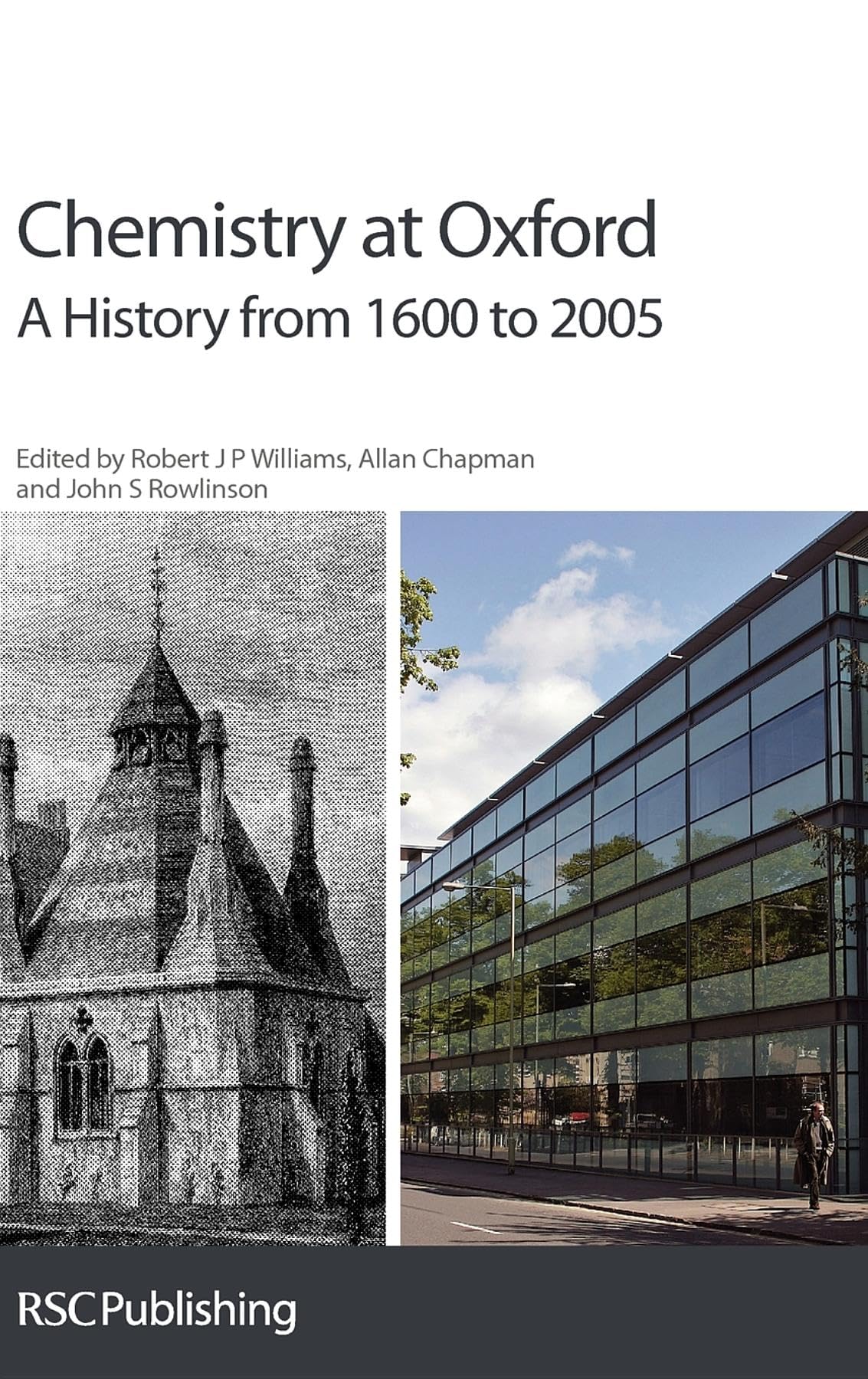
Title
Chemistry at Oxford: A History from 1600 to 2005,Used
Sold by Ergodebooks, an authorized reseller.
Returns accepted within 30 days | support@ergodebooks.com
Shipping Information
- Free Standard Shipping — United States only
- Processing Time: 3–5 business days
- Estimated Delivery: 6–10 business days after dispatch
- Double-boxed, fully insured & discreetly packaged
- Tracking number sent via email once dispatched
Returns & Refund
Returns accepted within 30 days of delivery.
Damaged or Defective Item
Free return shipping + replacement or full refund
Wrong Item Received
Free return shipping + replacement or full refund
Change of Mind
Return shipping at customer's expense · 25% restocking fee applies
Payment Option

This fascinating and unique history reveals the major influence of the Oxford Chemistry School on the advancement of chemistry. It shows how the nature of the University, and individuals within it, have shaped the school and made great achievements both in teaching and research. The book will appeal to those interested in the history of science and education, the city of Oxford and chemistry in general. Chemistry has been studied in Oxford for centuries but this book focuses on the last 400 years and, in particular, the seminal work of Robert Boyle, Robert Hooke, and the proto Royal Society of the 1650's. Arranged in chronological fashion, it includes specialist studies of particular areas of innovation. The book shows that chemistry has advanced, not just as a consequence of research but, because of the idiosynchratic nature of the collegiate system and the characters of the individuals involved. In other words, it demonstrates that science is a human endeavour and its advance in any institution is conditioned by the organization and people within it. For chemists, the main appeal will be the book's examination of the way separate branches of chemistry (organic, physical, inorganic and biological) have evolved in Oxford. It also enables comparison with the development of the subject at other universities such as Cambridge, London and Manchester. For historians and sociologists, the book reveals the motivations of both scientists and nonscientists in the management of the School. It exposes the unusual character of Oxford University and the tensions between science and administration. The desire of the college to retain its academic values in the face of external and financial pressures is emphasized.
⚠️ WARNING (California Proposition 65):
This product may contain chemicals known to the State of California to cause cancer, birth defects, or other reproductive harm.
For more information, please visit www.P65Warnings.ca.gov.