
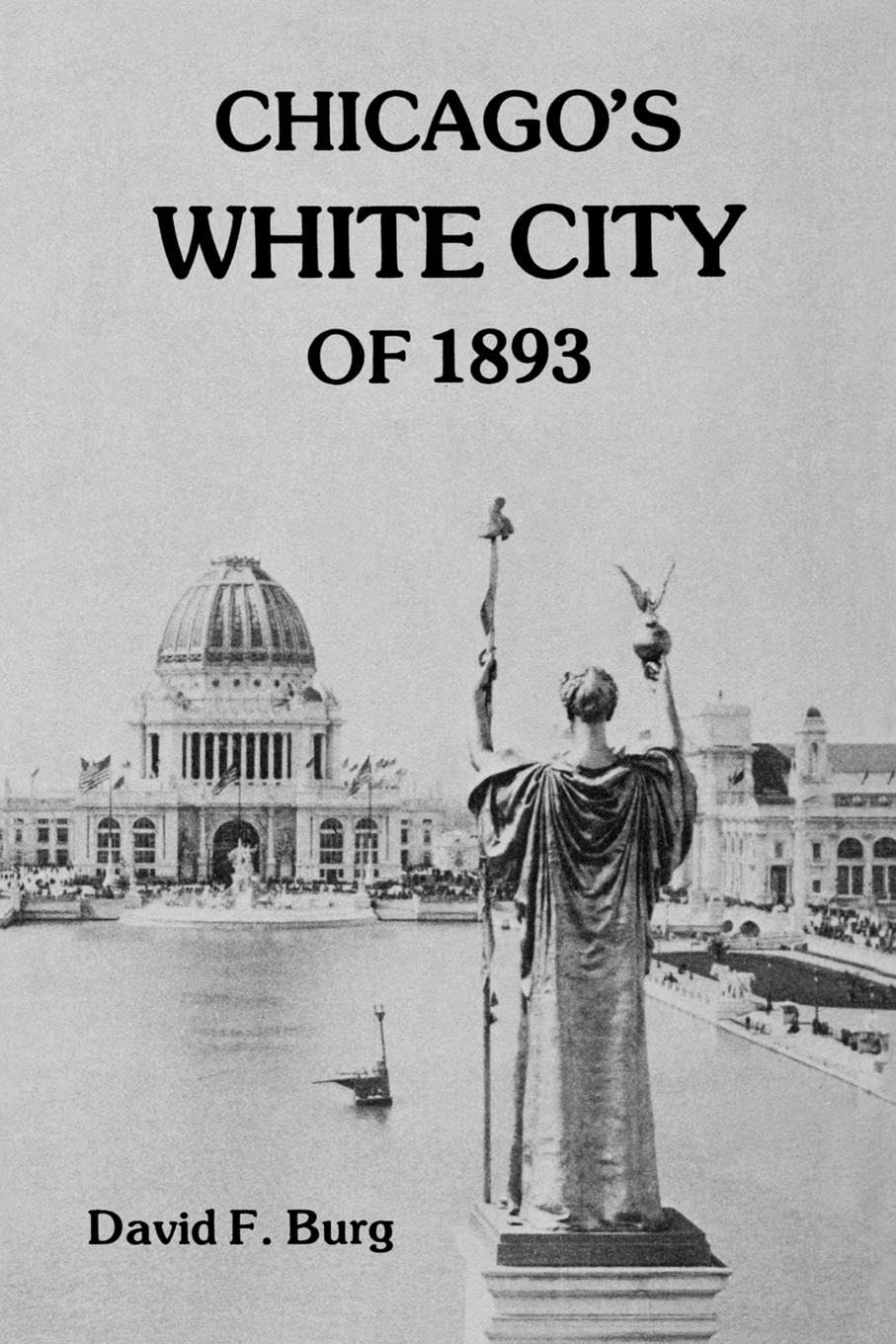
Title
Chicago'S White City Of 1893 (Reprint),Used
Sold by Ergodebooks, an authorized reseller.
Returns accepted within 30 days | support@ergodebooks.com
Shipping Information
- Free Standard Shipping — United States only
- Processing Time: 3–5 business days
- Estimated Delivery: 6–10 business days after dispatch
- Double-boxed, fully insured & discreetly packaged
- Tracking number sent via email once dispatched
Returns & Refund
Returns accepted within 30 days of delivery.
Damaged or Defective Item
Free return shipping + replacement or full refund
Wrong Item Received
Free return shipping + replacement or full refund
Change of Mind
Return shipping at customer's expense · 25% restocking fee applies
Payment Option

In 1893, the year that marked the four hundredth anniversary of the landing of Columbus in the New World, Chicago was host to an exposition to mark the occasion. Although the World's Columbian Exposition was the fifteenth world's fair, it was of vastly greater scope than any of its predecessors. Chicago created a veritable new city. It was not only larger than any previous exposition but also more elaborately designed, more precisely laid out, more fully realized, and more prophetic. It was the first exposition truly to solicit the participation of the entire world.In this study of the White City, David F. Burg shows America at a crossroads in its development. It was in the process of moving from a largely agricultural society to a predominately urban and industrial one. The exposition was an index of American values, achievements, and expectation in this era of profound and complex change. The exposition was an achievement of cooperative endeavor and expertise. It demonstrated that both artistic capacity and technology were available to transform, in agreeable combination, burgeoning industrial cities into welldesigned centers of business, culture, and community.Burg places his discussion in the context of the United States and Chicago during the early 1890s. Besides dealing with the multifaceted fair itselfits architecture, artworks, music, technological achievementshe discusses the congresses that were held on a variety of subjects, two of the most significant being the Congresses of Women and the World's Parliament of Religions.In the exposition's theme was the potential of fashioning the Kingdom of God on earth in contrast to the chaotic, dirty, industrial cities of the time. Burg finds in the exposition a significant legacy to architecture, city planning, and civic organization. Its most promising aftereffect occurred in the City Beautiful movement; its influence extended also to such ordinary concerns as welllighted streets, efficient waste disposal, and honest government.
⚠️ WARNING (California Proposition 65):
This product may contain chemicals known to the State of California to cause cancer, birth defects, or other reproductive harm.
For more information, please visit www.P65Warnings.ca.gov.