If you have any questions, you are always welcome to contact us. We'll get back to you as soon as possible, withing 24 hours on weekdays.
Customer service
All questions about your order, return and delivery must be sent to our customer service team by e-mail at yourstore@yourdomain.com
Sale & Press
If you are interested in selling our products, need more information about our brand or wish to make a collaboration, please contact us at press@yourdomain.com
Help
If you have any questions, you are always welcome to contact us. We'll get back to you as soon as possible, withing 24 hours on weekdays.
Customer service
All questions about your order, return and delivery must be sent to our customer service team by e-mail at yourstore@yourdomain.com
Sale & Press
If you are interested in selling our products, need more information about our brand or wish to make a collaboration, please contact us at press@yourdomain.com
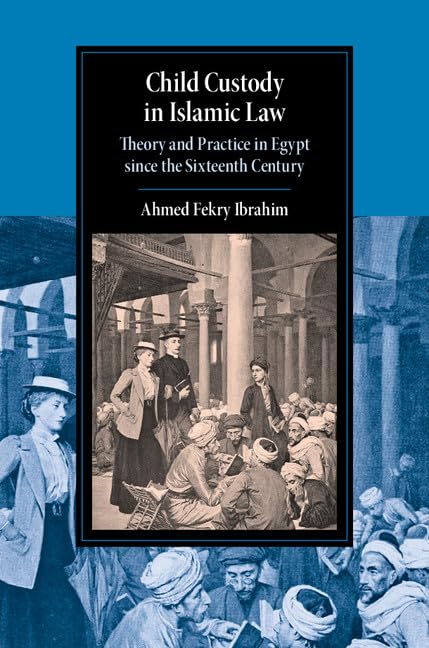
Premodern Muslim jurists drew a clear distinction between the nurturing and upkeep of children, or 'custody', and caring for the child's education, discipline, and property, known as 'guardianship'. Here, Ahmed Fekry Ibrahim analyzes how these two concepts relate to the welfare of the child, and traces the development of an Islamic child welfare jurisprudence akin to the EuroAmerican concept of the best interests of the child, enshrined in the Convention on the Rights of the Child (CRC). Challenging EuroAmerican exceptionalism, he argues that child welfare played an essential role in agreements designed by early modern Egyptian judges and families, and that Egyptian child custody laws underwent radical transformations in the modern period. Focusing on a variety of themes, including matters of age and gender, the mother's marital status, and the custodian's lifestyle and religious affiliation, Ibrahim shows that there is an exaggerated gap between the modern concept of the best interests of the child and premodern Egyptian approaches to child welfare.
⚠️ WARNING (California Proposition 65):
This product may contain chemicals known to the State of California to cause cancer,
birth defects, or other reproductive harm.
For MAP (Minimum Advertised Price) violations and Intellectual Property (IP) or Trademark concerns, please contact:
support@ergodebooks.com
⚠️ California Proposition 65 Warning: Some products sold on this website may expose you to chemicals known to the State of California to cause cancer, birth defects, or other reproductive harm. For more information, visit www.P65Warnings.ca.gov.