
Title
Children Of Fate: Childhood, Class, And The State In Chile, 18501930,New
Sold by Ergodebooks, an authorized reseller.
Returns accepted within 30 days | support@ergodebooks.com
Shipping Information
- Free Standard Shipping — United States only
- Processing Time: 3–5 business days
- Estimated Delivery: 6–10 business days after dispatch
- Double-boxed, fully insured & discreetly packaged
- Tracking number sent via email once dispatched
Returns & Refund
Returns accepted within 30 days of delivery.
Damaged or Defective Item
Free return shipping + replacement or full refund
Wrong Item Received
Free return shipping + replacement or full refund
Change of Mind
Return shipping at customer's expense · 25% restocking fee applies
Payment Option

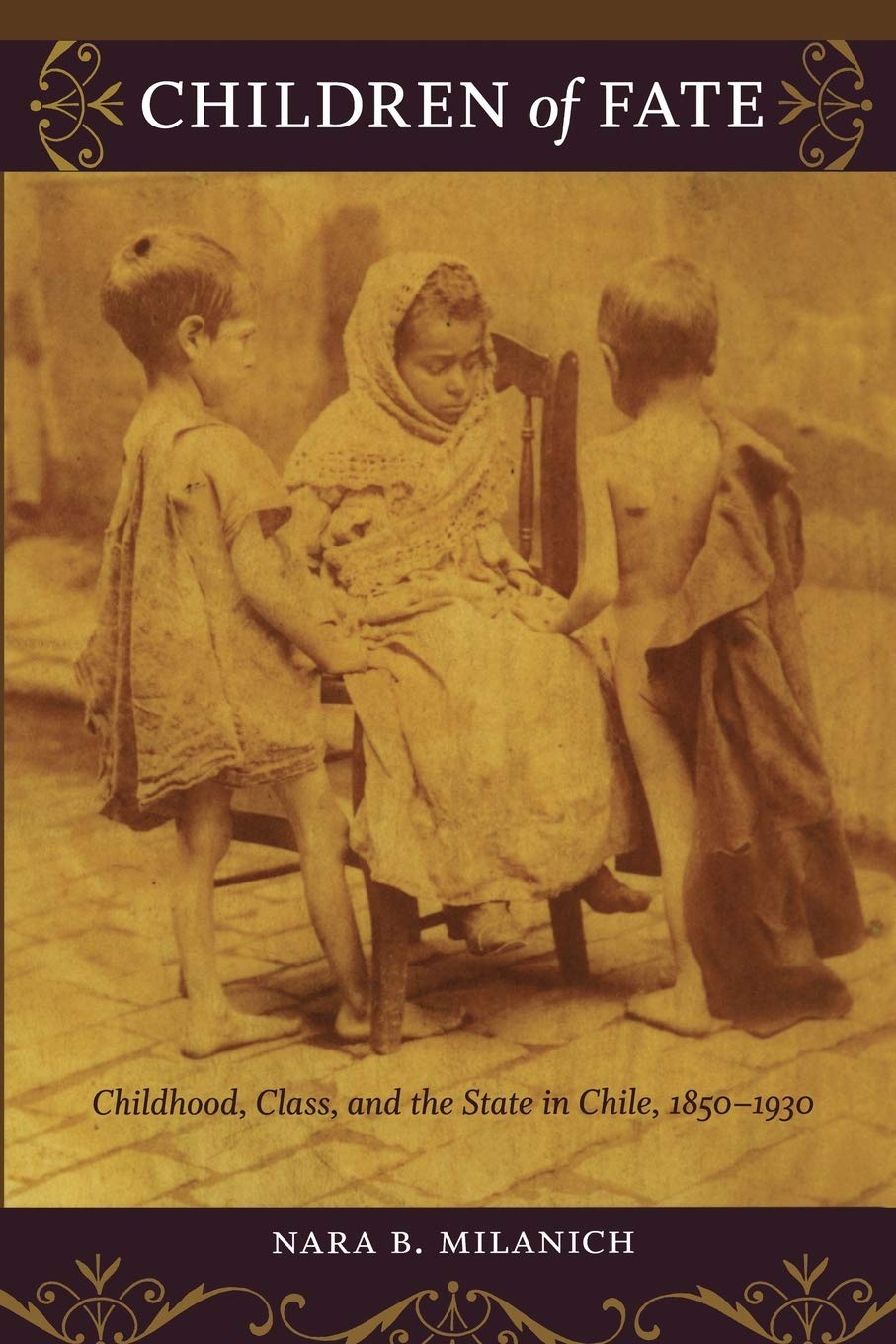
In modern Latin America, profound social inequalities have persisted despite the promise of equality. Nara B. Milanich argues that social and legal practices surrounding family and kinship have helped produce and sustain these inequalities. Tracing families both elite and plebeian in latenineteenth and earlytwentiethcentury Chile, she focuses on a group largely invisible in Latin American historiography: children. The concept of family constituted a crucial dimension of an individuals identity and status, but also denoted a privileged set of gendered and generational dependencies that not all people could claim. Children of Fate explores such themes as paternity, illegitimacy, kinship, and child circulation over the course of eighty years of Chiles modern history to illuminate the ways family practices and ideologies powerfully shaped the lives of individuals as well as broader social structures.Milanich pays particular attention to family law, arguing that liberal legal reforms wrought in the 1850s, which left the paternity of illegitimate children purposely unrecorded, reinforced not only patriarchal power but also hierarchies of class. Through vivid stories culled from judicial and notarial sources and from a cache of documents found in the closet of a Santiago orphanage, she reveals how law and bureaucracy helped create an anonymous underclass bereft of kin entitlements, dependent on the charity of others, and marginalized from public bureaucracies. Milanich also challenges the recent scholarly emphasis on state formation by highlighting the enduring importance of private, informal, and extralegal relations of power within and across households. Children of Fate demonstrates how the study of children can illuminate the social organization of gender and class, liberalism, law, and state power in modern Latin America.
⚠️ WARNING (California Proposition 65):
This product may contain chemicals known to the State of California to cause cancer, birth defects, or other reproductive harm.
For more information, please visit www.P65Warnings.ca.gov.