If you have any questions, you are always welcome to contact us. We'll get back to you as soon as possible, withing 24 hours on weekdays.
Customer service
All questions about your order, return and delivery must be sent to our customer service team by e-mail at yourstore@yourdomain.com
Sale & Press
If you are interested in selling our products, need more information about our brand or wish to make a collaboration, please contact us at press@yourdomain.com
Help
If you have any questions, you are always welcome to contact us. We'll get back to you as soon as possible, withing 24 hours on weekdays.
Customer service
All questions about your order, return and delivery must be sent to our customer service team by e-mail at yourstore@yourdomain.com
Sale & Press
If you are interested in selling our products, need more information about our brand or wish to make a collaboration, please contact us at press@yourdomain.com
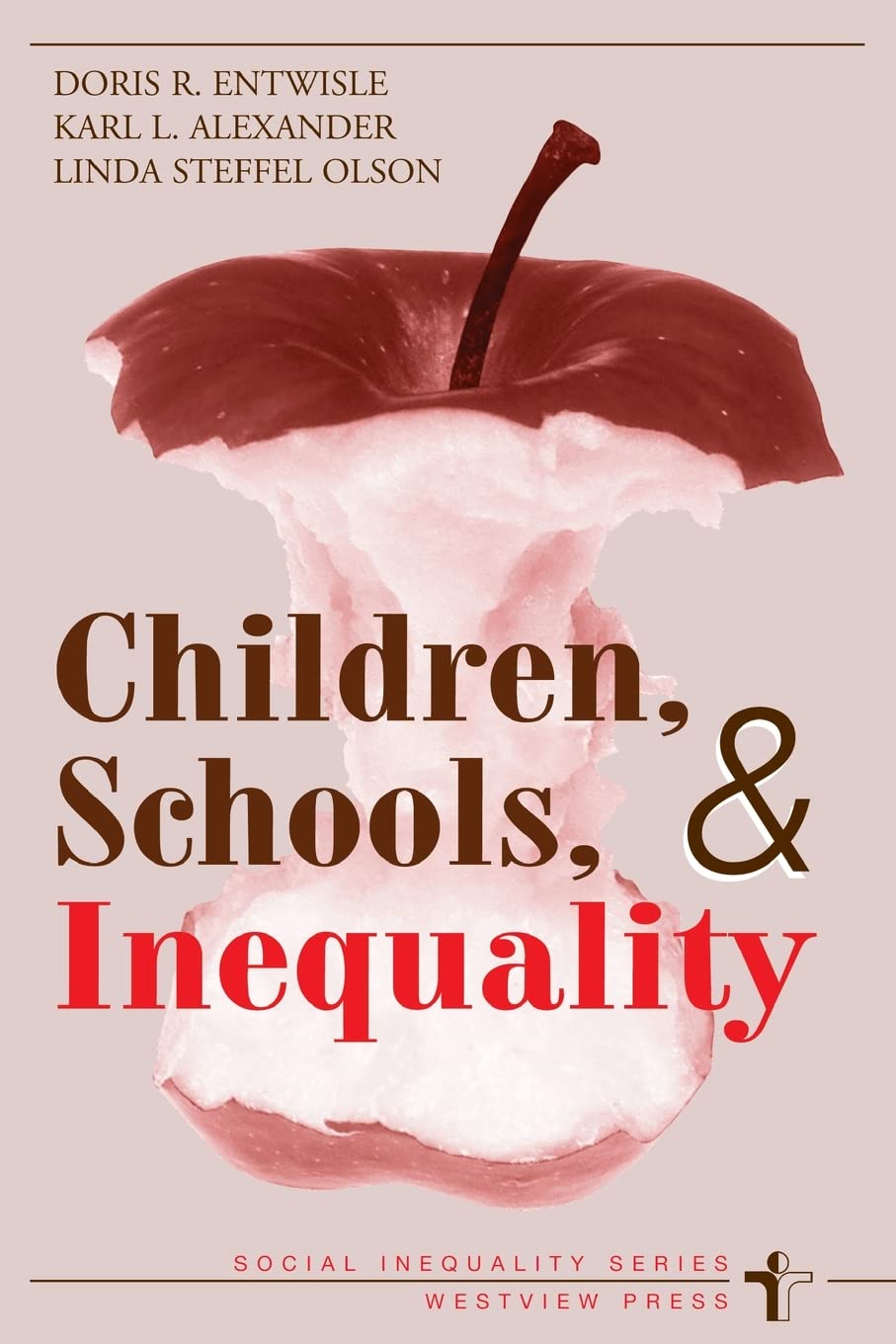
Educational sociologists have paid relatively little attention to children in middle childhood (ages 6 to 12), whereas developmental psychologists have emphasized factors internal to the child much more than the social contexts in explaining children's development. Children, Schools, and Inequality redresses that imbalance. It examines elementary school outcomes (e.g., test scores, grades, retention rates) in light of the socioeconomic variation in schools and neighborhoods, the organizational patterns across elementary schools, and the ways in which family structure intersects with children's school performance. Adding data from the Baltimore Beginning School Study to information culled from the fields of sociology, child development, and education, this book suggests why the gap between the school achievement of poor children and those who are better off has been so difficult to close. Doris Enwistle, Karl Alexander, and Linda Olson show why the firstgrade transition?how children negotiate entry into fulltime schooling?is a crucial period. They also show that events over that time have repercussions that echo throughout children's entire school careers. Currently the only study of this life transition to cover a comprehensive sample and to suggest straightforward remedies for urban schools, Children, Schools, and Inequality can inform educators, practitioners, and policymakers, as well as researchers in the sociology of education and child development.
⚠️ WARNING (California Proposition 65):
This product may contain chemicals known to the State of California to cause cancer,
birth defects, or other reproductive harm.
For MAP (Minimum Advertised Price) violations and Intellectual Property (IP) or Trademark concerns, please contact:
support@ergodebooks.com
⚠️ California Proposition 65 Warning: Some products sold on this website may expose you to chemicals known to the State of California to cause cancer, birth defects, or other reproductive harm. For more information, visit www.P65Warnings.ca.gov.