
Title
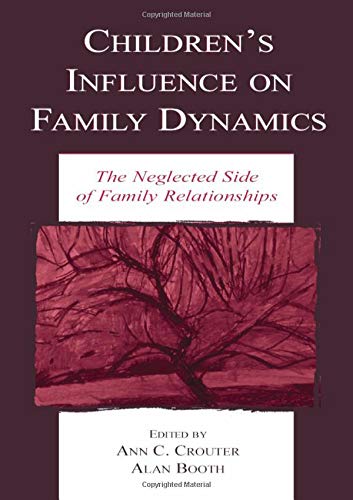
Children'S Influence On Family Dynamics: The Neglected Side Of Family Relationships (Penn State University Family Issues Symposi,Used
Sold by Ergodebooks, an authorized reseller.
Returns accepted within 30 days | support@ergodebooks.com
Shipping Information
- Free Standard Shipping — United States only
- Processing Time: 3–5 business days
- Estimated Delivery: 6–10 business days after dispatch
- Double-boxed, fully insured & discreetly packaged
- Tracking number sent via email once dispatched
Returns & Refund
Returns accepted within 30 days of delivery.
Damaged or Defective Item
Free return shipping + replacement or full refund
Wrong Item Received
Free return shipping + replacement or full refund
Change of Mind
Return shipping at customer's expense · 25% restocking fee applies
Payment Option

Any parent who has raised more than one child is likely to be keenly aware of subtle or even striking differences among their offspring. The central premise of this volume is that children bring personal qualities to their relationships with other family members that help shape family interaction, relationships, and even processes that family researchers have called 'parenting.' The chapters address how children's personal qualities make their mark on families in ways that may in turn influence children's subsequent development.The volume is based on the presentations and discussions from a national symposium on 'Children's influence on family dynamics: The neglected side of family relationships' held at the Pennsylvania State University, as the ninth in a series of annual interdisciplinary symposia focused on family issues. It is divided into four parts, each dealing with a different aspect of the topic. Part I sets the stage by focusing on the features of children that make a difference, as well as the kinds of research designs that are likely to shed light on the role of child influences. Part II focuses on early childhood, particularly the role of infant temperament and other individual differences in very young children in shaping their parents' behaviors, reactions in turn that feedback and influence the developing child. Part III focuses on adolescence, a time when young people are able to exert more choice in how they spend their time and who they spend it with. Part IV pulls the themes of the volume together and points the way for future research.
⚠️ WARNING (California Proposition 65):
This product may contain chemicals known to the State of California to cause cancer, birth defects, or other reproductive harm.
For more information, please visit www.P65Warnings.ca.gov.