If you have any questions, you are always welcome to contact us. We'll get back to you as soon as possible, withing 24 hours on weekdays.
Customer service
All questions about your order, return and delivery must be sent to our customer service team by e-mail at yourstore@yourdomain.com
Sale & Press
If you are interested in selling our products, need more information about our brand or wish to make a collaboration, please contact us at press@yourdomain.com
Help
If you have any questions, you are always welcome to contact us. We'll get back to you as soon as possible, withing 24 hours on weekdays.
Customer service
All questions about your order, return and delivery must be sent to our customer service team by e-mail at yourstore@yourdomain.com
Sale & Press
If you are interested in selling our products, need more information about our brand or wish to make a collaboration, please contact us at press@yourdomain.com
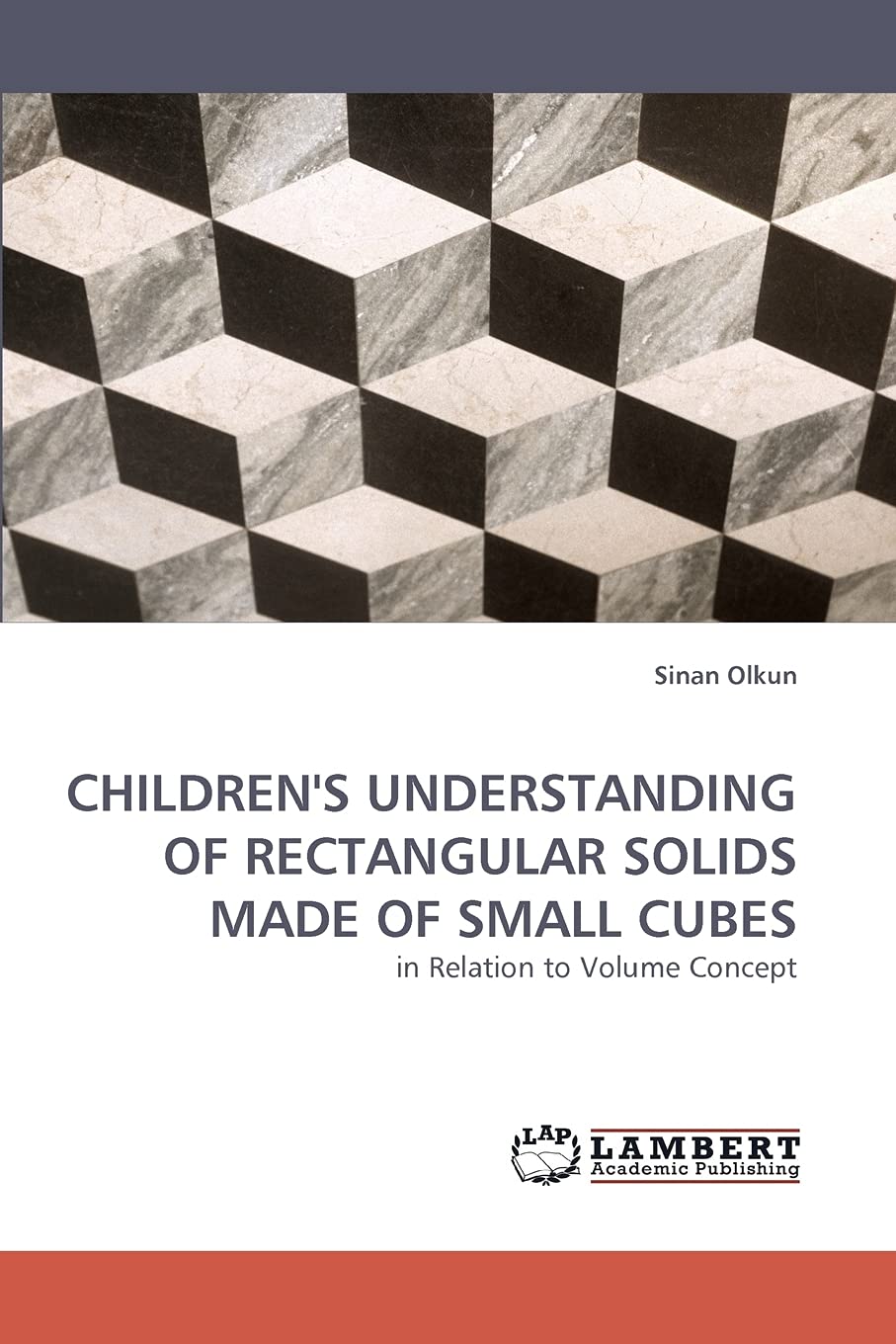
This study investigated fourth graders' understanding of rectangular solids made of small cubes through equal sharing activities involving cube buildings. A quasiexperimental design was utilized. In the first phase, clinical interviews were conducted individually to assess the level of functioning both in concrete and pictorial situations. In the second phase, they engaged in equal sharing of spatial constructions using drawings, concrete buildings, loose cubes, and colored pens. In the last phase, postclinical interviews were conducted to probe their improvements. Students used three distinct conceptualizations for cube arrays depending on what they formed as a unit and how they structured the whole building. Initially, their structuring was distracted by the complexity of buildings and none of them used the same strategies consistently across the problems. During the instruction, they exhibited the same three conceptualizations. After the instruction, all students consistently used layering strategies regardless of the complexity of the buildings. Equal sharing situations paved the road in establishing units, composite units, and unit iteration.
⚠️ WARNING (California Proposition 65):
This product may contain chemicals known to the State of California to cause cancer,
birth defects, or other reproductive harm.
For MAP (Minimum Advertised Price) violations and Intellectual Property (IP) or Trademark concerns, please contact:
support@ergodebooks.com
⚠️ California Proposition 65 Warning: Some products sold on this website may expose you to chemicals known to the State of California to cause cancer, birth defects, or other reproductive harm. For more information, visit www.P65Warnings.ca.gov.