
Title
Children'S Work, Schooling, And Welfare In Latin America,Used
Sold by Ergodebooks, an authorized reseller.
Returns accepted within 30 days | support@ergodebooks.com
Shipping Information
- Free Standard Shipping — United States only
- Processing Time: 3–5 business days
- Estimated Delivery: 6–10 business days after dispatch
- Double-boxed, fully insured & discreetly packaged
- Tracking number sent via email once dispatched
Returns & Refund
Returns accepted within 30 days of delivery.
Damaged or Defective Item
Free return shipping + replacement or full refund
Wrong Item Received
Free return shipping + replacement or full refund
Change of Mind
Return shipping at customer's expense · 25% restocking fee applies
Payment Option

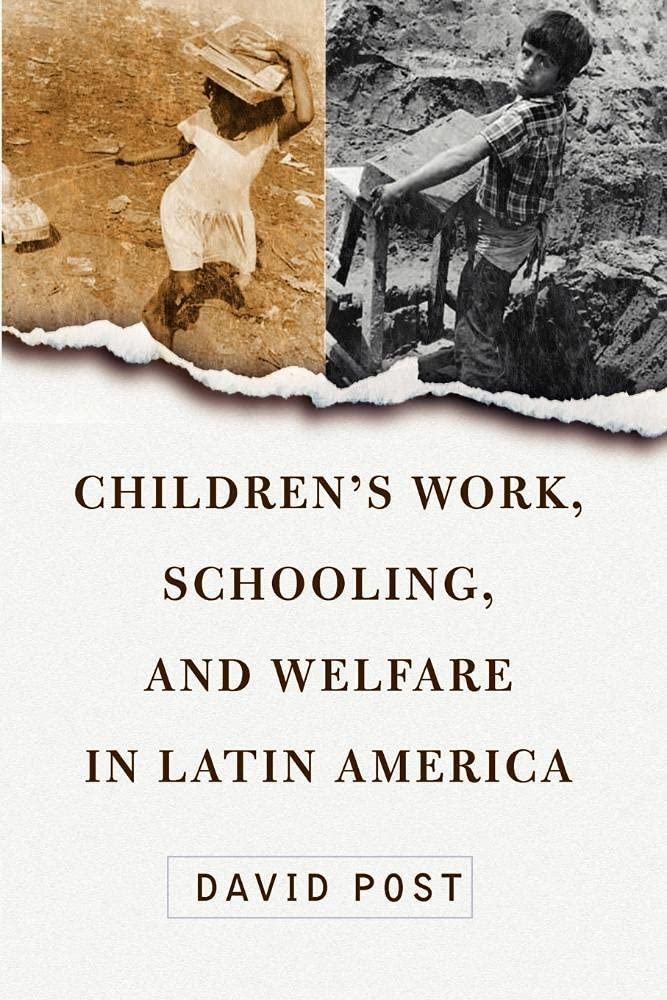
From the 1980s through the 1990s, children in many areas of the world benefited from new opportunities to attend school, but they also faced new demands to support their families because of continuing and, for many, worsening poverty. Children's Work, Schooling, And Welfare In Latin America is a comparative study of children, ages 1217, in three different Latin American societies. Using nationallyrepresentative household surveys from Chile, Peru, and Mexico, and repeatedly over different survey years, David Post documents tendencies for children to become economically active, to remain in school, or to do both. The survey data analyzed illustrates the roles of family and regional poverty, and parental resources, in determining what children did with their time in each country. However, rather than to treat children's activities merely as demographic phenomena, or in isolation of the policy environment, Post also scrutinizes the international differences in education policies, labor law, welfare spending, and mobilization for children's rights. Children's Work shows that child labor will not vanish of its own accord, nor follow a uniform path even within a common geographic region. Accordingly, there is a role for welfare policy and for popular mobilization. Post indicates that, even when children attend school, as in Peru or Mexico, many students will continue to work to support the family. If the consequence of their work is to impede their educational success, then schools will need to attend to a new dimension of inequality: that between parttime and fulltime students.
⚠️ WARNING (California Proposition 65):
This product may contain chemicals known to the State of California to cause cancer, birth defects, or other reproductive harm.
For more information, please visit www.P65Warnings.ca.gov.