
Title
Chile: Recent Policy Lessons And Emerging Challenges (Wbi Development Studies),Used
Sold by Ergodebooks, an authorized reseller.
Returns accepted within 30 days | support@ergodebooks.com
Shipping Information
- Free Standard Shipping — United States only
- Processing Time: 3–5 business days
- Estimated Delivery: 6–10 business days after dispatch
- Double-boxed, fully insured & discreetly packaged
- Tracking number sent via email once dispatched
Returns & Refund
Returns accepted within 30 days of delivery.
Damaged or Defective Item
Free return shipping + replacement or full refund
Wrong Item Received
Free return shipping + replacement or full refund
Change of Mind
Return shipping at customer's expense · 25% restocking fee applies
Payment Option

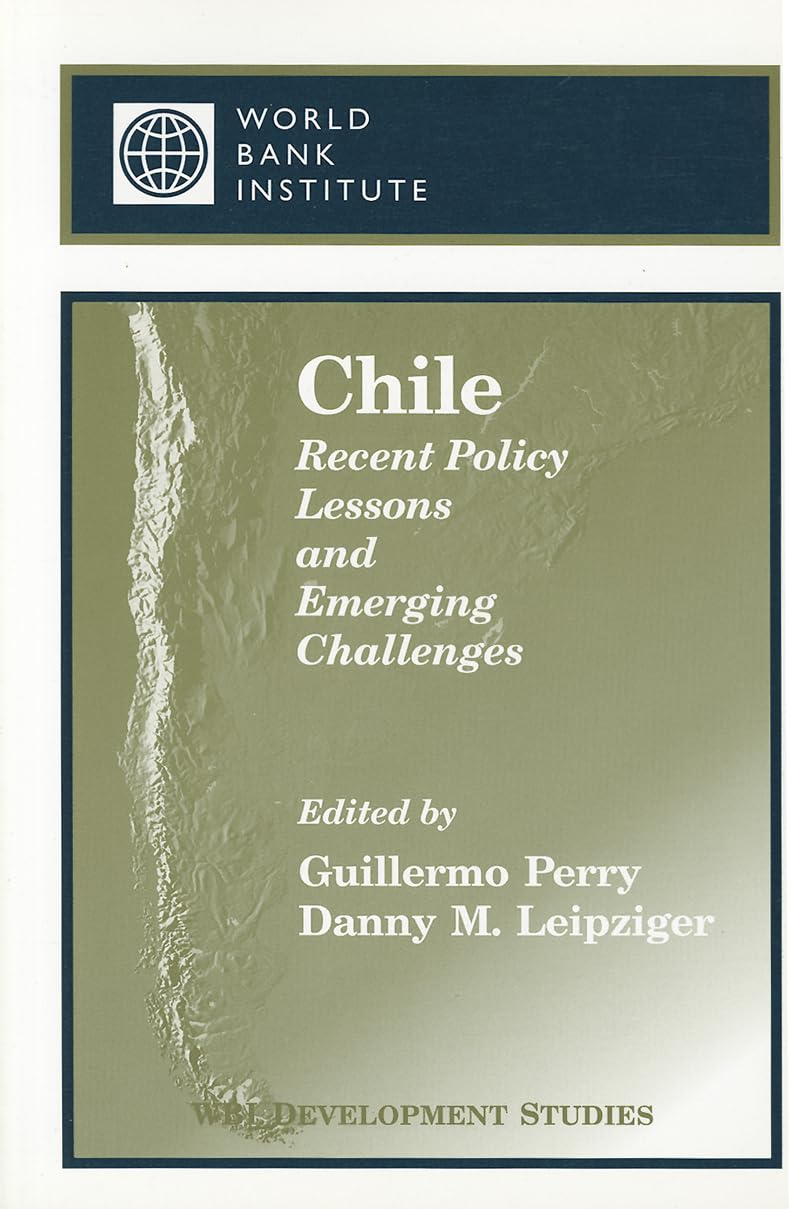
The 'Chilean model' has been expostulated for some time in the Latin American and Caribbean region and elsewhere because it appeared that the country, despite terrible political and economic turmoil, embodied important lessons about economic management. Over the last 15 years, Chile has been the Latin American country with the most consistent and successful economic record. The success of Chile's economic reforms and the subsequent dramatic increase in real income are well known. To a large extent, Chile's positive fiscal outcomes have been the result of sound policies as well as sound fiscal institutions. However, there is room for improvement in the education and health sectors, and the results for Chile in terms of equality of income are not positive. 'Chile: Recent Policy Lessons and Emerging Challenges' presents a series of papers analyzing different aspects of Chilean public policy, which cover economic and social policies as well as regulatory and governance issues. The book is broken down into three parts: The first part examines the contribution of macroeconomic policies to superior outcomes; the second part analyzes the many advances in the social sector and the remaining troublesome issues; and the third part evaluates regulatory reforms and the effects of privatization. Since no public policy model is static, further reforms are needed to maintain Chile's economic growth as well as to respond effectively to public demands. As Chile grapples with its pockets of poverty, the balance between social safety nets and the need for greater efficiency in labor markets, a rebalancing of regulatory powers, and other thorny issues, it will need to rely on its institutional experience in public policy and conflict resolution.
⚠️ WARNING (California Proposition 65):
This product may contain chemicals known to the State of California to cause cancer, birth defects, or other reproductive harm.
For more information, please visit www.P65Warnings.ca.gov.