
Title
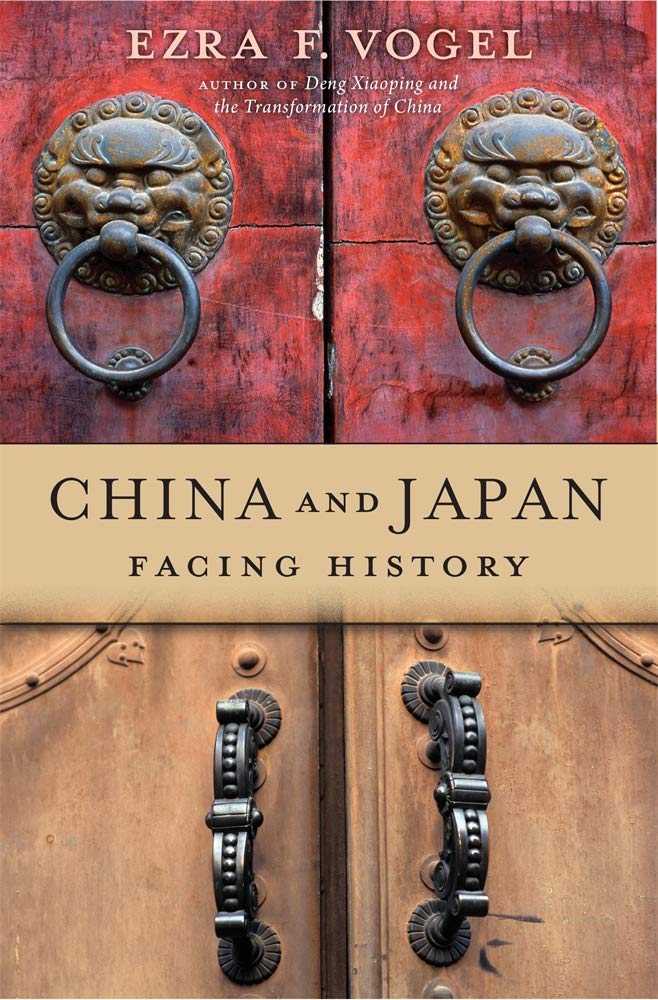
China And Japan: Facing History
Sold by Ergodebooks, an authorized reseller.
Returns accepted within 30 days | support@ergodebooks.com
Shipping Information
- Free Standard Shipping — United States only
- Processing Time: 3–5 business days
- Estimated Delivery: 6–10 business days after dispatch
- Double-boxed, fully insured & discreetly packaged
- Tracking number sent via email once dispatched
Returns & Refund
Returns accepted within 30 days of delivery.
Damaged or Defective Item
Free return shipping + replacement or full refund
Wrong Item Received
Free return shipping + replacement or full refund
Change of Mind
Return shipping at customer's expense · 25% restocking fee applies
Payment Option

One Of The Worlds Most Eminent Scholars Of East Asia Reveals The Important Touchstones In The Long History Between China And Japan And Argues That For The Sake Of World Stability They Must Forge A New Relationship For The Twentyfirst Century.China And Japan Have Cultural And Political Connections That Stretch Back Fifteen Hundred Years. But Today Their Relationship Is Strained. Chinas Military Buildup Deeply Worries Japan, While Japans Brutal Occupation Of China In World War Ii Remains An Open Wound. In Recent Years Less Than Ten Percent Of Each Population Had Positive Feelings Toward The Other, And Both Countries Insist That The Other Side Must Deal Openly With Its History Before Relations Can Improve.From The Sixth Century, When The Japanese Adopted Core Elements Of Chinese Civilization, To The Late Twentieth Century, When China Looked To Japan For A Path To Capitalism, Ezra Vogels China And Japan Examines Key Turning Points In Sinojapanese History. Throughout Much Of Their Past, The Two Countries Maintained Deep Cultural Ties, But China, With Its Great Civilization And Resources, Had The Upper Hand. Japans Success In Modernizing In The Nineteenth Century And Its Victory In The 1895 Sinojapanese War Changed The Dynamic, Putting Japan In The Dominant Position. The Bitter Legacy Of World War Ii Has Made Cooperation Difficult, Despite Efforts To Promote Trade And, More Recently, Tourism.Vogel Underscores The Need For Japan To Offer A Thorough Apology For The War, But He Also Urges China To Recognize Japan As A Potential Vital Partner In The Region. He Argues That For The Sake Of A Stable World Order, These Two Asian Giants Must Reset Their Relationship, Starting With Their Common Interests In Environmental Protection, Disaster Relief, Global Economic Development, And Scientific Research.
⚠️ WARNING (California Proposition 65):
This product may contain chemicals known to the State of California to cause cancer, birth defects, or other reproductive harm.
For more information, please visit www.P65Warnings.ca.gov.
- Q: What is the binding type of this book? A: This book has a hardcover binding. Hardcover books are known for their durability and often feature a protective cover.
- Q: How many pages does 'China and Japan: Facing History' have? A: This book contains five hundred thirty-six pages. This length allows for an in-depth exploration of Sino-Japanese history.
- Q: What are the dimensions of this book? A: The dimensions of the book are six and a half inches in length, one and a half inches in width, and nine and a half inches in height. These measurements make it a substantial yet manageable read.
- Q: Who is the author of this book? A: The author is Ezra F. Vogel. He is recognized as one of the world's leading scholars on East Asia.
- Q: What is the main focus of 'China and Japan: Facing History'? A: The book examines the historical relationship between China and Japan. It highlights key events that shape their current relationship and emphasizes the need for a new partnership.
- Q: Is this book suitable for casual readers? A: Yes, this book is suitable for casual readers interested in history. It provides accessible insights into complex historical events.
- Q: What themes are explored in this book? A: The book explores themes of cultural ties, historical conflicts, and the future relationship between China and Japan. It delves into significant historical touchstones.
- Q: Can this book be used as a reference for academic studies? A: Yes, this book can serve as a valuable reference for academic studies. Its thorough research and analysis make it relevant for students and scholars.
- Q: Is there a specific audience for this book? A: The book is aimed at readers interested in international relations, history, and East Asian studies. It is suitable for both general and academic audiences.
- Q: How should I care for this hardcover book? A: To care for the hardcover book, store it upright in a cool, dry place. Avoid exposure to direct sunlight to prevent fading.
- Q: Is there a warranty for this book? A: No, books typically do not come with a warranty. However, you can check the return policy for your purchase.
- Q: What should I do if the book arrives damaged? A: If the book arrives damaged, contact the retailer for a return or exchange. Most sellers have policies in place for damaged items.
- Q: Are there any special storage recommendations for this book? A: Yes, store the book in a dust-free environment and on a stable shelf. This will help maintain its condition over time.
- Q: Is this book appropriate for children? A: No, this book is not specifically designed for children. It covers complex historical themes that may be more suitable for adults and older teens.
- Q: What if I have questions about the content? A: If you have questions about the content, consider checking academic reviews or discussion forums related to the book. These can provide additional insights.
- Q: Does this book include any illustrations or maps? A: No, this book does not include illustrations or maps. It focuses on text to convey its historical analysis.